P1212 Code: Vehicle-Specific Meaning, Symptoms, and Diagnosis
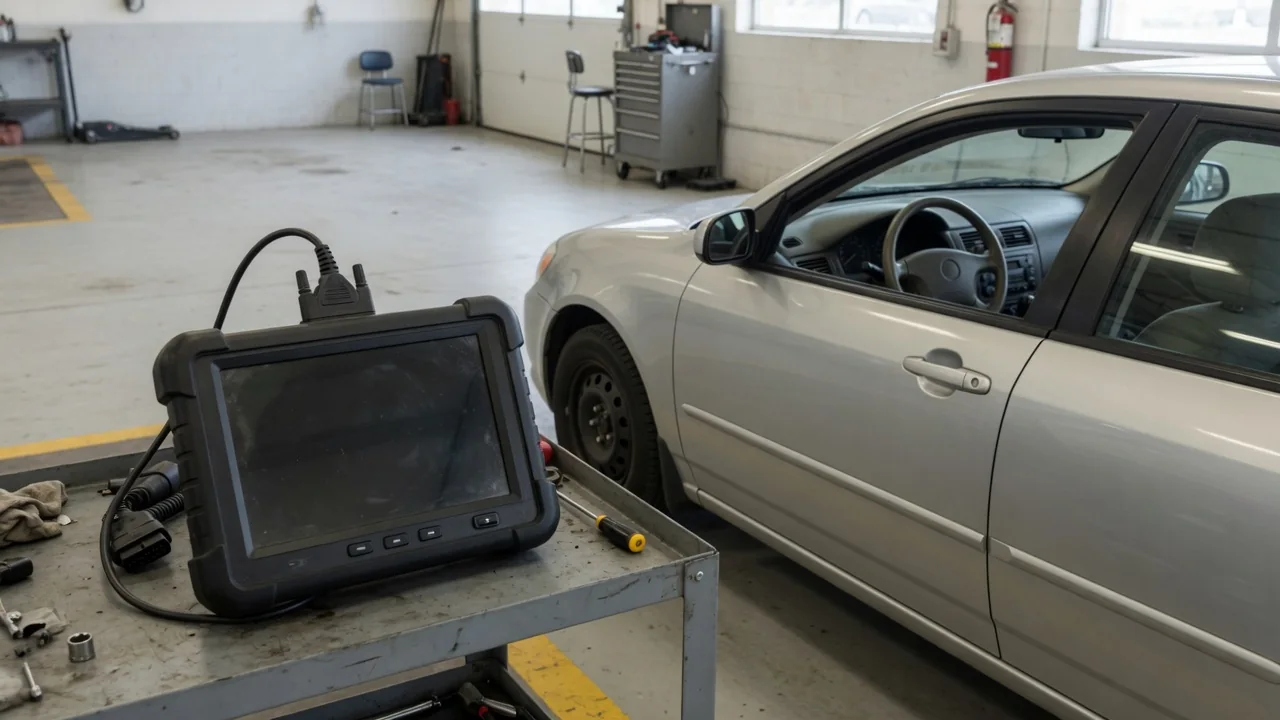
P1212 is a manufacturer-specific trouble code, so its meaning is not the same on every vehicle. Confirm make, model, year, engine, and vehicle identification number against factory service information before interpreting a P1212 code. That lookup identifies the reporting module, set conditions, and diagnostic testing path. Scanner shorthand can be incomplete, and a stored fault is evidence to interpret rather than proof a part has failed.
Verify What P1212 Means for Your Vehicle
P1212 is manufacturer-specific and must not receive a universal fault definition. Two vehicles can store the same alphanumeric label while monitoring different systems, using different modules, and applying different enable criteria. Interpreting a P1212 code therefore starts with the exact vehicle: make, model, model year, engine, and identification details that distinguish calibration and equipment. The vehicle identification number is useful because it documents the configuration that factory service information is written against. Until those details are confirmed, a generic chart or a neighboring model's definition is not a reliable substitute.
Vehicle-specific service information is the place to confirm the definition, the reporting module, and the conditions that set the code. Those conditions may include operating range, time, temperature, or related signals that a brief scanner line does not list. A scan tool's short text can be truncated, translated loosely, or drawn from a generic database that does not match the application. That description is a starting clue, not a confirmed diagnosis. Pending codes, current status, and freeze-frame data still need reading against the manufacturer's published criteria for that P1212 code.
Symptoms to Record and Reasons to Stop Driving
A P1212 code does not come with one universal symptom list. If a warning lamp is on, starting is difficult, the engine stalls, or power feels reduced, record those observations rather than assuming they always accompany this fault. Note engine temperature, idle versus cruise, load, and whether the concern is intermittent. Those details help a technician compare the complaint with freeze-frame data and the enable conditions in service information. Absence of a drivability complaint does not make the stored code meaningless; it only means severity cannot be judged from the code number alone.
A stored or pending P1212 code by itself does not establish how unsafe the vehicle is to drive. Treat the actual behavior as the decision point. If the engine stalls in traffic, power drops sharply, temperature climbs into an overheating range, or a critical warning appears, stop safely and arrange assistance rather than continuing. Intermittent hesitation that does not progress still belongs in the notes, because it may reappear during diagnostic testing. Do not keep driving through a condition that could leave the vehicle without propulsion or cooling.
Potential Causes Must Follow the Confirmed Definition
Every proposed cause of a P1212 code has to follow the verified vehicle-specific definition and the diagnostic procedure written for that application. Wiring, connectors, power supply, signals, or a named component are relevant only where that procedure identifies them. A circuit that belongs to one manufacturer's P1212 test plan may have no role on another vehicle that uses the same number for a different monitor. Skipping that confirmation and substituting a generic cause list can send testing toward the wrong system and leave the actual set conditions unexamined.
An associated component name in a scanner description does not prove that component has failed. Manufacturer-specific trouble codes often name the circuit, the monitor, or the control function that reported a result outside expected range, which can include wiring, power, ground, or related sensors. Labeling any cause as common is not justified without evidence for the exact vehicle application. Diagnostic testing is what ranks possibilities: compare freeze-frame data, companion codes, and measured operation against the published procedure, then treat a failed part as confirmed only after those steps isolate it.
Safe Checks and Information to Save Before Service
Before anyone clears a P1212 code, save the complete scan report. Capture code status, the reporting modules, pending codes, companion codes, and any freeze-frame data the tool can store. Companion codes should be recorded without assuming they all share one cause; they may be related, sequential, or independent. Recent repairs, battery disconnects, jump starts, and the order in which symptoms appeared supply diagnostic context that freeze-frame snapshots cannot fully replace. Clearing first erases that snapshot and can force the concern to reoccur before useful comparison is possible.
Owner checks should stay limited to safely accessible visual observations with the vehicle parked and the engine off. Look for obvious connector damage, loose battery cables, or fluid contamination only where those items can be seen without probing. Leave circuit probing, disassembly, and energized testing to a technician with the service information and the right equipment. Guessing at a repair from a P1212 description can damage connectors or create new faults. The saved scan information plus a written symptom timeline is more useful at the shop than an incomplete owner test.
How a Technician Narrows Down the P1212 Fault
A technician starts by confirming the complaint against the stored P1212 code and then following the manufacturer procedure for that exact vehicle configuration. Code status, pending versus confirmed, companion codes, and captured operating data from freeze-frame records guide the order of tests rather than a parts list. If the published path begins with power and communication integrity, those checks come before component replacement. Matching the reporting module and calibration to service information keeps diagnostic testing inside the system that actually set the fault.
Relevant circuits, signals, or system operation are then checked with the equipment the procedure calls for, without improvised tests around live high-voltage or fuel systems. An intermittent P1212 concern may not fail a one-time measurement; additional monitoring under the freeze-frame conditions may be required before a failed part can be identified. Returning pending codes during that watch still count as evidence, not as a completed diagnosis. The goal is to reproduce or bound the set conditions so the next step is supported by measurements rather than by the code label alone.
Repair the Confirmed Cause and Verify the Result
Repair decisions should follow documented test results rather than parts replacement solely because P1212 is present. The required repair depends on the verified definition and the fault that diagnostic testing isolated, which may be a connection, a power issue, a signal path, or a component. There is no universal fix for this code number, and compatibility claims for parts or calibrations cannot be made without the vehicle's identified configuration. Installing an unconfirmed part can leave the original set conditions in place and add a new variable to the next round of testing.
After the confirmed cause is corrected, repair verification uses the applicable service procedure. That typically includes a rescan for pending codes and companion codes, a check that the original symptom is gone, and whatever monitor or road-test steps the manufacturer specifies for that P1212 code. Clearing the code alone does not repair the fault; it only removes the stored evidence. If the code returns, renewed diagnosis is required rather than repeating the same replacement. Keep the earlier freeze-frame data and scan report so the new snapshot can be compared with the first event.