P1154 and P1155 Codes: Vehicle-Specific Meanings and Diagnosis
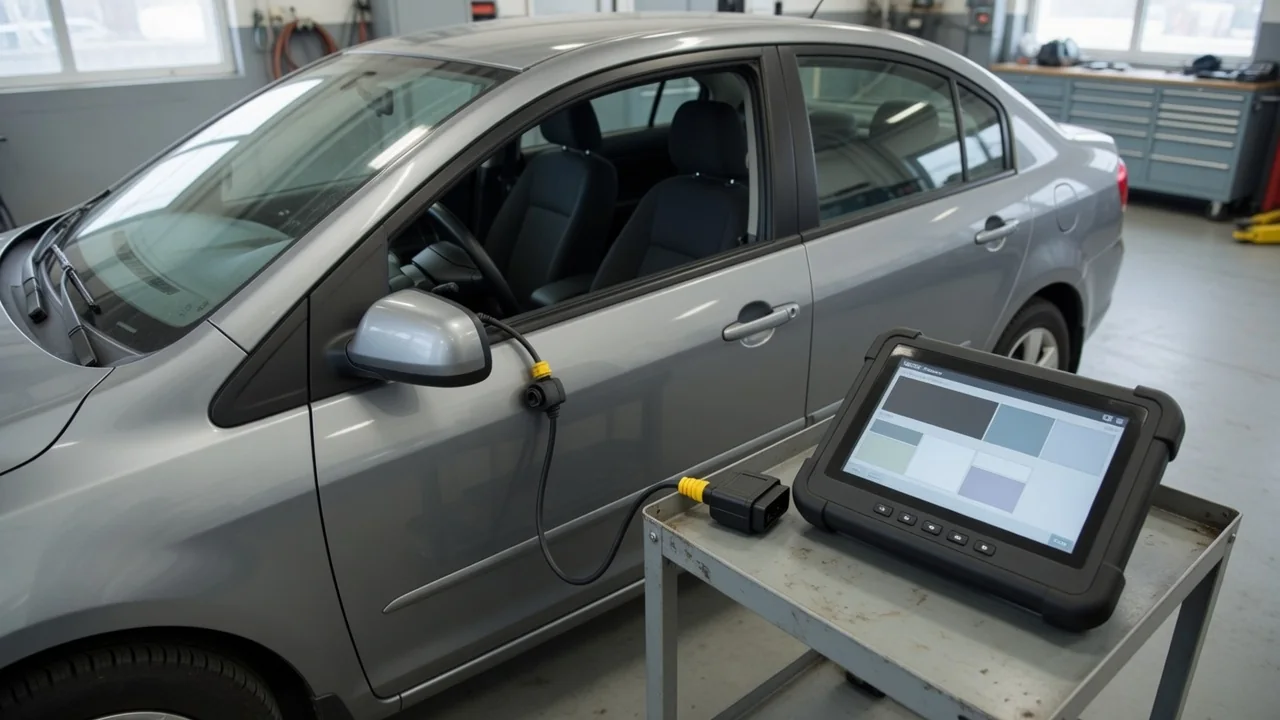
P1154 and P1155 are manufacturer-specific trouble codes, so a scan tool reading of a P1155 code or a P1154 code does not share one factory meaning across every vehicle. The vehicle-specific code definition depends on make, model, year, engine, and applicable market. Treat stored P1155 data as evidence that a control module recorded a condition, not as proof that a named part has failed. Confirm the definition and setting criteria in matching service information before any diagnostic testing.
Verify P1154 and P1155 Meanings for the Exact Vehicle
A P1154 or P1155 code is a manufacturer-specific trouble code, which means the numeric identifier is assigned by the vehicle maker rather than by a single industry-wide definition. Interpretation starts with matching the code to the exact make, model, year, engine family, and market because the same number can describe different monitored systems on different applications. Until that match is made, the scan tool label is only a pointer. Using a definition written for another brand, a different displacement, or another region can send diagnosis toward the wrong circuit.
Vehicle-specific service information is what establishes the official wording, the monitored system, and the conditions that allow the control module to store P1154 or P1155. Adjacent code numbers do not, by themselves, prove a shared component, a shared fault, or a shared repair path. If the factory definition for the stated application cannot be verified, that definition remains unresolved and should be treated as unknown rather than guessed from another listing. Diagnostic testing then waits on documentation that names the actual circuit or function, not on the proximity of the two numbers.
Understand What a Confirmed P1155 Definition Establishes
Once the vehicle-specific P1155 definition is confirmed, it tells you which function the control module was watching and which conditions had to be met before the code set. That documentation also assigns the correct bank, sensor, circuit, or component designation for that application, language a generic scanner short description often compresses or mislabels. A confirmed P1155 code means the module detected a defined condition long enough, or under the required operating window, to store a fault. It does not identify the failed hardware, the failed wire, or the failed connector by itself.
The condition detected by the control module is a snapshot of what the software compared against its limits, not a completed diagnosis of why those limits were crossed. Wiring faults, connector issues, power or ground problems, and actual component operation can all produce the same stored result, which is why diagnostic testing must still isolate the cause. A scanner's brief phrase is not sufficient grounds for ordering a replacement part, because the phrase names a monitored path rather than a verified failure. Parts should wait until the applicable procedure shows a failed test or visible damage on that specific vehicle.
Interpret P1154 Within Its Vehicle Application
A verified P1154 definition likewise names a monitored function and the setting criteria for that application only. Those criteria may involve a particular operating mode, a comparison between sensors, a circuit range, or another software check described in the factory information. Until that wording is confirmed for the exact vehicle, P1154 remains a manufacturer-specific identifier rather than a named part. Pending or confirmed status then shows whether the module has seen the condition once in the current drive cycle or has matured it into a stored confirmed code.
Freeze-frame data captured when P1154 set records engine speed, load, temperature, and related operating values that place the event in a real driving window. Accompanying codes add context but still require their own vehicle-specific definitions. Vehicles that display both P1154 and P1155 should not be treated as if one code caused the other simply because the numbers sit next to each other. Attribution to a particular component still needs evidence from the applicable diagnostic procedure, including circuit or operating data that actually failed a specified test.
Recognize Possible Symptoms and Urgent Warning Signs
P1155 symptoms can be limited to an illuminated check engine light even when the driver notices no change in how the vehicle starts, idles, or drives. That pattern is common when a manufacturer-specific monitor sets in the background rather than during an obvious misfire. Rough running, hesitation, or increased fuel use may appear only when the verified meaning involves mixture, airflow, or a related actuator path, and those changes still do not identify the failed part. Record whether any change occurs at startup, after warm-up, or under particular driving conditions without forcing unsafe behavior.
A flashing check engine light, severe shaking, stalling, or substantial power loss is a different situation from a steady lamp with a stored P1155. Those urgent warning signs mean the vehicle should be stopped in a safe location and professional assistance arranged rather than driven through continued load. Do not attempt to reproduce a stall, a misfire-like shake, or a sudden power drop in traffic. A pending code that has not yet matured can still coincide with these warnings if another fault is present, so the full code list and freeze-frame data belong with the symptom notes.
Narrow Possible Causes With Safe Observations
Possible causes should be organized around the verified monitored system, not around a generic list of parts that happen to appear on other vehicles with the same number. When the documentation points to a circuit, that can include wiring, connectors, power supply, grounds, or component operation, but only those items the procedure actually tests. Preserve the complete code list and available freeze-frame information before clearing codes or disconnecting the battery, because that snapshot is often the only record of the operating conditions when P1154 or P1155 set. Clearing first erases the context needed for later diagnostic testing.
Owner inspection should stay at accessible visual observations with the engine off and cool, such as visibly damaged wiring, a connector that is unseated, or a harness that has been pinched. That wiring inspection can note what is obviously disturbed, but it cannot prove continuity, voltage, or sensor accuracy. Recent repair history, including work on related harnesses or components, can guide which area to examine first without proving that the last job caused the current P1155. Electrical probing, powered tests, under-vehicle access, and any work near hot or moving parts belong with qualified technicians.
Use Test Results to Choose and Confirm a Repair
A technician follows the vehicle-specific diagnostic procedure and reviews relevant circuit or operating data before recommending a repair. That sequence compares live readings, commanded states, and specified tests against the confirmed definition of P1155 or P1154 rather than against a generic parts catalog. A repair recommendation should rest on demonstrated damage or a failed test, not on the fact that a code names a circuit or sensor. Replacing a part solely because the scanner printed that name can leave the original wiring, power, or software condition untouched.
Clearing a code does not demonstrate that the underlying fault has been corrected; the monitor must run again under the conditions the factory procedure requires. Verification uses post-repair checks, code status as pending or confirmed, and monitor completion when those steps apply to the vehicle. Before handing the vehicle to a shop, collect make, model, year, engine, exact codes including P1154 and P1155, a description of P1155 symptoms, freeze-frame data, and notes on recent work. That packet lets diagnostic testing start from documented evidence instead of from a guessed vehicle-specific code definition.