P1133 Code: Vehicle-Specific Meaning, Symptoms, and Diagnosis
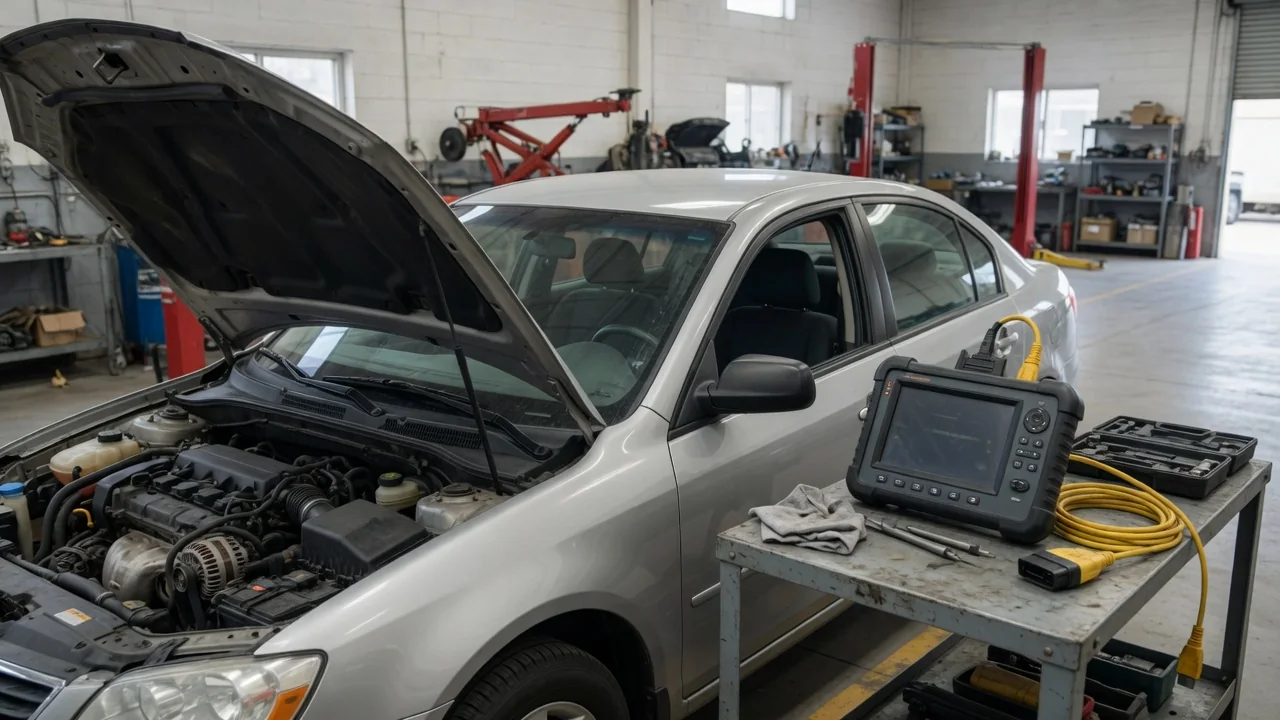
P1133 is a manufacturer-specific trouble code whose meaning depends on year, make, model, and engine rather than one industry-wide definition. A stored P1133 code with the check engine light is evidence of a detected condition, not proof a part has failed. Confirm vehicle service information before judging oxygen sensor response, fuel trim, or any other system, then use that confirmed definition to interpret symptoms and diagnostic testing.
Verify What P1133 Means for Your Vehicle
Unlike many generic powertrain codes, P1133 does not carry a universal SAE definition that applies to every vehicle. The same numeric identifier can describe different monitored conditions depending on the manufacturer and the calibration of that engine family. Before interpreting P1133, record the exact year, make, model, engine, and the scanner's printed description, then compare that wording with vehicle service information for that application. Skipping this step can send diagnosis toward the wrong circuit or sensor even when the code number looks familiar.
Some applications associate P1133 with oxygen sensor response or switching behavior, but that interpretation is valid only after the manufacturer definition is confirmed for the vehicle in front of you. A code identifies a condition the control module detected against its programmed criteria; it does not establish that a sensor, harness, or other part has failed or needs replacement. Diagnostic testing must still separate a slow sensor, faults in wiring and connectors, an exhaust influence, or a fuel-control issue that merely changes what the module sees.
Possible P1133 Symptoms and Driving Concerns
P1133 symptoms often begin with a check engine light and little else. Many drivers notice no change in idle, acceleration, or fuel use even while the code is stored, because the module can flag a monitoring result without a dramatic drivability change. When rough running, hesitation, or increased fuel use does appear, those complaints still cannot confirm the P1133 fault or identify a failed part. Similar behavior can come from unrelated misfires, vacuum leaks, or fuel delivery problems, so the light and the stored description remain the starting evidence, not the diagnosis.
A flashing check engine light, severe shaking, stalling, or substantial power loss is a different situation. Those conditions can indicate misfire or other faults that may damage the catalytic converter or leave the vehicle difficult to control, so stop safely and arrange assistance rather than continuing to drive. For milder P1133 symptoms, note when they occur: cold starts, warm idle, light cruise, or acceleration. That timing, together with freeze-frame data captured when the code set, helps a technician match the complaint to the operating conditions the manufacturer uses for diagnostic testing.
Potential Causes Under the Confirmed Make-Specific Definition
Once the make-specific definition is confirmed, cause lists should follow that manufacturer diagnostic procedure rather than a generic oxygen-sensor story. Name a make only when its application of P1133 is established for that vehicle; otherwise the same number can point to an unrelated circuit. Where the confirmed definition is oxygen-sensor monitoring, slow or limited oxygen sensor response, damaged wiring and connectors, and poor grounds are possibilities that still require testing. A sensor that looks old is not automatically the failed part, and a corroded connector can produce the same stored result as a sluggish element.
Exhaust leaks upstream of a monitored sensor can dilute or delay the gas sample, so the module may report a response problem even when the sensor itself still functions. Air-fuel control issues that drive fuel trim far from expected values can also change how quickly a sensor appears to switch. Companion codes for fuel trim, misfire, or other oxygen sensors, plus recent repairs such as exhaust work or connector service, are context that can redirect testing. They do not prove a cause; they only change which checks belong first in the confirmed procedure.
Information Owners Can Safely Gather
Before clearing anything, record all stored and pending codes, the scanner's exact wording for P1133, and any freeze-frame data the tool displays. Freeze-frame snapshots typically include engine speed, load, coolant temperature, and fuel trim at the moment the code set, which later diagnostic testing will compare with manufacturer test conditions. Also collect year, make, model, engine, mileage, recent maintenance, and when the check engine light first appeared. That package lets a shop start from the vehicle-specific definition instead of guessing from the number alone.
Limit visual observations to accessible areas with the engine off and cool. Note obviously loose connectors, chafed wiring, or damaged insulation near sensors without removing components or opening harnesses. Owners should not touch hot exhaust components, probe live circuits, or work beneath an unsupported vehicle. Those actions can cause burns, electrical damage, or injury, and they are not required to document P1133 for a technician. Photographs of connector locations and a written list of codes and symptoms are enough owner-level information to support professional diagnostic testing.
Professional Tests That Narrow Down the Fault
A technician should follow the manufacturer's diagnostic sequence and the specified test conditions for that exact application of P1133, not a generic sensor-swap checklist. Freeze-frame data shows whether the code set at idle, cruise, or under load, and companion codes indicate whether fuel trim, misfire, or another monitor was already in play. Relevant live readings then let the shop compare current behavior with the condition the module reported. Skipping those steps and replacing parts by number alone often leaves the original P1133 code waiting to return.
Where the confirmed definition involves oxygen-sensor monitoring, evaluation typically includes sensor activity, fuel-control data, and inspection of wiring and connectors that serve that circuit. Electrical testing may be needed to check continuity, shorts, or reference integrity, and leak testing may be used when an exhaust path could distort the sample. Controlled operating-condition checks recreate the speed, load, and temperature window the manufacturer uses for the monitor. Those procedures belong in a shop with the correct service information; they are not owner roadside repairs and should not include improvised probing of hot exhaust or live high-current circuits.
Repair Decisions and Confirmation After Service
Repairs should follow a demonstrated fault, such as a verified wiring defect, an identified exhaust leak, or a sensor that failed the manufacturer's tests for the confirmed P1133 definition. Vehicle-specific information is still required to confirm the affected component's location and whether a replacement is suitable for that engine. Clearing P1133 with a scan tool or disconnecting the battery only erases stored evidence; it does not correct the condition that set the code. If the problem remains, the check engine light and the same P1133 code are likely to return once the monitor runs again.
After service, confirmation should follow manufacturer-prescribed checks, including the relevant monitor completing under the specified conditions and a scan for returning codes or P1133 symptoms. A short test drive that never reaches the enable criteria can leave the repair unverified even if the light is off. Estimates vary with diagnostic labor, how accessible the circuit or component is, and which repair the tests actually support, so a quote without that diagnosis is incomplete. Ask the shop to document the confirmed definition, the tests performed, and the part or repair that addressed the demonstrated fault.