P1129 Code: Vehicle-Specific Meaning, Diagnosis, and Repairs
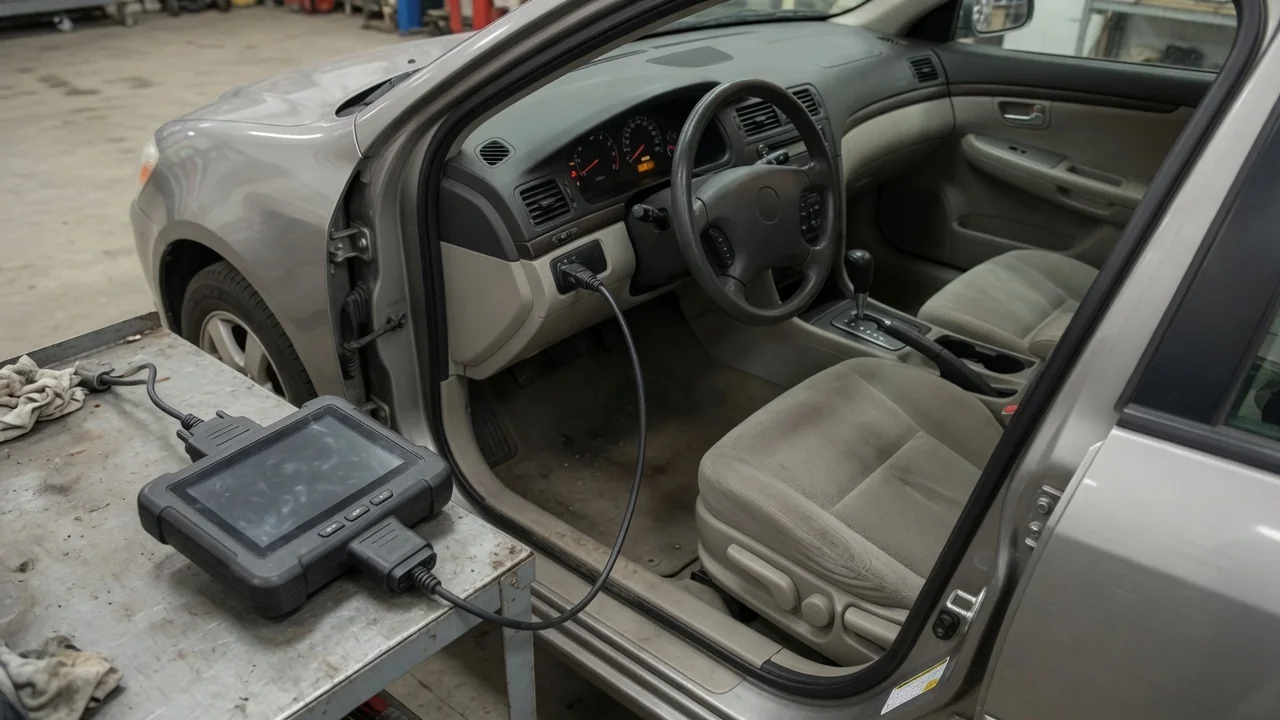
P1129 is a manufacturer-specific trouble code, so the same stored number can point to different systems depending on the vehicle. A generic scanner label for a P1129 code may be incomplete or simply inapplicable. Confirm year, make, model, engine, and vehicle service information before interpreting the diagnostic trouble code, then use that verified wording to decide what the check engine light is actually reporting.
Verify What P1129 Means for Your Vehicle
A P1129 code is not a universal definition. Different manufacturers assign that number to different monitored conditions, so treating it as if it always names the same sensor, circuit, or control function will send diagnosis in the wrong direction. Before any interpretation, identify the vehicle year, make, model, and engine, then open the applicable manufacturer service information for that exact application. Only that documentation can tell you which system set the diagnostic trouble code.
Generic scan-tool text often copies a broad description that does not match the vehicle in front of you. That wording can be incomplete, borrowed from another brand, or simply unused on this powertrain. Use the verified, vehicle-specific definition to name the involved system, then stay with that wording when you review freeze-frame data, pending codes, and driveability symptoms. Until the manufacturer definition is confirmed, do not assume what P1129 means or which circuit failed.
Document Symptoms Without Assuming a Cause
Record how the vehicle behaves while the code is stored rather than jumping to a failed part. Note whether the check engine light is steady or flashing, and whether the engine starts, idles, and accelerates in a normal way. Write down any rough running, hesitation, stalling, or reduced power as observations only. Those notes describe what you felt; they are not a universal symptom list for every P1129 code across every manufacturer.
Capture when the warning appeared, the operating conditions at that moment, and any recent service. Mileage, weather, fueling, towing, and prior repairs can all matter later when a technician compares your notes with freeze-frame data. Timing still does not prove cause. A part replaced last week is not automatically the reason P1129 set, and a quiet drive after the light came on does not prove the condition has gone away.
Identify Possible Causes From the Confirmed Definition
A diagnostic trouble code reports a detected condition. It does not, by itself, identify a failed part. Once the manufacturer definition is confirmed, possible electrical, sensor, mechanical, or control-related causes should be listed only as they relate to that system and to the published diagnostic procedure. Wiring, connectors, sensors, actuators, vacuum or mechanical hardware, and software calibrations may all be candidates, but only testing can show which of those actually produced the stored P1129.
Avoid calling any component the usual culprit. A popular replacement on internet forums may belong to a different make or a different definition of the same number. Follow the vehicle-specific test steps in order, and replace or repair a part only when those results support it. Guessing at a sensor or control module because P1129 appeared is not diagnosis, and swapping parts without measurements can leave the original condition in place while adding new faults.
Preserve Evidence and Make Safe Initial Observations
Before clearing anything, save every stored and pending code, each code's status, and all available freeze-frame data. That snapshot records engine speed, load, temperature, and related values at the moment the control module decided P1129 met its criteria. Accompanying codes can point diagnosis toward a shared circuit, a related subsystem, or a separate issue that needs its own path. Code order still does not prove which fault happened first, so treat the full list as context rather than a timeline.
Limit owner checks to documenting symptoms and anything readily visible with the vehicle parked and the engine off. Look for obvious fluid leaks, damaged connectors you can see without reaching into tight spaces, or warning messages already shown on the instrument cluster. Do not unplug components, probe circuits, or reach near hot or moving parts. Those actions can erase evidence, create new codes, or cause injury. Safe observation supports a later professional test; it is not a substitute for the manufacturer procedure.
Know When Driving Should Stop
P1129 alone cannot establish whether continued driving is safe. Urgency comes from how the vehicle behaves and from other warnings, not from the number stored in memory. A flashing check engine light, severe shaking, repeated stalling, overheating, or substantial power loss are reasons to pull over when it is safe to do so and arrange assistance. Those conditions can damage the engine or leave you without reliable control of speed, regardless of what the P1129 definition later proves to be.
A steady check engine light with no noticeable driveability symptoms still deserves prompt diagnosis. Follow the vehicle owner's manual for any reduced-power messages, towing limits, or service warnings that appear with the light. Do not treat a quiet ride as proof that a safe remaining distance exists, because the stored condition can worsen without extra warning. Schedule inspection soon, keep your symptom notes and freeze-frame records with the vehicle, and avoid aggressive driving until a technician confirms what P1129 is reporting.
Use Professional Testing to Choose and Verify Repairs
A technician starts with the confirmed definition, freeze-frame data, related codes, and the manufacturer test procedure for that vehicle. Those sources together isolate whether the condition is electrical, mechanical, sensor-related, or control-related. Wiring repair, component replacement, mechanical correction, or software work become options only when vehicle-specific findings support them. The same P1129 code on two different models can lead to entirely different repairs, so a parts list written before testing is not a diagnosis.
After any repair, verification still matters. Recheck the system with the published tests, then perform a follow-up scan for stored and pending codes. Clearing the check engine light by itself does not demonstrate a successful repair, because the monitor may not have run again or the original condition may still be present. Repair scope and cost depend on the confirmed cause, how difficult access is, and how much testing was required; no single price applies to every P1129.