P1127 Code: Verify Its Meaning, Diagnose the Cause, and Plan Repairs
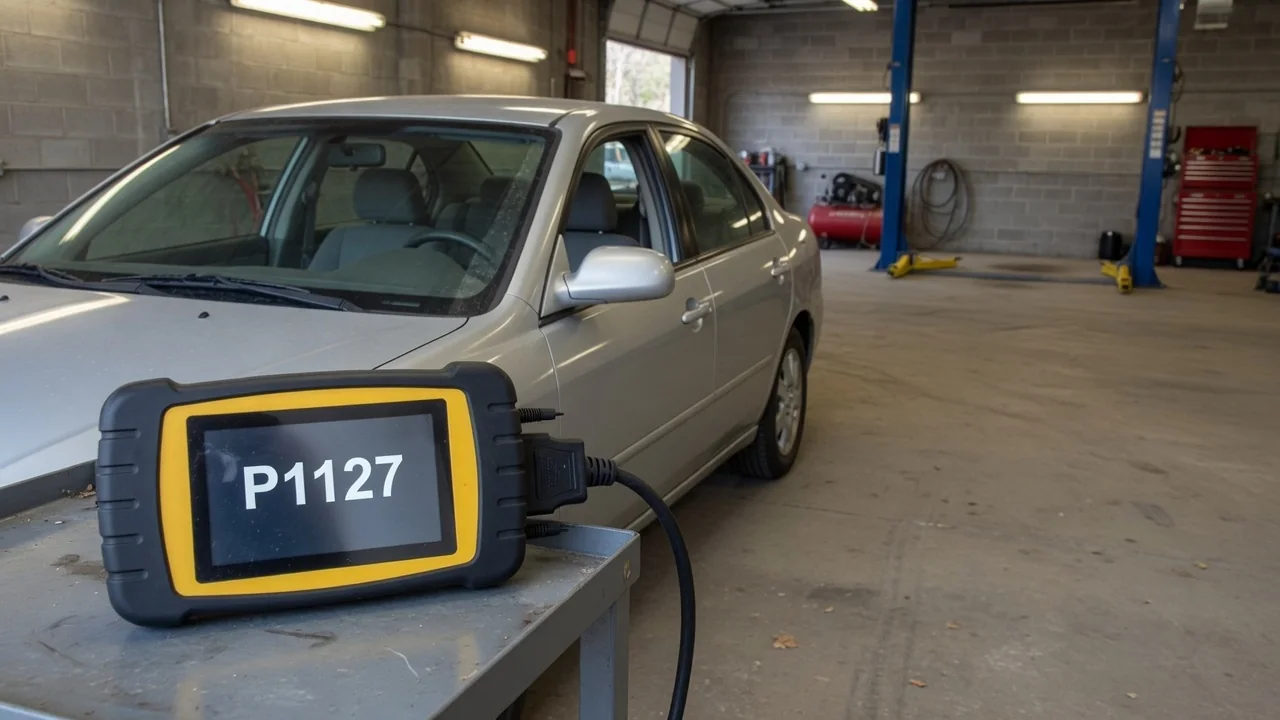
A P1127 code can point to different faults depending on the vehicle. Because this trouble code is manufacturer-specific, the powertrain control module in one model may report it for a throttle issue while another uses it for an oxygen sensor or fuel system problem. Reading the code with a generic scanner is only the first step. Vehicle identification and service information determine the exact meaning. Without that confirmation, any diagnosis or repair guess is premature.
Verify What P1127 Means for Your Vehicle
P1127 is not a universal OBD-II definition. Instead, the code meaning is assigned by the manufacturer, so the same number can describe unrelated conditions on different vehicles. Confirm the make, model, model year, engine, and even the reporting control module before accepting a generic scanner description. A powertrain control module may set P1127 for a closed-loop fuel fault on one application, while a transmission controller or another module could report the identical code for a separate issue.
Vehicle-specific service information is essential because the code definition includes the test conditions, sensor references, and subsystem involved. The repair procedure differs completely if P1127 refers to an oxygen sensor heater circuit versus a throttle actuator. Freeze-frame data, pending codes, and the exact wording stored in the module also matter. Relying on a generic code reader alone can lead to replacing the wrong part, so the confirmed definition comes before any parts decision.
Record Symptoms and Decide Whether to Keep Driving
Write down everything observed when the code appears: warning lights, cranking behavior, idle smoothness, hesitation, unusual noise, or whether the vehicle simply drives normally. A stored P1127 may set without any noticeable symptom, and by itself that does not indicate severity. The condition becomes more concerning when accompanied by stalling, severe shaking, a flashing check-engine light, overheating, or a strong fuel odor. Those signs suggest a misfire or catalyst-damaging condition that should stop the vehicle safely and get immediate attention.
Whether the car can be driven depends on the verified code meaning plus actual behavior. A manufacturer definition involving a secondary air injection fault is less urgent than a fuel trim or throttle control issue. If the code definition points to a system that could affect safe operation, avoid long trips until tested. Since P1127 can cover many different systems, the owner's manual guidance for an illuminated check-engine light is only a general fallback; the confirmed code interpretation sets the real risk level.
Identify Possible Causes After Confirming the Definition
Once the exact definition is confirmed, each potential cause must follow from that specific diagnostic procedure. If P1127 points to an oxygen sensor performance issue, possible causes could include a damaged sensor wire, poor connector contact, exhaust leaks, or contaminated fuel. But when the code definition is for a throttle position correlation, the relevant inputs are the accelerator pedal sensor, throttle body wiring, and powertrain control module signals. The code naming a sensor does not mean the sensor is bad; many sensor codes are caused by circuit or mechanical faults that alter the signal.
Electrical connections and wiring should be inspected only when the confirmed definition involves them. Look for signs of chafing, corrosion, pushed-back pins, or loose grounds with the vehicle off and cool. Sensor inputs often require scan tool data to compare against expected values, and mechanical operating conditions such as vacuum leaks or restricted exhaust are tested according to the service procedure. Avoid assuming the most common internet cause; a diagnostic test must prove the failure before replacing any component.
Save Scan Information and Make Safe Observations
Before clearing the code or disconnecting the battery, save every detail the scan tool offers. Record the exact code wording reported by each module, whether P1127 is stored or pending, and any accompanying diagnostic trouble codes. Freeze-frame data captures the engine temperature, fuel trims, rpm, and load at the moment the fault set. This information often shows whether the fault occurred only when cold, during acceleration, or under a specific condition, which guides later testing.
Note recent repairs, a weak battery, or unusual operating conditions when the warning first appeared, but do not treat timing as proof of cause. A code that appears after a repair may be related to disturbed wiring, or it may be coincidental. While the vehicle is off and cool, a careful owner can inspect accessible connectors and wiring for obvious damage, but probing wires, removing components, or taking measurements with the engine running should be left to a technician. The goal is preserving evidence, not performing a risky repair.
Understand What Professional Testing Must Establish
A professional diagnostic begins with the confirmed definition and the manufacturer's test sequence. The technician will use the exact P1127 definition to decide which subsystem to test first. Accompanying codes often create a diagnostic path; for example, a fuel system code stored alongside P1127 may direct attention to fuel pressure before sensor response. The recorded freeze-frame data helps the technician recreate the operating conditions under which the fault occurred, avoiding unnecessary component replacement.
Live sensor data and targeted tests must be compared against specifications from service information. A scan tool can show whether a sensor value is plausible under the current engine load and temperature. Electrical tests confirm continuity, resistance, and reference voltage. Mechanical tests such as smoke testing for vacuum leaks or backpressure measurement may be needed for certain P1127 definitions. The technician must establish a chain of evidence that separates the underlying fault from its effects before recommending replacement, and that evidence should be shared with the owner.
Choose an Evidence-Based Repair and Confirm the Result
Repair options depend on what testing proved. If a connector terminal was found corroded and cleaning restored a stable circuit, that may resolve P1127. If a sensor failed an electrical test or its live data remained implausible after circuit verification, replacement is justified. The estimate depends on the confirmed cause, needed parts, and access time; a throttle body removal costs far more than a connector repair. Clearing P1127 without repairing the verified fault only hides the code until the monitor runs again, so it does not demonstrate a fix.
After the repair, the technician should clear codes and perform the manufacturer's drive cycle or monitor conditions to see if P1127 returns. Follow-up scanning checks for pending codes and confirms that readiness monitors complete. The vehicle may need several drive cycles under varying conditions to verify the fix. If the same code reappears, the original diagnosis missed something, and further testing is required. A successful repair is not the code disappearing once, but the fault no longer setting after the applicable operating conditions are met.