P1125 Code: Vehicle-Specific Meaning, Diagnosis, and Repairs
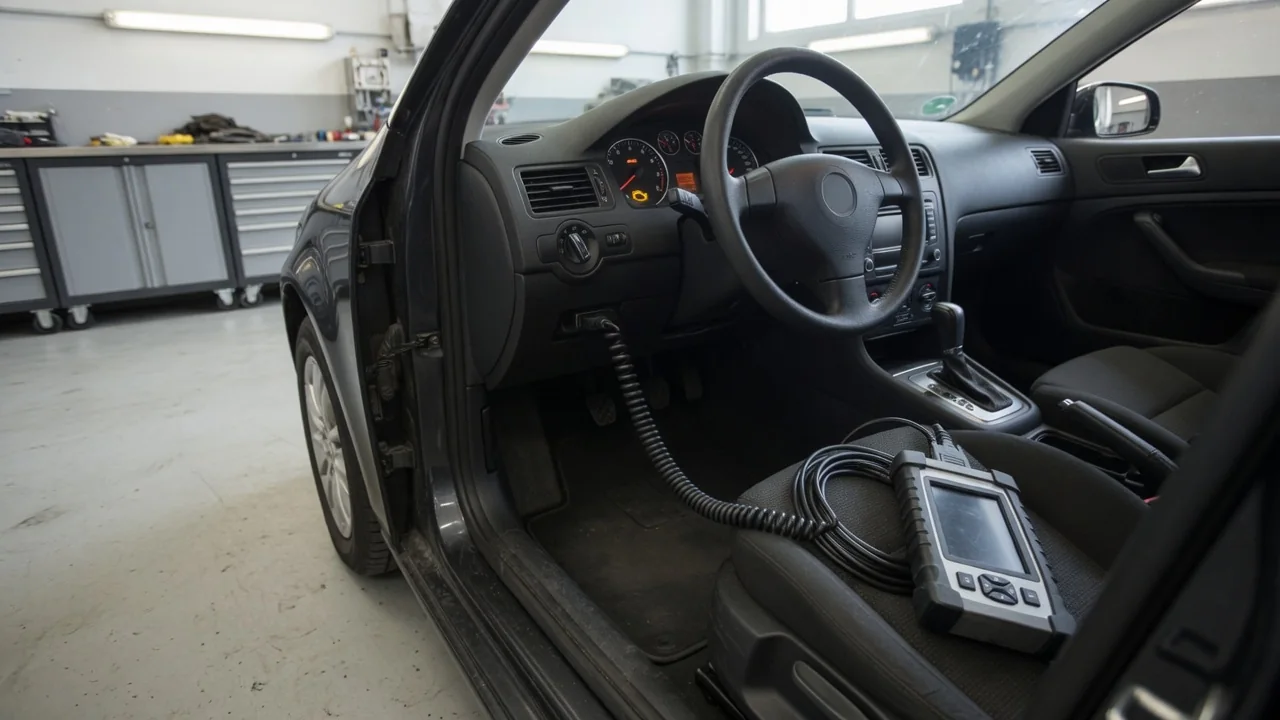
P1125 is a manufacturer-specific trouble code, so the p1125 code does not name one universal failed part. A scanner's brief label still depends on year, make, model, engine, and the maker's service information. Treat the stored condition as evidence to interpret with freeze-frame data and companion fault codes, not as proof a part must be replaced. Confirm that vehicle-specific code definition before diagnostic testing or repairs.
What P1125 Means for Your Vehicle
The p1125 code is a manufacturer-dependent powertrain code, which means it has no single universal component diagnosis. On one vehicle it may describe a throttle or pedal related condition; on another it may refer to a different powertrain circuit or control function. That variation is why year, make, model, engine, and the applicable manufacturer service information must be confirmed before anyone interprets P1125. Without that match, a generic code reader description can send testing toward the wrong system.
A scan tool often prints a short phrase next to P1125, yet that phrase may lack the detail needed to identify the affected system. The stored code records a detected condition at a moment in time; it does not establish which part needs replacement. Companion fault codes, freeze-frame data, and the vehicle-specific code definition together show what the control module actually flagged. Replacing a sensor, actuator, or harness on the strength of the number alone skips the diagnostic testing that separates a true fault from a related or secondary condition.
Symptoms to Record and When to Stop Driving
Symptoms tied to P1125 depend on the verified vehicle-specific definition, so there is no universal symptom list that fits every make. One application may illuminate the check engine light with little change in driveability, while another may display reduced engine power or alter throttle response. Record warning lights, starting behavior, idle quality, acceleration response, and any reduced-power message exactly as they appear. Those notes, plus whether the concern is constant or intermittent, help a technician match observed behavior to the confirmed system rather than to a generic code description.
The p1125 code by itself cannot establish whether continued driving is safe. Stalling, unpredictable acceleration, or inadequate power to move with traffic warrants stopping in a safe location and arranging assistance. A sudden loss of throttle authority or a limp strategy that leaves the vehicle unable to merge or climb can create a similar risk even if the engine still runs. If the vehicle still starts, idles, and accelerates in a predictable way, document the lights and driving notes and have the condition evaluated promptly rather than assuming the stored code is harmless.
Possible Causes Within the Confirmed System
Possible causes for P1125 should be organized around the manufacturer's diagnostic procedure for the exact vehicle, not around a shared parts list. Once the code definition is confirmed, wiring, connectors, electrical supply, sensors, or actuators may be relevant only when that definition supports them. A pedal position circuit on one model is not interchangeable with a throttle actuator or airflow related condition on another. Following the published path keeps testing inside the confirmed system and avoids treating every nearby component as a suspect.
Mechanical or control-related faults belong in the discussion only where vehicle-specific diagnostic information supports them. Binding linkage, a control module strategy, or a related powertrain function might appear in some service procedures and be absent from others. Frequency ranking is not a substitute for test evidence, and naming a failed component without measurements overstates what the stored code shows. The p1125 code remains a recorded condition until circuit, signal, or mechanical checks specified for that vehicle confirm or rule out each candidate.
Safe Observations Before a Diagnostic Appointment
Before codes are cleared, save the full scan report, code status, and available freeze-frame data. Those records preserve operating conditions the control module associated with P1125, including engine speed, load, temperature, and related values when they are present. Note whether the fault appeared during startup, idling, acceleration, or another identifiable operating condition. Recent repairs, battery problems, and intermittent behavior are useful history, yet they should be recorded without assuming they caused the code.
Owner inspection should stay limited to readily visible concerns with the vehicle parked and the engine off. Loose connectors that can be seen without probing, damaged insulation in an exposed harness, or an obviously displaced air intake duct may be worth noting for the appointment. Leave probing, disassembly, and actuator operation to a professional, because those steps can create new faults or disable a reduced-power strategy in an unsafe way. Bring the saved scan information and driving notes so diagnostic testing can start from the stored evidence rather than from a cleared memory.
How Professional Testing Narrows the Fault
Technicians begin by confirming the vehicle-specific meaning of P1125 and reviewing companion fault codes before choosing tests. Related codes can show whether the same operating condition affected more than one circuit or whether a second system set a related flag. Freeze-frame information and relevant live data then place the fault in context, such as a particular throttle request, engine load, or temperature range. That comparison often reveals whether the stored condition is present now or only appeared under a brief set of conditions.
Circuit, signal, or mechanical testing follows the vehicle's service procedure and requires appropriate equipment, including a capable scan tool and, when specified, a meter or oscilloscope. A single scan cannot prove a component has failed, because wiring, supply voltage, a connector, or a control decision can set the same report. An intermittent p1125 code may need further observation under the conditions captured in freeze-frame data. Repair verification later depends on repeating those conditions rather than on a key cycle that shows no current code.
Repair Options and Confirmation That the Fault Is Resolved
Repair choices for P1125 should follow confirmed findings, such as correcting a connection, repairing a circuit, or replacing a tested faulty component when those results apply. Programming, setup, or relearn procedures are vehicle-dependent and should be performed only when the service information specifies them after a particular repair. Installing a new sensor or actuator without those steps can leave the same code present even when the hardware is sound. Matching the repair to measured results keeps parts replacement from becoming a guess based on the scanner label.
Clearing the p1125 code alone does not repair its cause. After the confirmed work, verification of normal operation and a follow-up scan under suitable conditions are required, ideally matching the freeze-frame operating range when that data was saved. Check engine light status, reduced engine power messages, idle quality, and acceleration response should match expected behavior for that vehicle. If the code returns, further diagnosis is needed rather than repeating the same replacement. Repair verification is complete only when the condition no longer sets under the relevant drive conditions.