P1122 Code: Verify Its Meaning, Symptoms, and Repair Options
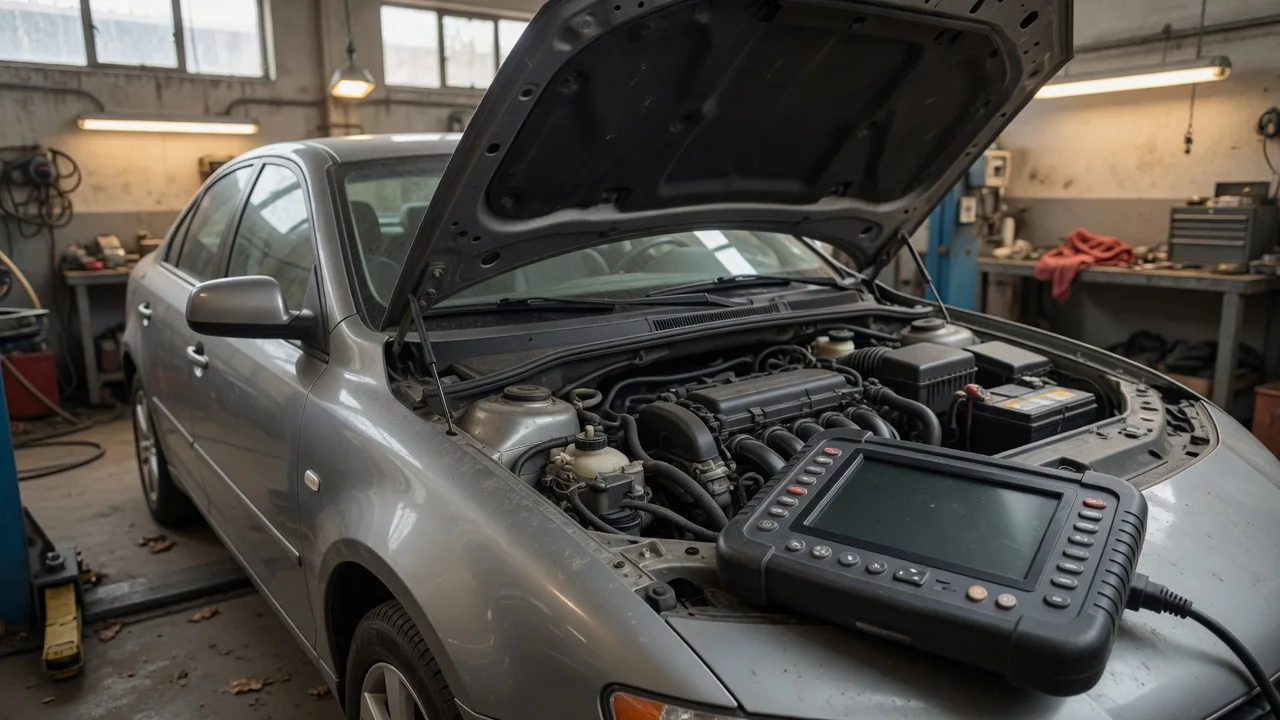
P1122 is a manufacturer-specific diagnostic trouble code, so it does not carry one shared meaning across every year, make, and model. A scanner may show a generic label for the P1122 code, but that text alone does not confirm the circuit, component, or operating condition involved. Confirm the definition and diagnostic path in vehicle-specific service information before treating lights, driving changes, or a stored code as proof of a failed part.
Verify What P1122 Means for Your Vehicle
P1122 belongs to the manufacturer-specific trouble code range. Unlike many standardized powertrain codes, it has no single definition that applies to every vehicle. The same P1122 code can point to different systems depending on the maker, and even two engines from the same brand may not share the same description. Year, make, model, engine, and any relevant configuration such as transmission or emission package are required before anyone interprets the stored identifier.
Vehicle-specific service information is the source that verifies the exact wording and the diagnostic procedure tied to that wording. A scan tool's generic text label can be incomplete, outdated, or written for a different application, so it should not be treated as the confirmed meaning or as identification of a failed part. Until the applicable definition is checked, P1122 remains a stored request for diagnosis rather than a parts list. Diagnostic testing then follows the procedure written for that vehicle.
Symptoms to Record When P1122 Appears
Symptoms associated with a P1122 code depend on the verified meaning for that vehicle, so they should be recorded rather than assumed. Note whether the check engine light is steady or flashing, whether pending codes or additional diagnostic trouble codes are present, and any change in starting, idle quality, available power, or accelerator response. Those observations help a technician match driving behavior to the system named in service information. They are not universal P1122 symptoms that apply to every manufacturer.
Record when the concern appears: at startup, after warm-up, during acceleration, or only under intermittent driving conditions. A vehicle that still seems to drive normally does not establish that a stored code is harmless, because some faults set P1122 without an obvious change in feel. If the vehicle stalls, loses usable power, or responds unpredictably to accelerator input, stop in a safe location and arrange assistance rather than continuing to drive. Unpredictable throttle or power loss is a safety issue, not a wait-and-see observation.
Possible Causes Must Follow the Confirmed Definition
Possible causes of P1122 should be organized around the circuit, component, or operating condition named once the definition is confirmed. Wiring and connectors, power or ground faults, and component faults belong in that discussion only where the applicable diagnostic procedure supports them. A code that names a sensor or actuator is evidence that the control module saw an out-of-range condition in that path; it does not prove the named part has failed. The failed item may be the wiring, a supply, another related device, or the module's interpretation of data.
Ranking likely causes by how often they appear on other vehicles is not a substitute for vehicle-specific evidence. Replacing a part because the P1122 code mentions it, without testing called out in service information, can leave the original fault in place and add an unnecessary repair. Diagnostic testing is what separates a damaged harness, a poor connector, a supply problem, and a component that actually failed. Until those steps are completed, treat listed causes as hypotheses, not as a shopping list.
Safe Checks and Information to Save Before Service
Before any clearing or battery disconnect, record the full scanner description of P1122, every accompanying diagnostic trouble code, and code status when the tool reports it, including pending codes. Freeze-frame data captures operating conditions at the moment the fault was stored and can be lost if codes are erased or power is removed. Save that snapshot along with recent repairs, battery issues, and the circumstances when the warning first appeared, without assuming any of those events caused the code.
Owner checks should stay limited to visible concerns with the vehicle parked and the engine off. Look for obvious damage, disconnected connectors that can be seen without reaching into the engine bay, or warning messages already displayed. Do not probe wiring and connectors, run powered component tests, or work near hot or moving parts. Those steps belong to diagnostic testing under vehicle-specific service information. The useful owner contribution is a complete record of lights, driving changes, and stored data, not an attempt to confirm a failed part at home.
How Professional Testing Narrows the Fault
A technician starts from the verified P1122 definition, accompanying codes, freeze-frame data, and the manufacturer diagnostic sequence for that application. Those sources decide which circuit, supply, or component tests are relevant and which ones would waste time on the wrong system. Checking circuit integrity and power or ground supply is often specified so the path can be proven before a part is condemned. The purpose is to confirm whether the module is seeing a true circuit problem, a supply issue, or a component that is not responding as commanded.
When the applicable procedure calls for it, live data and component-response checks show how the affected system behaves while running, which a stored P1122 code cannot show by itself. Intermittent faults complicate that picture: one normal reading, a temporarily restored connection, or an absent symptom during the visit may leave the cause unresolved. Returning conditions, duplicated freeze-frame data, and repeated diagnostic testing under the same operating conditions are often needed. A single good measurement does not close the case if the code or the driving concern can still return.
Repair Options and Confirmation That P1122 Is Resolved
Repair options follow confirmed findings, such as an affected wiring connection, a power or ground supply fault, or a component that failed the tests specified for that vehicle. Before any replacement, verify part fitment for the year, make, model, and engine, and check whether programming or a relearn is required after installation. Installing an unconfirmed part because the P1122 code named it does not complete the repair. Clearing P1122 turns off stored evidence and may extinguish the check engine light, but it does not repair the underlying fault.
After work is finished, confirmation uses the applicable verification procedure in service information, a review of the original symptoms, and a check for returning codes, including pending codes. Drive conditions that match freeze-frame data often belong in that confirmation so the module can retest the same operating range. An estimate depends on the vehicle, diagnostic labor, and confirmed repair needs; it cannot be stated as a current price without those details. Resolution means the fault no longer sets and the vehicle behaves correctly under the conditions that first stored P1122.