P1121 Code: Verify Its Meaning, Causes, and Repair Options
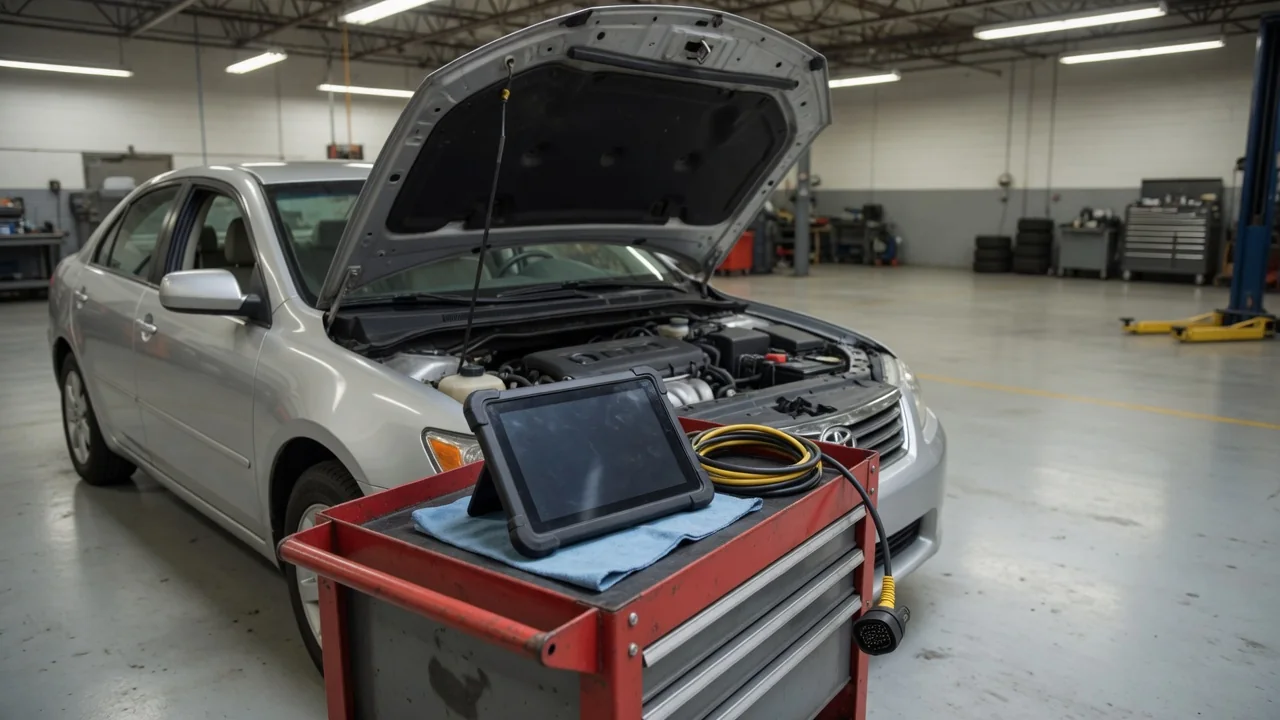
P1121 is a manufacturer-specific diagnostic trouble code, so its meaning is not the same on every vehicle. Before treating a scanner label as a diagnosis, confirm the make, model, year, engine, and vehicle service information that apply to your car. The P1121 code reports a detected condition; it does not identify a failed part. Symptoms, causes, and repair options only become useful after that verification.
Verify What P1121 Means for Your Vehicle
Unlike many standardized powertrain codes, P1121 is a manufacturer-specific trouble code and does not point to one universal component or fault. On one vehicle it may describe a circuit or control condition, while another maker may assign it to an entirely different system. That is why the same P1121 code cannot be interpreted from a generic list. You need the vehicle make, model, year, engine, and the applicable vehicle service information before you decide what the control module actually reported.
A scan tool short description or an online code label is only a starting clue. Those summaries often omit module, strategy, and condition details that change the diagnostic path. The stored P1121 identifies a condition the control module detected against its programmed criteria; it does not establish which part needs replacement. Interpreting the code without manufacturer confirmation can send testing toward the wrong circuit or assembly. Confirm the definition first so later inspection, data review, and repair decisions follow the procedure written for that vehicle.
Document Symptoms and Decide Whether to Keep Driving
Symptoms tied to P1121 depend on the verified vehicle-specific meaning, so no single complaint list applies to every car. Record whether the check engine light is on, flashing, or accompanied by a displayed message. Note drivability changes such as hesitation, uneven idle, reduced response, or unusual operating behavior, and whether they appear at startup or only after the engine warms. Write down when the condition began and under what speed, load, or temperature it repeats. That record later helps match symptom timing to the confirmed diagnostic procedure.
The presence of P1121 alone cannot establish whether continued driving is safe. Some manufacturer definitions describe conditions that mainly illuminate a warning, while others may coincide with reduced performance or unstable running. If the vehicle overheats, loses substantial power, stalls, or otherwise compromises safe operation, stop in a safe location and seek assistance rather than continuing. For milder warnings with stable control, document the symptoms and have the definition confirmed promptly. Treat drivability and temperature behavior as the practical safety guide, not the code number by itself.
Preserve Scan Data Before Clearing the Code
Before erasing anything, record the exact P1121 description shown by the scanner, the reporting module, and whether the status is pending, confirmed, or permanent. Pending codes can show a condition that has not yet matured into a stored fault, while a confirmed or permanent status indicates the module has already met its set criteria. Capture freeze-frame data as well, because those snapshots of operating conditions at the time of detection often guide later testing. Accompanying codes belong in the same notes so related systems are not overlooked.
Also document recent repairs, battery disconnections, and when symptoms began, without treating those events as proof of a cause. A battery reset can erase volatile memory or change learned values, and a recent service may coincide with the code without explaining it. Clearing the P1121 code removes freeze-frame data and status history that technicians use to reconstruct the event. Erasing a diagnostic trouble code does not repair the underlying fault; it only hides evidence until the condition returns. Preserve the record first so diagnosis can start from facts rather than from a blank screen.
Narrow Possible Causes Using the Verified Definition
Cause discussion should wait until the applicable system and manufacturer diagnostic procedure are identified. Only after that verification does it make sense to consider wiring, connectors, sensor signals, actuators, or mechanical conditions, and only where the verified fault definition supports those items. A wiring and connector inspection may be relevant for a circuit-related P1121, yet it would be a poor first assumption if the confirmed description points to a mechanical or control-strategy condition. Using the published path keeps testing aligned with what the module actually monitored.
Accompanying codes and symptom timing can narrow what to test without proving a specific failure. A related sensor or actuator code stored with P1121 may suggest a shared circuit or operating condition, while a complaint that appears only after warmup can shift attention toward temperature-dependent behavior. None of that evidence identifies a failed part by itself. Avoid claims about the most common cause, and do not recommend a replacement part based solely on P1121. The code is a condition flag; parts are replaced only after the applicable tests confirm they do not meet specification.
Separate Safe Observations From Professional Testing
Owner checks should stay limited to recording symptoms and looking at accessible areas with the vehicle parked and the engine off and cool. You can document visible damage, loose connectors that can be seen without reaching into hot or moving areas, or leakage that is apparent from a safe vantage. Do not disconnect components, probe circuits, or reach near belts, fans, or hot parts. Those observations add useful context, but they are not a substitute for the manufacturer diagnostic procedure once the P1121 definition is confirmed.
Technicians may need manufacturer wiring diagrams, live data, circuit measurements, or commanded component tests, depending on the verified definition. That work is meant to establish the cause before any repair is chosen. Bypasses, live electrical procedures performed without the published method, and any attempt to open a hot cooling system are not appropriate owner steps and can create additional hazards. Professional testing should follow vehicle service information for that make and model so measurements match the circuit the module actually used to set P1121.
Choose a Supported Repair and Verify the Result
Each repair option should follow confirmed findings rather than the code number. If testing shows damaged wiring or a connector fault, repair that circuit. If a component fails the applicable manufacturer tests, replacement of that part becomes a supported option. Calibration, relearn, or software work belongs in the plan only when the vehicle-specific procedure requires it after the repair. Choosing a part because P1121 appeared, without those results, leaves the original condition unaddressed and can add unrelated work.
Repair verification uses the prescribed post-repair checks, a review of the original symptoms, and a follow-up scan for P1121 and related codes. An extinguished check engine light immediately after clearing codes does not establish a successful repair, because the warning can stay off until the module runs the same monitor again. If P1121 returns, further diagnosis is required rather than repeating the same replacement. Confirm that the reporting module no longer sets the condition under the operating circumstances captured in the original freeze-frame data.