P1120 Code: Vehicle-Specific Meaning, Diagnosis, and Repairs
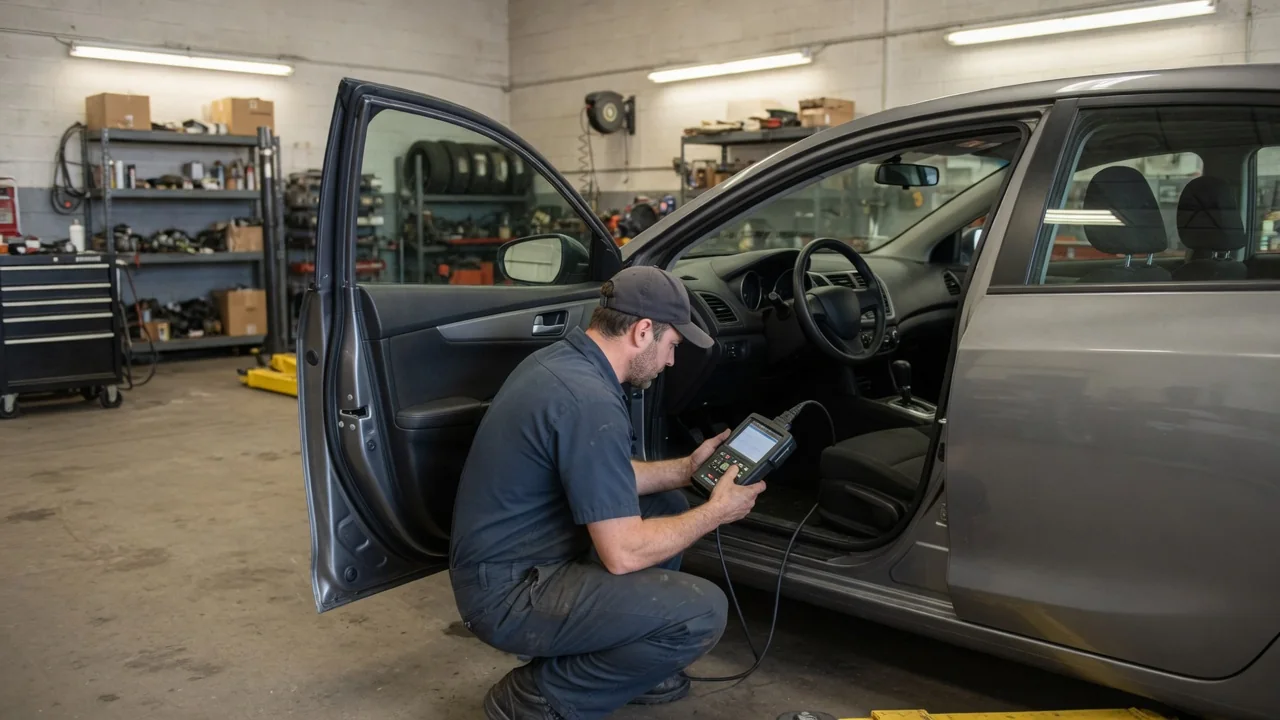
The P1120 code is a manufacturer-controlled powertrain diagnostic trouble code, not a single SAE generic definition that applies to every vehicle. Before treating a scan as a diagnosis, confirm what P1120 means for the exact make, model, model year, and engine using vehicle service information. A diagnostic scan tool may display a short label, but that label can be incomplete. Use freeze-frame data, companion codes, and the verified definition to decide what the monitored system actually is.
Verify What P1120 Means for Your Vehicle
P1120 is a manufacturer-specific trouble code, so its meaning is assigned by the vehicle maker rather than by a universal powertrain list. Two vehicles can store the same P1120 code and still be monitoring different circuits, sensors, or control functions. To find the correct definition, identify make, model, model year, engine family, and the VIN when the service information is split by calibration or market. Until those details match the published description, do not name the monitored system or assume a parts list.
A generic scanner description for P1120 can be incomplete, truncated, or borrowed from another application. Some tools show a broad throttle, pedal, or sensor phrase that does not match the setting conditions in the factory procedure. Vehicle service information is required before interpreting enable criteria, fail thresholds, or the diagnostic path. That documentation also identifies related monitors and whether the code is current, pending, or history. Without it, a short P1120 label is only a starting flag, not a confirmed system name.
Symptoms to Record and When to Stop Driving
An illuminated warning light may be the only noticeable sign when P1120 is stored. Drivability effects depend on the verified code meaning and on how the control module responds, so hesitation, irregular idle, reduced power, or unexpected accelerator response should be recorded if they appear, not treated as proof of a particular part. Note whether the concern shows at startup, after the engine warms, during light throttle, or under load. Do not deliberately recreate unsafe behavior to gather more examples.
If acceleration becomes unpredictable, the engine stalls repeatedly, or the vehicle cannot be kept under safe control, stop as soon as it is safe and arrange professional assistance. A stored P1120 code does not by itself tell a driver whether the vehicle will continue to respond normally. Record what the warning lamps showed, whether power felt limited, and the driving conditions at the time. Those notes help a technician compare observed behavior with freeze-frame data without asking the driver to repeat a hazardous situation.
Possible Causes After the Code Definition Is Confirmed
Once the P1120 definition is confirmed, possible causes should follow that system and the manufacturer diagnostic procedure rather than a universal parts list. Wiring and connector faults, including damaged insulation, loose terminals, corrosion, or poor power and ground, can distort a monitored circuit and set the same code as a failed component. Mechanical or sensor faults belong in the discussion only when the vehicle-specific description and tests point to them. The stored code identifies a detected condition, not the part that must be replaced.
Companion codes often narrow the field by showing whether the module also saw a related circuit, range, or performance concern. A technician uses those codes with the confirmed P1120 meaning to decide which circuit, actuator, or mechanical path to inspect first. Replacing a sensor or throttle-related part because the scanner used similar wording is a guess, not a diagnosis. Until testing supports a failed component, treat wiring, connectors, supplies, and the monitored hardware as competing explanations that must be sorted with the published procedure.
Safe Checks and Information to Preserve
Before clearing anything, record the exact P1120 code, the scanner description, code status, companion codes, and any freeze-frame data. Freeze-frame snapshots capture operating conditions when the fault was detected and can later be compared with live sensor data. Recent repairs, battery voltage problems, and the timing of symptoms supply context without proving a cause. Clearing codes or disconnecting the battery too early can erase pending status, freeze-frame, and related history that a technician needs to choose the correct tests.
Owner observations should stay limited to safely accessible visual checks with the vehicle off. Look for obvious damage, disconnected connectors, or disturbed harnesses near the system named in the confirmed definition, without probing live circuits. Note any aftermarket devices spliced into related wiring. Those observations are clues, not a completed diagnosis. Clearing P1120 to see if it returns does not confirm a repair and may force the monitor to run again without the original evidence that explained how the condition set.
How Professional Testing Narrows the Fault
A technician starts with the vehicle-specific diagnostic procedure and reviews companion codes before choosing tests. That sequence usually compares stored freeze-frame with live sensor data, then checks circuit integrity and signal quality against manufacturer specifications. When P1120 points to a monitored circuit, those comparisons help separate an out-of-range reading from a wiring or connector problem. Related codes can change the test order, because a shared power, ground, or communication fault can set more than one trouble code at the same time.
An intermittent P1120 may not be present during a short test drive, so the technician may review recorded conditions, inspect connectors, and look for harness movement or moisture rather than replacing a part immediately. Electrical probing, actuator operation, and other invasive tests belong in a shop with the correct diagrams and safety practices. Bypass methods and improvised jumper checks are not a substitute for the published procedure. The goal is to confirm whether the detected condition is still active and which circuit or component actually produced it.
Repair Options and Evidence That the Fault Is Resolved
Repair options follow confirmed findings. Those findings may support connector service, wiring repair, correction of a power or ground supply fault, or replacement of a component that failed the specified tests. Programming, calibration, or relearning should be considered only when the applicable service procedure requires it after the repair. Installing a new part because P1120 appeared is not a repair strategy. The work performed should match the verified system and the test results, not a generic list of throttle or pedal parts.
Repair verification is more than watching a warning light go out. After the work, a rescan should confirm that P1120 and related companion codes do not return, and relevant operating data should be reviewed under safely evaluated conditions. An extinguished lamp alone is insufficient evidence of a lasting repair, because a monitor may not have run or the original condition may still be intermittent. Cost estimates depend on diagnostic findings and repair scope, which cannot be stated as a fixed figure from the code number alone.