P1105 Code: Verify the Meaning, Diagnose the Cause, and Plan Repairs
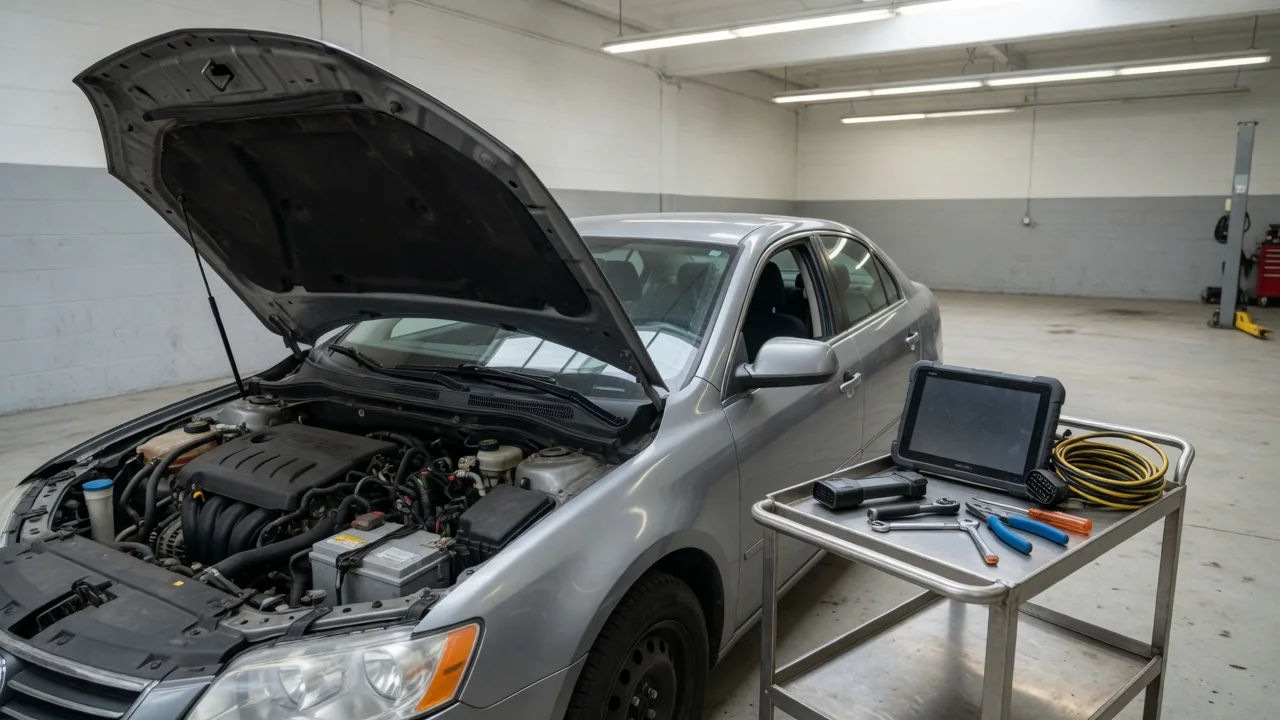
A P1105 code can leave you guessing because it means different things on different vehicles. Unlike a universal OBD-II definition, P1105 is manufacturer-dependent, so the alarm on your dash points to a broad issue that needs precise interpretation. Before assuming you know what failed, you must verify the code against your exact year, make, model, and engine. The right diagnostic path starts with confirming the vehicle-specific meaning.
Verify What P1105 Means for Your Vehicle
P1105 is not a single, standardized fault that applies to every car. Some manufacturers use it for one subsystem while others assign it a completely different monitoring circuit. The same code could relate to a fuel pressure reading on one model and a MAP sensor plausibility check on another. This variation means any generic description from a basic scan tool may not match your vehicle. The first step is always to look up the P1105 definition in the service information for your specific VIN, engine calibration, and production date. Without that confirmation, you are working with an unverified label rather than a diagnosis.
Once you have the correct definition, remember that a trouble code identifies a detected condition, not a broken part. The engine control module sets P1105 when a monitored value falls outside an expected range, but that range can be influenced by several factors. A generic scanner description may mention one suspected component, yet the real problem could be in the wiring, a vacuum line, or a calculation error caused by another sensor. Replacing a part based solely on the code number often leaves the light on. Confirm the exact system and detection criteria for your vehicle before drawing any conclusions about what needs attention.
Symptoms to Record and Signs to Stop Driving
The symptoms that accompany P1105 depend entirely on the system your vehicle monitors. Some drivers see a steady check engine light with no obvious difference in how the car runs, while others experience hard starting or rough idle. Because the code can point to fuel control, boost pressure, or another engine management function, the impact on drivability varies widely. Pay attention to any hesitation, reduced power, or unusual noise during acceleration, but do not assume every P1105 triggers the same behavior. Recording exactly what you feel helps a technician connect the code to a real-world symptom instead of chasing a stored number in isolation.
Write down when the concern appears: right after a cold start, only after the engine reaches operating temperature, or under steady highway load. These details can reveal whether the fault is intermittent or always present. Do not intentionally create unsafe conditions to reproduce a stall or power loss. If the engine cuts out repeatedly, lacks enough power to keep up with traffic, or the check engine light begins flashing, stop driving as soon as it is safe. A flashing light signals a condition that can damage the catalytic converter or cause immediate drivability failure. Severe symptoms call for a tow rather than continued testing on the road.
Potential Causes After the Definition Is Confirmed
After you confirm the vehicle-specific P1105 definition, potential causes become more focused. Look at the system identified in the service information and consider the inputs that affect its operation. For example, if the code relates to a fuel pressure sensor, a wiring harness with damaged insulation could produce the same out-of-range signal as a failing sensor. Loose or corroded connectors, missing grounds, or a weak power feed create resistance that shifts voltages enough to set a code. Do not ignore the physical path between a sensor and the control module. Even the best component cannot report correctly if its circuit is compromised.
A monitored value can also be driven out of range by a problem in another system. Low fuel pressure caused by a restricted filter or a tired pump can make a perfectly good pressure sensor send a reading that the computer interprets as a fault. Likewise, an air leak downstream of a mass airflow sensor changes air-fuel calculations and may push a related sensor beyond its target window. The code names one observable condition, not the root cause. That is why a technician must test each part of the chain: the wiring, the supply voltage, the reference values, and the actual system state, not just replace the named sensor.
Safe Observations to Make Before a Shop Visit
Before you visit a shop or clear the code, save all the information the scanner provides. Write down or photograph the freeze-frame data, including engine speed, coolant temperature, vehicle speed, and fuel trims at the moment P1105 was set. Note whether the code is current, pending, or stored, and list any companion codes. These companion codes can reveal a shared power supply or a common ground that fails under load. Do not erase the code just to see if it returns; you will delete the freeze-frame evidence that helps a technician reproduce the condition. The raw data is often more valuable than the code number alone.
Document anything that happened just before the light came on: recent battery replacement, jump-start, sensor replacement, or even a full fuel tank from a different station. These events provide context, but they are not proof of cause. Perform only visual inspections with the vehicle parked, engine off, and the key removed. Look for obviously loose connectors, cracked vacuum lines, or signs of rodent damage in accessible areas. Do not reach near hot exhaust parts, disconnect pressurized fuel lines, or probe electrical connectors with a multimeter unless you have the specific service procedure and training. Your notes and safe observations give the technician a head start without risking injury or introducing a new fault.
Professional Tests That Can Identify the Fault
A professional diagnosis begins with the confirmed P1105 definition and the recorded freeze-frame data. The technician checks whether the conditions captured in the freeze frame match the fault description. For example, if the code set at idle with a cold engine, they will recreate that state while watching live data. They compare your sensor readings or calculated values against the manufacturer’s specification for that exact operating point. There is no universal good or bad number for every vehicle; the target changes with engine load, temperature, and altitude. Live data comparison is the cornerstone of accurate fault finding.
Beyond scan data, the technician may test circuit integrity with a digital multimeter, scope, or load tester following vehicle-specific service procedures. An intermittent connection can pass a simple continuity test and fail under vibration, so the diagnosis may include wiggling a harness while watching the scan tool. For a component that reports a fluid or air value, they might use a mechanical gauge to verify actual pressure against the sensor’s reported value. Underlying system conditions, such as low fuel delivery or a leaking exhaust before an oxygen sensor, also require targeted checks. Ask for the measured values and the specification when a repair is proposed; that evidence separates a confirmed fault from a guess.
Choose a Repair and Confirm the Result
The correct repair follows the confirmed test results. If a wiring fault is found, the fix may be as simple as re-terminating a connector or splicing a damaged wire using approved methods. A failed component should be replaced only after testing shows it does not meet specification. Even then, part fitment must match your exact VIN and engine. One P1105 definition may involve a pressure sensor, while another points to a vacuum switching valve; the part number is not interchangeable just because the code is the same. Never order a replacement part based solely on the code number.
After the repair, the technician should clear the code, perform a rescan, and run the manufacturer’s readiness monitors or the specific functional test for the repaired system. The work is not complete until the original fault condition is gone. Clearing the code or disconnecting the battery only hides the symptom; the computer will rerun its monitor and set P1105 again if the root cause remains. Confirm that the freeze-frame data no longer recreates the out-of-range value and that the check engine light stays off over several drive cycles. Repair cost depends on diagnostic time, part accessibility, and the confirmed fault, but a verified fix is always cheaper than repeated guessing.