P1102 Code: Verify Its Meaning, Symptoms, and Repair Path
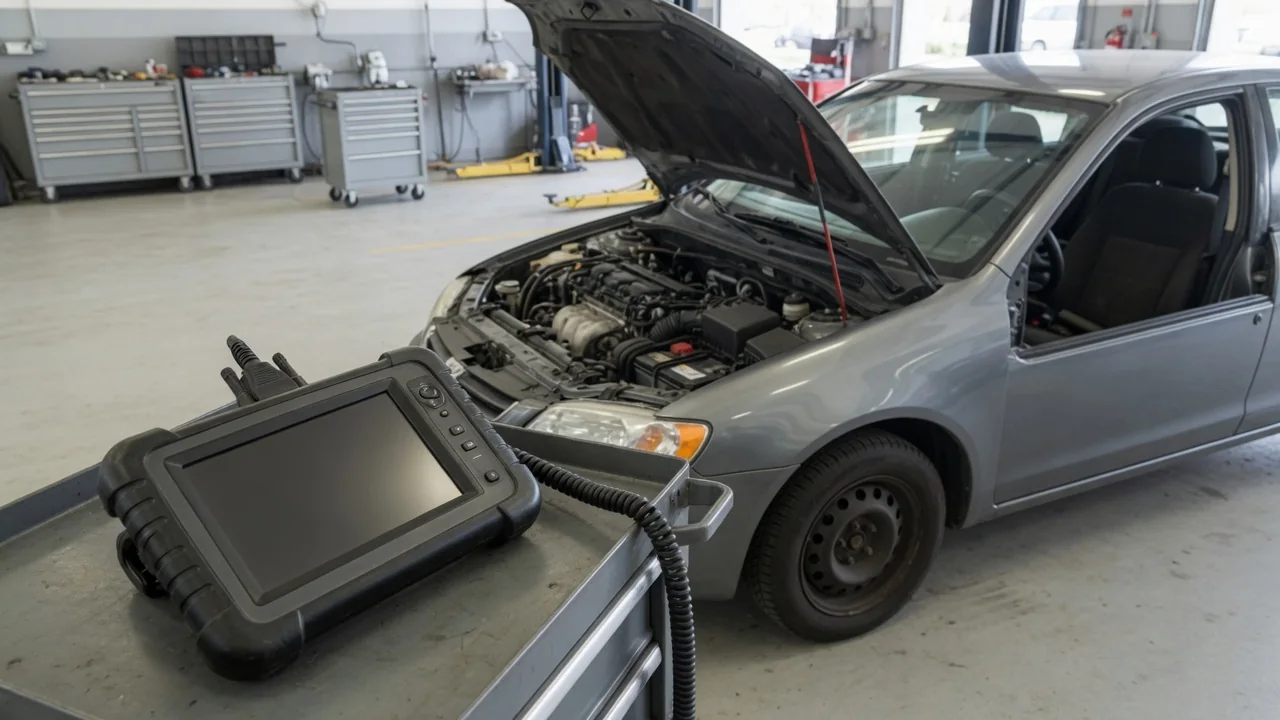
A P1102 reading on your scan tool is not a single, universal verdict. Unlike standardized OBD-II codes, P1102 is manufacturer-specific, and its meaning changes with the vehicle platform and engine calibration. Before pursuing symptoms or repairs, the code must be verified against the exact make, model, model year, engine, and sometimes the vehicle identification number. Jumping to a part replacement based on a generic scanner message can waste time and money. This guide walks through the verification and diagnostic path that turns a confusing code into a sound repair decision.
Verify What P1102 Means for Your Vehicle
P1102 exists in the manufacturer-defined range where each automaker assigns its own meaning. A definition valid on one vehicle may point to a completely different circuit or condition on another. To verify the code, you need the make, model, model year, engine option, and in some cases the full vehicle identification number. These details let you pull the correct service information, which is the only reliable source for setting conditions and diagnostic steps. Without this lookup, any interpretation of P1102 is speculation.
A scan tool often displays a short description such as 'manifold absolute pressure sensor circuit low' or a reference to a cooling system component, but that text is derived from a generic database or a limited lookup. It does not confirm which part is faulty or that a component needs replacement. Manufacturer service information establishes the exact meaning, the enabling criteria, and the prescribed test sequence. Rely on that verified definition rather than a convenient but potentially misleading label.
Document Symptoms and Decide When to Stop Driving
Before assuming the severity of a P1102, document what the vehicle is actually doing. Record whether the check engine light is on steady or flashing, and note any starting difficulty, rough idle, hesitation, stalling, or unusual sounds. Many vehicles show no noticeable change in drivability. Also capture when the symptoms occur: at cold startup, at idle, under acceleration, or after the engine reaches operating temperature. These observations become valuable when compared against the code's verified setting conditions.
Driving advice depends entirely on the confirmed code meaning and the current behavior of the vehicle. If the car runs normally and the light is steady, you may be able to drive cautiously to a repair facility after recording the code. However, stop safely and seek assistance if you experience severe power loss, repeated stalling, a flashing check engine light indicating possible misfire, or any urgent warning that compromises control. No single rule applies to every P1102, so let verified information and real symptoms guide your decision to keep driving.
Record P1103, P1104, and P1105 Without Assuming a Shared Fault
Searches for P1103, P1104, and P1105 often accompany queries about P1102, but their numeric proximity does not mean the codes share a cause or even appear together. Each of these is also manufacturer-specific and must be verified against the same vehicle information. Do not assume that finding one of these codes alongside P1102 points to a common component or a simplified diagnostic sequence. Adjacent code numbers do not establish any relationship in the vehicle's control system.
If a scan actually shows additional codes such as P1103, P1104, or P1105, record their exact descriptions and status—stored, pending, or permanent—along with the control module that reported each one. A technician needs this full record to decide which code is primary and which may be a consequence of another fault. Treat every code as a separate lookup need, and avoid grouping them into a single 'P110x' problem. Only verified service information can reveal whether any interaction matters for diagnosis.
Preserve the Details of P1106, P1107, and P1108
P1106, P1107, and P1108 are no more universal than P1102. Each requires its own manufacturer-specific definition before you can act on it. Capture the complete scan report, including which module set each code, whether it is stored or pending, and the exact freeze-frame data if available. Freeze-frame records engine speed, coolant temperature, fuel trims, and other parameters at the moment the fault was detected. Those values often expose the operating conditions that triggered the code.
Preserve freeze-frame data before clearing codes or disconnecting the battery. Once wiped, that information cannot be recovered, and a technician loses a critical clue. If you must clear a code to continue driving, save a photo or written copy of the entire report first. During diagnosis, the technician will compare the verified definitions and setting conditions for P1106, P1107, and P1108 against the P1102 record. That comparison reveals whether one code is a root fault, a secondary reaction, or an unrelated stored event.
Narrow the Causes With Safe Observations and Professional Tests
With a verified P1102 definition in hand, you can narrow the likely causes instead of guessing from a generic list. If the service information identifies a specific circuit, sensor, or monitored condition, use that guidance. For example, a low-voltage reading on a manifold pressure circuit might point to wiring, a connector, or a sensor—but only the prescribed test sequence can isolate which. Keep any proposed cause tied to the exact setting conditions for your vehicle and code version.
At home, limit yourself to safe observations: note recent maintenance, such as a replaced sensor or disturbed harness, and visually inspect accessible areas with the vehicle parked and engine off. Do not unplug connectors, probe wires, or dismantle components without the proper procedure. Professional circuit testing, live-data analysis, and component activation are needed when the service information calls for them. Each test resolves a specific uncertainty—whether signal voltage is present, whether a ground is intact, or whether a monitored value reacts correctly to known inputs.
Choose a Confirmed Repair and Verify the Result
A repair should follow directly from a failed test or a confirmed observation. If a connector is corroded and the circuit test proves continuity after cleaning, that repair is justified. If a sensor fails its specified resistance or voltage test, replacement is supported. Do not replace a part only because its name appears in the P1102 description. A manifold pressure code does not automatically mean a bad pressure sensor, just as a cooling system code does not always demand a new thermostat. The verified diagnostic sequence tells you what to replace.
After the repair, verify the result using the applicable service procedure. This usually means clearing the code, performing the drive cycle or enabling conditions, and scanning again to confirm the code stays away. The original symptom—rough idle, stumble, or whatever was recorded—must also resolve. Clearing the check engine light alone is not proof. If the code returns or the fault is intermittent, further diagnosis is required under the same verified definition, because the root cause may lie elsewhere in the circuit or operating conditions.