P1100 Code: Vehicle-Specific Meaning, Diagnosis, and Repairs
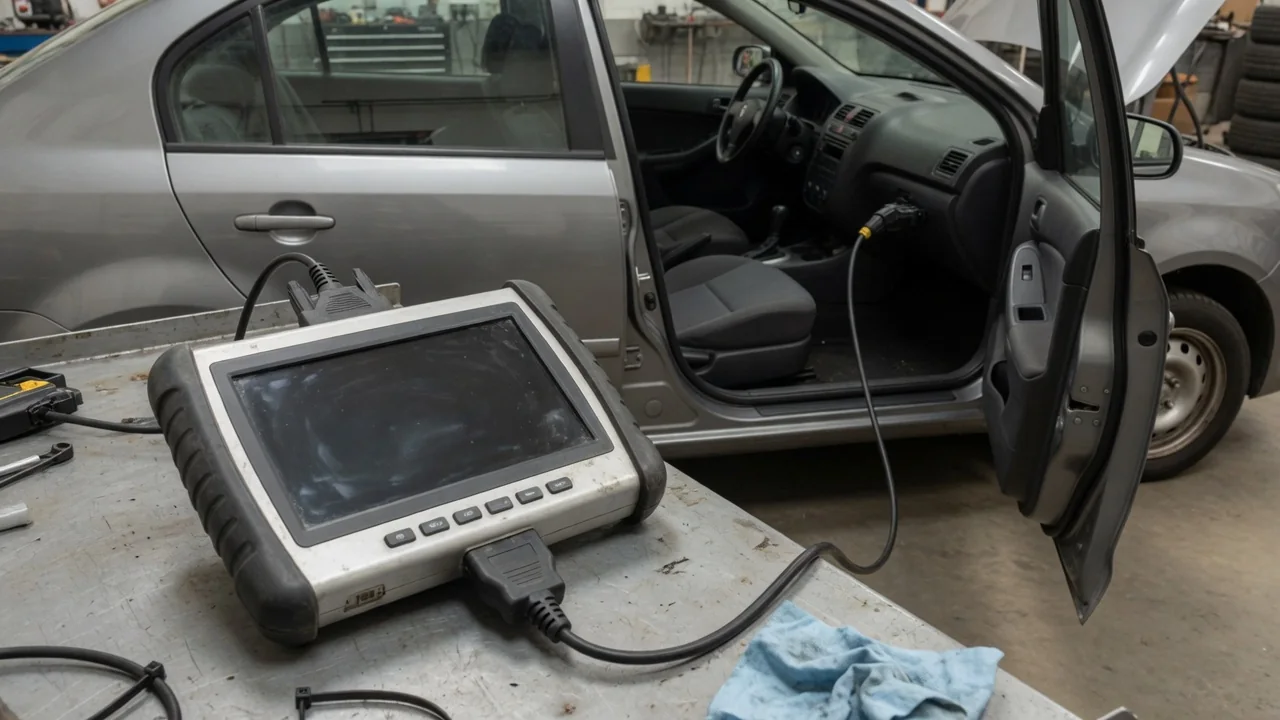
The P1100 code is a manufacturer-specific diagnostic trouble code, so its meaning is not the same on every vehicle. Before treating a stored P1100 as a failed part, confirm the definition and test criteria in vehicle service information for the exact make, model, year, and engine. A scan tool label, a check engine light, or a pending code is evidence to interpret, not a parts list.
Verify What P1100 Means for Your Vehicle
P1100 cannot be assigned one universal component or fault definition because it is a manufacturer-specific diagnostic trouble code. Different makers reuse the same alphanumeric identifier for different systems, so a generic scanner description may name a circuit, sensor, or operating condition that does not apply to your engine. Vehicle service information for the make, model, year, and powertrain is required before interpreting the stored result. Until that definition is confirmed, the code only indicates that a control module recorded a condition that met its criteria, not that a particular part has failed.
A scan tool's generic description is often a shortened label rather than the manufacturer's diagnostic criteria. Those criteria can include enable conditions, voltage or signal ranges, and how long a condition must persist before a pending code becomes stored and the check engine light turns on. Diagnostic testing should start from that documented definition, not from a guess about a popular part. Distinguishing a detected operating condition from a failed component keeps freeze-frame data and related codes useful instead of steering the repair toward an unconfirmed part.
Symptoms and Warning Signs to Record
Symptoms tied to a P1100 code depend on the verified vehicle-specific meaning. A stored or pending code can appear with a check engine light while idle, starting, and power delivery feel unchanged, especially when the fault is intermittent or the monitor only fails under a narrow set of conditions. Record warning lamps, cranking and starting behavior, idle quality, hesitation, and whether any change occurs on a cold start, after warmup, or during particular driving conditions. Those notes help later diagnostic testing match freeze-frame data to real-world operation.
Symptoms alone cannot establish which system or component caused P1100. Hesitation, a rough idle, or a hard start can share many unrelated causes, and the manufacturer-specific definition may point to a circuit or operating condition that does not produce those complaints. If the engine stalls, power drops severely, the vehicle overheats, or the check engine light flashes, stop in a safe place and seek assistance rather than continuing to drive. A flashing lamp can indicate a misfire-related condition that risks catalytic converter damage, which is separate from assuming P1100 itself names a failed part.
Possible Causes Must Follow the Confirmed Definition
Possible causes of a P1100 code must follow the confirmed definition in vehicle service information, not a universal list of parts. Once the affected system is identified, look at that circuit or function first: wiring, connectors, power supply, grounds, and signal paths when the criteria describe an electrical circuit. A corroded pin, a loose ground, or an interrupted reference voltage can set the same identifier as a sensor that never failed. Recent repairs and the moment the check engine light appeared are useful context, but they do not prove causation or rank one cause as more common than another.
Sensor or mechanical operating faults belong in the cause discussion only when the vehicle-specific diagnostic criteria actually evaluate those items. If the documented test concerns airflow, fuel delivery, or an actuator, then those mechanical paths become relevant after circuit integrity is considered. If the criteria concern only a signal range or a comparison between modules, replacing a mechanical part without that support is speculation. An intermittent fault can follow a repair because a connector was disturbed, or the timing can be unrelated. Use that history to choose what to inspect, not as proof the last installed part is the source.
Safe Checks Before a Diagnostic Appointment
Before a diagnostic appointment, save the full scan report, code status, and any freeze-frame data, and do not clear P1100 or pending codes first. Freeze-frame snapshots capture engine speed, load, temperature, and related values at the moment the monitor failed, which later diagnostic testing needs. Record the make, model, year, engine, mileage, recent work, and whether the fault appears during cold starts, warm operation, or a particular driving condition. That record is more useful than a memory of a check engine light that later went out.
Limit owner observations to what is readily visible with the vehicle parked and the engine off, such as an obviously disconnected connector, a damaged harness, or a loose ground strap. Do not touch hot exhaust, cooling, or moving parts, and do not unplug sensors, probe circuits, or disconnect the battery in an attempt to reset the P1100 code. Those actions can introduce new faults, disturb an intermittent connection, or erase freeze-frame data and pending codes that a technician needs. Replacing parts without diagnosis has the same effect: it spends money and can hide the original evidence.
How Professional Testing Narrows the Fault
Professional diagnostic testing should follow the manufacturer's procedure for the confirmed P1100 definition, not a generic flowchart that assumes one component. Accompanying codes, freeze-frame conditions, and relevant live data help choose which circuit or function to test first, but they still do not prove a part has failed. A related pending code can show another monitor is close to failing, while freeze-frame data can show whether the event happened at idle, under load, or during warmup. Those clues narrow the path; the documented tests decide whether a signal, power, ground, or mechanical condition is actually out of range.
Circuit, signal, or system testing stays at the level the verified fault criteria require, which may include checking continuity, voltage supply, ground integrity, or comparing live readings with the expected operating condition. An intermittent fault often will not appear on a parked inspection, so the technician may need to reproduce the recorded driving conditions rather than replace a convenient part. If inspection and specified tests remain inconclusive, that result does not justify speculative replacement. Repair verification later depends on those same steps, so swapping parts early can make the original P1100 harder to confirm or dismiss.
Repair Options and Confirmation That the Fault Is Resolved
Repairs should address a demonstrated fault, such as correcting a verified connection problem or replacing a component that fails the tests required by vehicle service information. The P1100 code itself is not a parts order. Scope depends on the confirmed cause, how the affected circuit or component is accessed, and what follow-up testing the procedure requires, without treating any typical price as a given. A simple connector repair and a module or sensor replacement are different jobs only after testing shows which one is actually needed.
After the repair, follow the applicable service procedure for repair verification, including whether P1100 returns under the operating conditions that originally set it. Clearing the code or watching the check engine light turn off does not by itself confirm success, because a pending code can take another drive cycle to appear and an intermittent fault can stay quiet until the same conditions return. Confirm that related monitors run as the procedure requires and that freeze-frame data is no longer capturing the previous failed condition. Only then is the stored P1100 reasonably treated as resolved.