P1068 Code: Verify Its Meaning, Causes, and Repair Steps
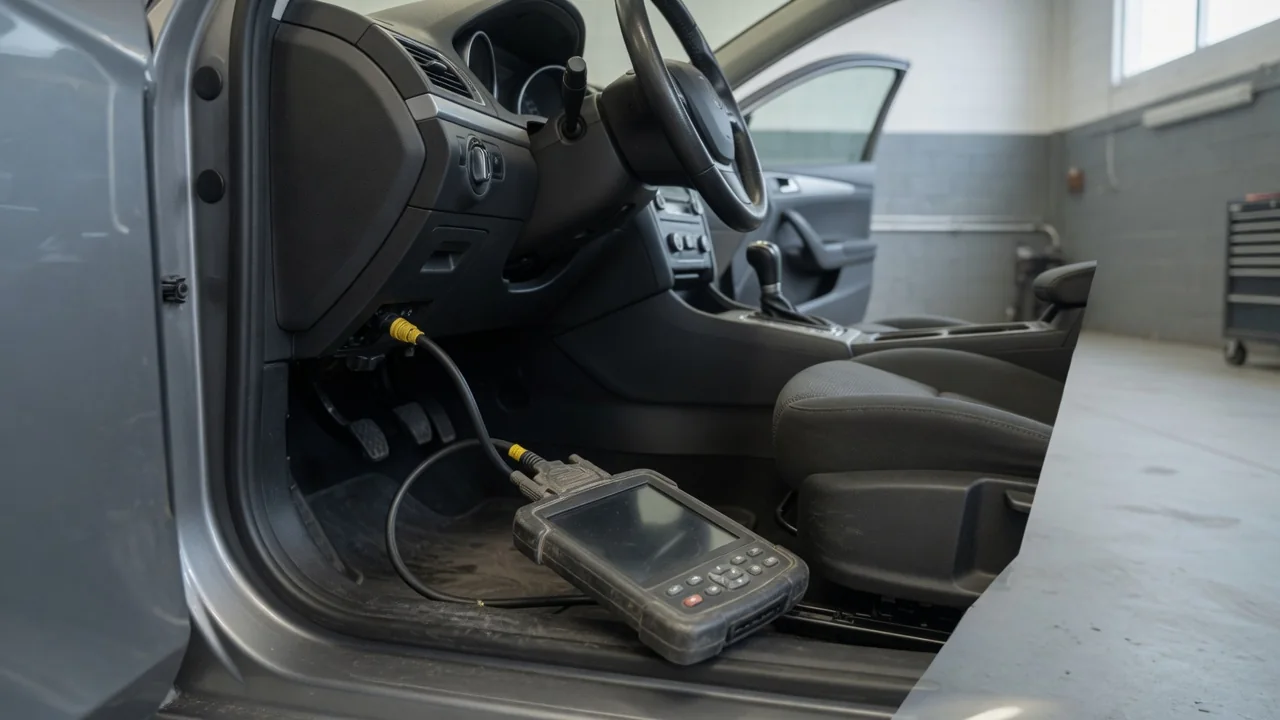
A P1068 code appears when a vehicle’s control module reports a fault that the generic OBD-II description cannot fully explain. Because P1068 is a manufacturer-specific powertrain code, its meaning depends on the car’s make, model, engine, and market. Simply seeing “P1068” on a scanner does not tell you which system is involved or what part may be at fault. This guide explains how to verify the definition, record symptoms, assess safety, gather diagnostic evidence, and confirm a lasting repair.
Verify What P1068 Means for Your Vehicle
The P1068 diagnostic trouble code belongs to a range reserved for manufacturer-specific definitions, meaning the same number can point to different systems on different vehicles. On one platform it might refer to an intake manifold runner control circuit; on another it could relate to a fuel pressure sensor or a turbocharger control function. The generic scanner label is only a starting point, and it may be incomplete or misleading without the exact calibration information for the vehicle.
To verify what P1068 means for your car, gather the make, model, model year, engine code, and market where the vehicle was sold. The vehicle identification number is especially useful because it lets a repair database retrieve the exact build configuration. Also note which control module reported the code—engine, transmission, or another system—since the same numeric code can appear in different modules with different meanings. Vehicle-specific service information is necessary before interpreting symptoms or planning tests.
Record Symptoms and Decide Whether to Keep Driving
A stored P1068 alone cannot predict which symptoms you will notice or whether the vehicle is safe to drive. The code may be accompanied by a check engine light, reduced power, rough idle, or no obvious change in behavior. Since the underlying fault varies by vehicle, do not assume that any particular symptom is universal. The best practice is to write down exactly what you observe: when the light came on, how the engine runs, and whether the problem occurs only under certain conditions.
Some symptoms require immediate attention regardless of the code definition. If the engine is shaking severely, stalling, overheating, or producing smoke or a strong fuel odor while driving, pull over safely and shut the engine off. A flashing check engine light is a sign of a misfire that could damage the catalytic converter. When any of these severe symptoms occur, have the vehicle towed to a repair facility instead of continuing to drive.
Connect Possible Causes to the Verified Definition
Possible causes for P1068 should only be considered after you know the verified definition for your specific vehicle. If the code relates to a particular circuit, the fault may lie in the wiring, a connector, the electrical supply, the component itself, or a mechanical condition that affects the system. However, the fact that a code mentions a sensor or actuator does not prove that part has failed. A wiring fault, a poor ground, or a control module issue can produce the same code.
The vehicle-specific service information usually includes a diagnostic procedure that starts with the most likely causes and moves to less common ones. Without that procedure, there is no reliable way to rank causes or skip tests. A code that says “intake air temperature sensor circuit” may be set by a biased sensor, but it could also be set by a wiring issue or a fault in the powertrain control module. Resist the temptation to replace a component based only on the code’s name.
Gather Useful P1068 Diagnostic Information Safely
Before clearing P1068 or disconnecting the battery, save every piece of evidence from your scan tool. Record the exact code definition, whether the code is stored as a pending code or a confirmed code, and the freeze-frame data that shows engine conditions when the fault occurred. This information can reveal whether the problem appears only when the engine is cold, at a certain speed, or under load, and it helps a technician avoid guessing.
Also note when the code first appeared and what was happening at that time—weather, road conditions, or recent repairs. Write down any other diagnostic trouble codes that are stored, even if they seem unrelated, because multiple codes can point to a shared cause such as a low system voltage or a bad ground. Keep your owner checks limited to visual inspections with the vehicle parked and the engine off. Do not unplug components, probe electrical circuits, or open pressurized systems without proper equipment and training.
Understand Professional Testing and Repair Decisions
A professional technician uses the verified P1068 definition, any related codes, and the manufacturer’s diagnostic procedure to choose tests that are relevant to the fault. The procedure may call for checking powers and grounds at a connector, measuring sensor values with a scan tool, or performing an actuator test. If the definition points to a mechanical system such as variable valve timing, the technician may check oil pressure or component movement before condemning an electrical part.
Any repair should follow a demonstrated fault, not a guess. If testing shows an open circuit in the wiring, repair that circuit before replacing a sensor. If a component fails a specified test, replace it and then recheck the system. Replacing a sensor, actuator, wiring assembly, or control module solely because P1068 is present is not a valid repair strategy and can waste money while leaving the real problem unsolved.
Confirm the Repair and Handle a Returning Code
Clearing P1068 or turning off the check engine light does not prove that the underlying problem is fixed. The code may return after the vehicle is driven if the conditions that set it are still present. After a repair, the vehicle must be tested according to the service procedure. This may mean operating the engine under specific conditions while monitoring live data, or simply driving the vehicle until the relevant monitor completes and then scanning again to confirm no codes return.
If the same P1068 code comes back after a repair, do not simply clear it again. Renew the diagnosis using the evidence you saved earlier and compare the freeze-frame data showing the conditions when the code set. A different symptom or a new code may point toward the true cause. Avoid prescribing a universal drive cycle or repeatedly erasing the code, because without confirming the repair the vehicle may still have an active fault that affects emissions, performance, or safety.