P1061 Code: Vehicle-Specific Meaning, Diagnosis, and Repair
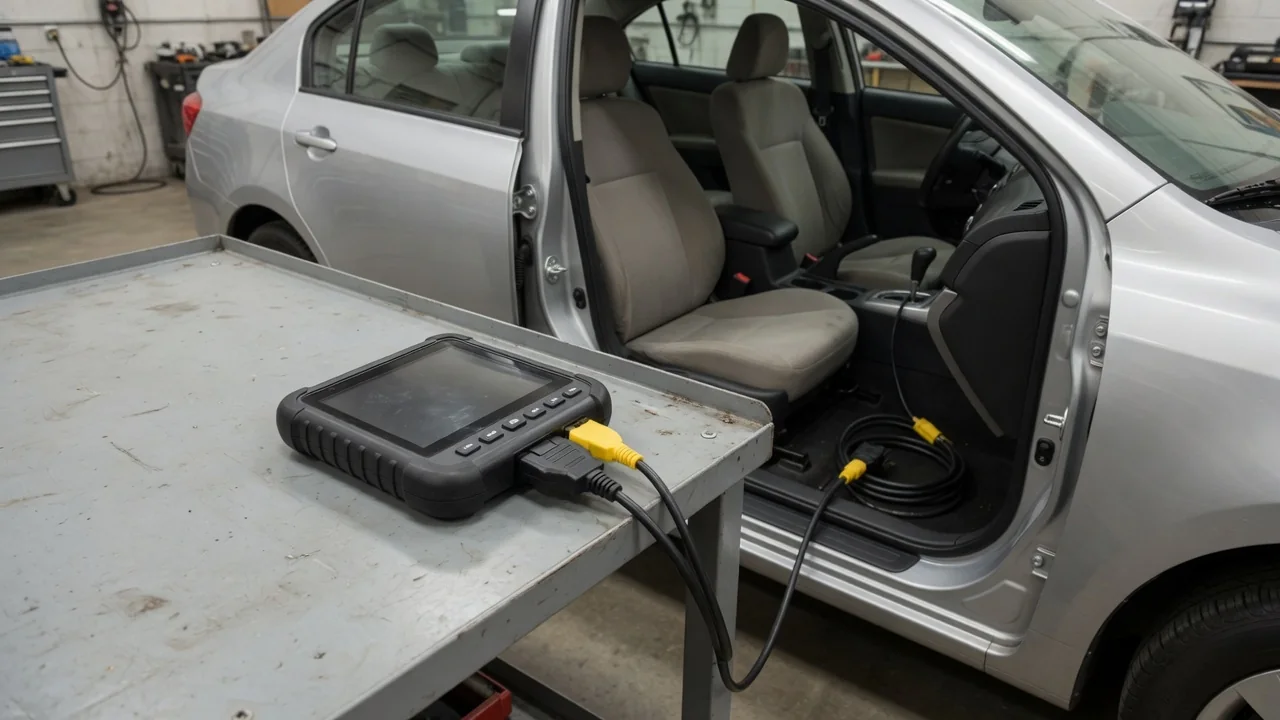
A P1061 diagnostic trouble code can appear on any OBD-II vehicle, but its meaning is not standardized across the industry. Because the definition is manufacturer-specific, the same code may point to different circuits, sensors, or control functions depending on the exact make, model, year, and engine. Without a verified description for your vehicle, even a professional-grade scan tool can mislead. The following sections explain how to interpret the code correctly, record useful symptoms, narrow plausible causes, and pursue a repair that actually resolves the detected condition.
What P1061 Means for Your Vehicle
P1061 is a manufacturer-specific powertrain code, meaning its definition can vary significantly between automakers. One vehicle may use this code for a fuel system pressure concern, while another may apply it to an intake air control circuit or an entirely different subsystem. Therefore, no universal component failure or repair procedure can be attached to this code. The first step is always to confirm the precise definition through manufacturer service information for the specific vehicle, including the model year and engine option, because even similar models within the same brand can assign different meanings.
A generic OBD-II scanner will display only a brief text description, often shortened or simplified, and that description may not match the actual fault conditions programmed into your vehicle's control module. Factory diagnostic information includes the code-setting criteria, enabling conditions, and potential causes, which are essential for interpreting whether the code indicates a circuit fault, a performance problem, or a communication issue. The code only identifies that a monitored condition fell outside expected parameters; it does not prove that any particular sensor, actuator, or wiring connector has failed, so component replacement without testing is not justified.
Symptoms to Record When P1061 Appears
When P1061 is stored, the check engine light may be the only symptom the driver notices, especially if the fault does not directly affect basic engine operation. However, depending on the verified definition, other observable signs may appear. Record whether the engine starts normally, idles smoothly, accelerates without hesitation, or misfires under load. Note if the concern is present only on a cold start, only after the engine reaches operating temperature, or under specific conditions such as high humidity or after driving for a certain period. These details help the technician associate the code with real-world behavior.
Distinguish between what you feel as a driver and what the vehicle's diagnostic data supports. A rough idle or reduced power may seem related to the code, but those effects could stem from a separate issue, a companion fault code, or even normal variation under the current conditions. Write down the date and circumstances when the warning light first appeared, along with any recent repairs, fluid top-ups, or parts replacements. While a recent service is not proof of causation, this timeline can help a technician notice a loose connector, an incorrectly routed hose, or a pinched wire.
How the Confirmed Definition Narrows Possible Causes
Once the vehicle-specific definition of P1061 is confirmed, every possible cause must be tied directly to the described fault conditions. For example, if the code indicates a rationality check between two sensors, then the cause list should include the sensors themselves, their shared power or ground circuits, and any mechanical condition that could create an implausible relationship. If the code instead refers to a control circuit open or short, then wiring, connectors, and the controlled component are logical starting points. Causes that are not supported by the manufacturer's diagnostic information should not be added simply because they seem plausible.
Freeze-frame data and any companion fault codes provide important context for narrowing the list. If a P1061 is stored alongside a code for a related voltage or communication issue, a shared electrical supply or data bus problem may be the root cause. Operating conditions recorded at the moment the code was set—such as engine temperature, rpm, and vehicle speed—can indicate whether the fault occurs only during a cold start, at idle, or under acceleration. The code alone cannot establish how often this failure occurs in the field or justify replacing a named part without testing the suspected circuit and component.
Safe Checks Before a Diagnostic Appointment
Before taking the vehicle to a shop, preserve all diagnostic information. If you have access to a scan tool, save the complete scan report including the exact code numbers, their descriptions, and their status as stored, pending, or permanent. Record the freeze-frame data associated with P1061, if available, because this snapshot of operating conditions can be lost if codes are cleared. Do not clear the code yourself, and do not disconnect the battery; doing so may erase valuable information and also reset adaptive learning values that the technician needs for diagnosis.
You can perform limited visual checks with the engine off and cool. Consult the owner's manual before opening the hood, and check only accessible fluid levels such as engine oil and coolant, if the manual directs this. Look for obvious leaks, disconnected hoses, or damaged wiring that you can see without reaching into moving or hot areas. Do not unplug any electrical connector, probe any circuit, or attempt to start the vehicle if you notice a severe condition. If the check engine light is flashing, the engine is shaking violently, stalling, overheating, or losing significant power, stop driving as soon as it is safe and arrange for towing rather than continuing to operate the vehicle.
What Professional Diagnosis Should Establish
A professional diagnostic session should begin by confirming the exact vehicle configuration, including any recent modifications, then retrieving all stored codes and their definitions from the factory service information. The technician should verify the code status and review the freeze-frame data to see the conditions under which P1061 was set. Comparing the stored operating conditions to the current live data can reveal whether the fault is present right now or occurred only under past conditions. This step prevents misdiagnosis when the same code appears in different vehicle lines with different meanings.
Companion codes and live data are essential for selecting the correct diagnostic path. For example, if P1061 is accompanied by a code for a system voltage problem, the technician may first inspect charging system output and ground connections. Vehicle-specific testing is required to distinguish a sensor reading that is out of range due to a failed sensor from one that is out of range because of a wiring fault or an actual mechanical condition. Intermittent faults are particularly challenging; if the symptom does not reproduce during the appointment, the technician may need to keep a data recorder or request that the vehicle be driven under similar conditions. An unreproduced symptom does not prove a particular repair is needed or that one has been successful.
Repair Decisions and Confirming the Result
The appropriate repair depends entirely on what the diagnostic testing reveals. There is no universal P1061 fix, and the same parts list cannot apply to every vehicle. A verified fault in a specific circuit may require repairing a damaged wire or replacing a failed sensor, while a performance-related code may require cleaning a throttle body, repairing a vacuum leak, or updating control module software. Any proposed repair should be tied directly to a test result that shows the component or circuit is not operating as specified. Clearing the code or disconnecting the battery will not correct the underlying condition and will only delay the inevitable return of the light.
After the repair is completed, the technician should clear the code and then perform an appropriate rescan to ensure no codes remain. The verification process may include a drive cycle that reproduces the original enabling conditions, such as a cold start or a specific speed and load range. If the code does not return and all related monitors have run successfully, the repair can be considered complete. Request a written estimate that identifies the confirmed fault, the proposed work, the parts involved, and the verification plan, including any post-repair road test or monitor completion. Without a clear verification step, you may be left wondering whether the P1061 issue was truly resolved.