P1051 Code: Verify Its Meaning, Symptoms, and Repair Path
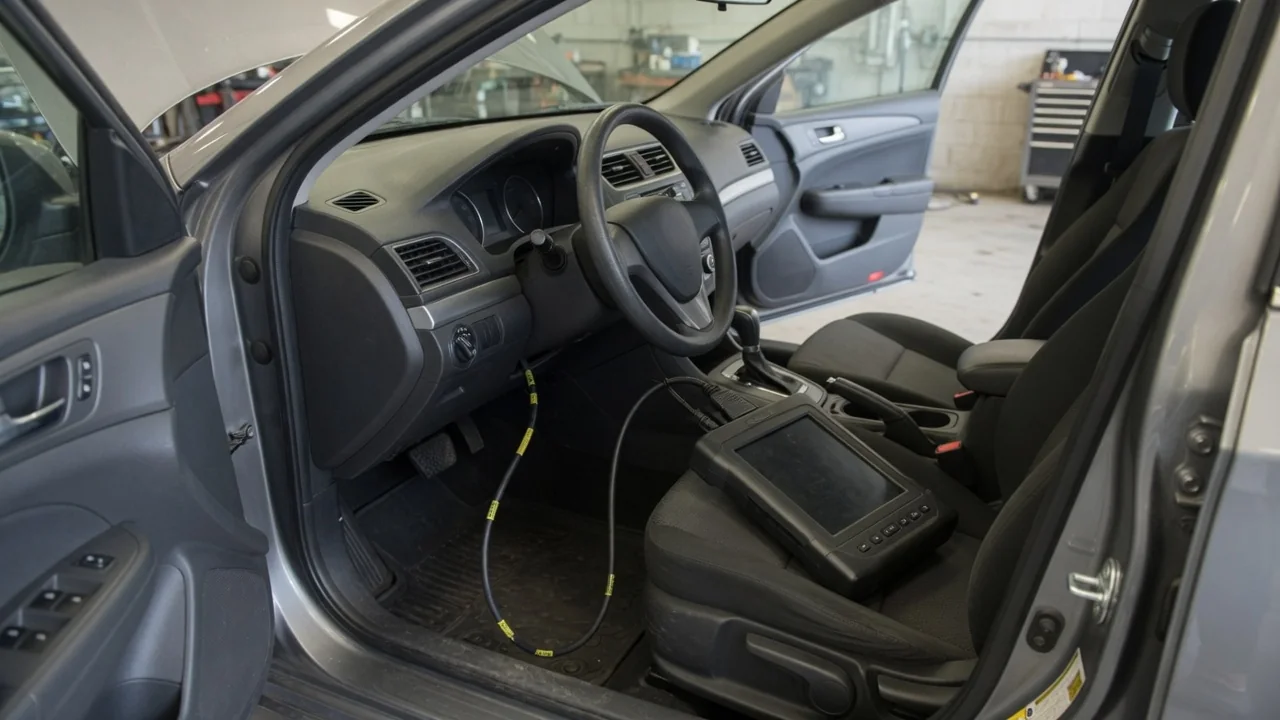
The P1051 code is a manufacturer-specific trouble code, so it does not carry one shared meaning across every vehicle that can set it. An OBD-II scanner may display P1051 or a short label, but that readout is only a starting point. Confirming the reporting module, the full wording, and the vehicle identification number with year, make, model, and engine is required before symptoms, causes, or repairs can be interpreted accurately.
Verify What P1051 Means for Your Vehicle
P1051 belongs to the manufacturer-specific range of diagnostic trouble codes rather than a universally defined OBD-II listing. That means two vehicles can store the same alphanumeric string while monitoring entirely different systems. Before treating the P1051 code as a fuel, ignition, emissions, or actuator problem, match it to the exact vehicle using year, make, model, engine, and the applicable service information. The vehicle identification number helps a shop pull the correct definition instead of a generic database guess.
An OBD-II scanner often shows a brief phrase that may be incomplete, outdated, or written for a different manufacturer. Confirm the full code wording and which control module reported it, because a body, powertrain, or transmission module can each set manufacturer-specific trouble codes with overlapping numbering. P1051 identifies a detected condition that met a stored monitoring threshold. It does not, by itself, prove that a named sensor, solenoid, or other part has failed, and it is not authorization to replace a component based on the label alone.
Record Symptoms and Decide Whether to Keep Driving
Once the definition is confirmed, observations such as a check engine light, rough running, reduced power, or no noticeable change can be judged against that meaning. Record when anything happens, including startup, idle, acceleration, and after the engine has warmed, without deliberately recreating unsafe conditions. Note whether the warning is steady or flashing and whether drivability changed at the same time the P1051 code appeared. Those notes help a technician compare freeze-frame data with real-world behavior rather than guessing from the code number.
P1051 alone cannot establish whether continued driving is safe, because the same stored identifier can represent conditions of very different severity depending on the vehicle. Severe shaking, stalling, overheating, a flashing check engine light, or substantial power loss warrants stopping in a safe location and arranging assistance. If the vehicle otherwise runs normally, still treat the stored or pending codes as unfinished diagnostic testing rather than a green light. Do not keep driving solely because the engine feels unchanged while a manufacturer-specific trouble code remains unexplained.
Understand Which Causes Fit the Confirmed Definition
Candidate causes should follow the verified system and the manufacturer's diagnostic procedure, not a universal list of common P1051 failures. Wiring, connectors, power supply, sensors, or actuators become relevant only when the confirmed definition places them in the monitored circuit or function. A code that concerns a control-module input, for example, points first to the conditions that set that monitor, while a different manufacturer's use of P1051 may involve an unrelated actuator. Jumping to a popular replacement part before that mapping is complete mixes unrelated vehicles together.
Associated stored or pending codes and the operating conditions captured with them may show an underlying issue affecting several monitored functions, such as a supply voltage problem or a communication interruption. Those companions can be more informative than P1051 in isolation. Part names that appear in a scanner description, together with a matching symptom pattern, are still insufficient evidence for replacing a component. Diagnostic testing has to show that the named part, rather than a connection, power feed, or related control logic, actually produced the detected condition.
Save Useful Evidence Before Clearing the Code
Record all stored and pending codes, their status, and available freeze-frame data before anyone clears diagnostic information. Freeze-frame snapshots typically capture engine speed, load, temperature, and related values at the moment the monitor failed, which later helps compare the P1051 code with how the vehicle was being used. Also note recent repairs, battery disconnects or replacements, and when the check engine light first appeared, without assuming those events caused the fault. Timing and work history are clues for diagnostic testing, not proof of a failed part.
Limit owner checks to safely visible observations with the vehicle parked and the engine off, such as obvious connector damage, loose caps, or fluid leaks that can be seen without tools. Do not probe wiring, disconnect components, or work near hot or moving parts in an attempt to chase P1051. Clearing codes or disconnecting the battery can erase freeze-frame data and pending codes that a technician still needs. Erasing the memory also does not repair the underlying condition, so the same manufacturer-specific trouble code can return as soon as the monitor runs again.
Know What Professional Diagnosis Should Establish
A technician should use vehicle-specific service information to identify the setting conditions for P1051 and follow the published diagnostic sequence for that module and monitor. That sequence exists because manufacturer-specific trouble codes are not interchangeable across brands. Depending on the confirmed definition, relevant live data, circuit tests, or controlled component tests may be required to see whether the reported condition is still present. Diagnostic testing that skips those steps and goes straight to parts replacement treats the code as a parts catalog rather than evidence to interpret.
Repair recommendations should rest on test evidence that distinguishes a failed component from wiring, supply, connection, or other system faults. A circuit that fails a commanded test, for example, does not automatically mean the actuator at the end of that circuit is defective. Providing the shop with the exact code record, including pending codes, freeze-frame data, observed symptoms, and recent work history, shortens that process. The vehicle identification number and the reporting module should be included so the technician is not forced to reverse-engineer a generic scanner label.
Match the Repair to the Fault and Verify the Result
Repairs should match the confirmed fault. That may mean correcting a connection or wiring problem that testing has already isolated, replacing a component proven defective, or addressing a related condition that caused several monitors to fail. A useful estimate separates diagnosis, the supported repair, and any required setup or repair verification rather than bundling those steps into one unexplained figure. Because P1051 is manufacturer-specific, programming, adaptations, or monitor completion may be part of the work on some vehicles and unnecessary on others, which is why the estimate should follow the actual findings.
After the repair, verification should include the checks specified for that vehicle, a review of the original symptoms, and monitoring for returning codes under the manufacturer-specified operating conditions. Completing those conditions can take more than a short test drive, depending on how the monitor is enabled. An extinguished check engine light immediately after code clearing is not proof of a successful repair, because clearing only empties memory. Repair verification is complete only when the same P1051 code does not reset and the vehicle behaves as expected under the conditions that originally set the fault.