P1040–P1049 Trouble Codes: Manufacturer-Specific Meanings
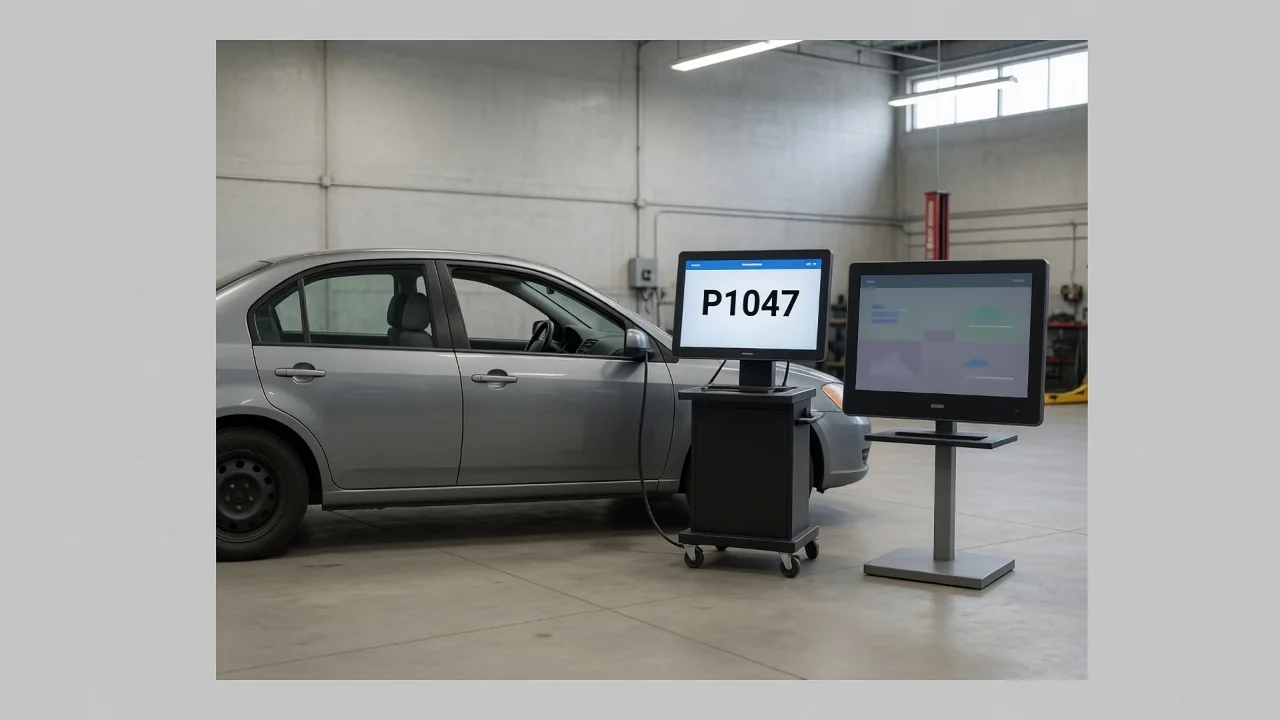
P1047 and neighboring P1040–P1049 codes are manufacturer-specific powertrain diagnostics, so the same number can mean different things on different vehicles. A generic OBD-II scan tool may show only a brief description, but accurate interpretation requires the exact make, model, year, and engine. These codes often point to a monitored circuit, sensor, or actuator performance condition, yet they never prove a part has failed. Reading the code correctly is the first step toward pinpointing the actual issue without replacing components unnecessarily. This guide explains how to approach each code safely.
Verify the Vehicle-Specific Meaning Before Interpreting Any Code
Because P1040 through P1049 are manufacturer-specific, the code number alone does not identify the affected system or fault. The same code can be assigned to different components across brands or even between model years. A P1047 on one vehicle might relate to a turbocharger control circuit, while on another it could indicate an exhaust camshaft position actuator issue. Therefore, any diagnosis must start with the vehicle identification and exact engine configuration. Only the manufacturer’s service information defines the intended meaning for that particular application.
A suitable scan tool should display the full manufacturer definition, not just a generic phrase like “manufacturer control.” If the scanner shows incomplete or conflicting descriptions, treat that as a flag to consult verified service data. Record the vehicle’s VIN, engine code, and any relevant options before interpreting the code. For each code entry in this guide, the verified application, documented meaning, possible symptoms, plausible causes, and next diagnostic decision are structured as separate items. When an application is unverified, that uncertainty is stated rather than assumed.
P1040, P1041, and P1042: Establish What Each Code Identifies
P1040 has different meanings depending on the manufacturer. On some General Motors vehicles, P1040 is defined as “Fuel Tank Pressure Sensor Circuit High Voltage,” indicating a possible issue with the EVAP system pressure sensing. On certain Ford applications, P1040 may refer to a “Supercharger Boost Control Circuit” condition. Because these definitions involve different systems, causes range from wiring faults and sensor failures to mechanical boost control problems. The code itself does not prove which part is faulty; it only reports that a signal or circuit state fell outside expected parameters.
P1041 is often defined on Ford vehicles as “Supercharger Boost Control Circuit Low,” meaning the powertrain control module detected a lower than expected voltage in the boost control circuit. Potential causes include a damaged wire, poor connector contact, or a failed boost control solenoid. However, a code naming a solenoid does not prove the solenoid needs replacement; the fault could be in the harness or connector. Symptoms may include reduced power under acceleration or no noticeable driving change, with only the check engine light illuminated. P1042 has been used for “Supercharger Boost Control Circuit High” on some Fords, indicating an opposite voltage condition. Without knowing the exact model and year, the meaning cannot be assumed.
P1043, P1044, and P1045: Interpret the Documented Fault Condition
P1043 appears on some GM vehicles as “Fuel Tank Pressure Sensor Circuit Low Voltage.” The documented fault condition means the ECM saw a voltage below the calibrated threshold from the fuel tank pressure sensor, which is used to monitor EVAP system pressure. Electrical causes such as a short to ground, open circuit, or sensor internal fault are plausible, but the detected low voltage is only a symptom of the underlying electrical problem. A technician must test the circuit before considering sensor replacement. Checking for companion EVAP codes and freeze-frame data showing fuel level and engine temperature helps narrow the investigation.
P1044 has been defined on certain Ford diesel applications as “Exhaust Gas Recirculation (EGR) Cooler Bypass Control Circuit Malfunction.” The wording indicates a control circuit issue for the EGR cooler bypass actuator, not necessarily a failed actuator. Possible causes include wiring opens or shorts, a faulty actuator, or a failed driver inside the PCM. In contrast, P1045 on some GM gasoline vehicles means “Fuel Tank Pressure Sensor Circuit Intermittent.” The intermittent nature points to loose connections, chafed wiring, or a sensor that drops out under vibration. Reviewing recorded operating conditions at the time the code set helps identify whether temperature, road speed, or fuel level correlates with the fault.
P1046 and P1047: Connect the Verified Definition to Symptoms
P1046 is used by some manufacturers for an undefined or manufacturer-specific monitoring condition. For example, on certain Hyundai/Kia models, P1046 has been reported as “Crankshaft Position Sensor (CKP) - Incorrect Signal” though official definitions may differ by year. The detection condition often means the PCM received an implausible signal from the crankshaft sensor during engine rotation. What remains uncertain without testing is whether the sensor, reluctor wheel, wiring, or PCM is at fault. The code confirms a signal deviation but not the root cause. Symptoms could include hard starting, stalling, or no noticeable change if the signal fault was transient.
P1047 on specific GM applications is defined as “Crankshaft Position Sensor Circuit Intermittent.” The verified meaning indicates the ECM detected intermittent dropouts in the crankshaft position signal, which is critical for ignition timing and fuel injection. The detection condition establishes that the signal was lost or distorted momentarily, but it does not reveal whether the sensor, its connector, the wiring, or a damaged reluctor wheel is responsible. Supported symptoms may include random misfires, stalling, hesitation, or simply an illuminated malfunction indicator lamp with no drivability change. Professional testing should begin with a visual inspection of the sensor harness and connector, followed by a scan tool review of the CKP signal during cranking and idle while monitoring for dropouts. Only after confirming the sensor circuit and target wheel integrity can the sensor be considered faulty.
P1048 and P1049: Identify the Evidence Needed for Diagnosis
P1048 appears on certain Ford vehicles as “Supercharger Boost Control Circuit Open.” The definition points to an open circuit in the boost control solenoid or its wiring, which prevents the PCM from controlling boost pressure. With an open circuit, the supercharger may default to a safe low-boost mode, resulting in a noticeable loss of power under load. Other possible causes include a disconnected solenoid, broken wire, or corroded connector. Because the code specifically indicates an open circuit, resistance testing and connector inspection are the logical first steps. If the circuit tests good, the control solenoid may be internally open and should be tested according to manufacturer specifications before replacement.
P1049 has been defined on some Audi and Volkswagen models as “Intake Camshaft Adjustment, Bank 1 - Mechanical Malfunction.” This code indicates that the ECM commanded a change in intake camshaft timing but the actual position did not reach the target within a set time. Potential causes include low engine oil pressure, a faulty camshaft adjuster solenoid, a stuck mechanical adjuster, or timing chain wear. Symptoms often include a rattling noise at startup, rough idle, and reduced power. Companion fault codes for camshaft position sensors or timing correlation are common. Before attributing the code to a failed component, the technician must verify oil pressure, check for related timing codes, and test the adjuster operation using a scan tool.
Record Findings Safely and Decide When to Seek Service
When any of these P1040–P1049 codes appears, the first step is to record the full code, the scanner’s exact wording, whether it is a pending or confirmed code, and any freeze-frame data such as engine speed, coolant temperature, and fuel trims. Do this while parked safely with the engine off. Before clearing anything, note how often the light appears and whether the vehicle was recently serviced. Clearing the code erases the valuable freeze-frame data and can hide an intermittent problem, so it is better to document first. A smartphone photo of the scan tool screen can preserve the information.
Pay attention to warning lights, starting behavior, rough running, power loss, and recent work without deliberately trying to reproduce the fault. If the vehicle exhibits severe problems like stalling, overheating, or a flashing check engine light, stop safely and seek professional assistance. The code number alone cannot determine whether the vehicle is safe to drive. Owner checks should be limited to visual inspection of accessible wiring and connectors while the engine is off; do not probe electrical circuits, operate actuators, or remove components. Clearing a code does not establish a repair—it only turns off the warning. Confirmation requires vehicle-appropriate testing after the underlying issue is fixed.