P1028 Code: Verify Its Meaning and Plan Safe Diagnosis
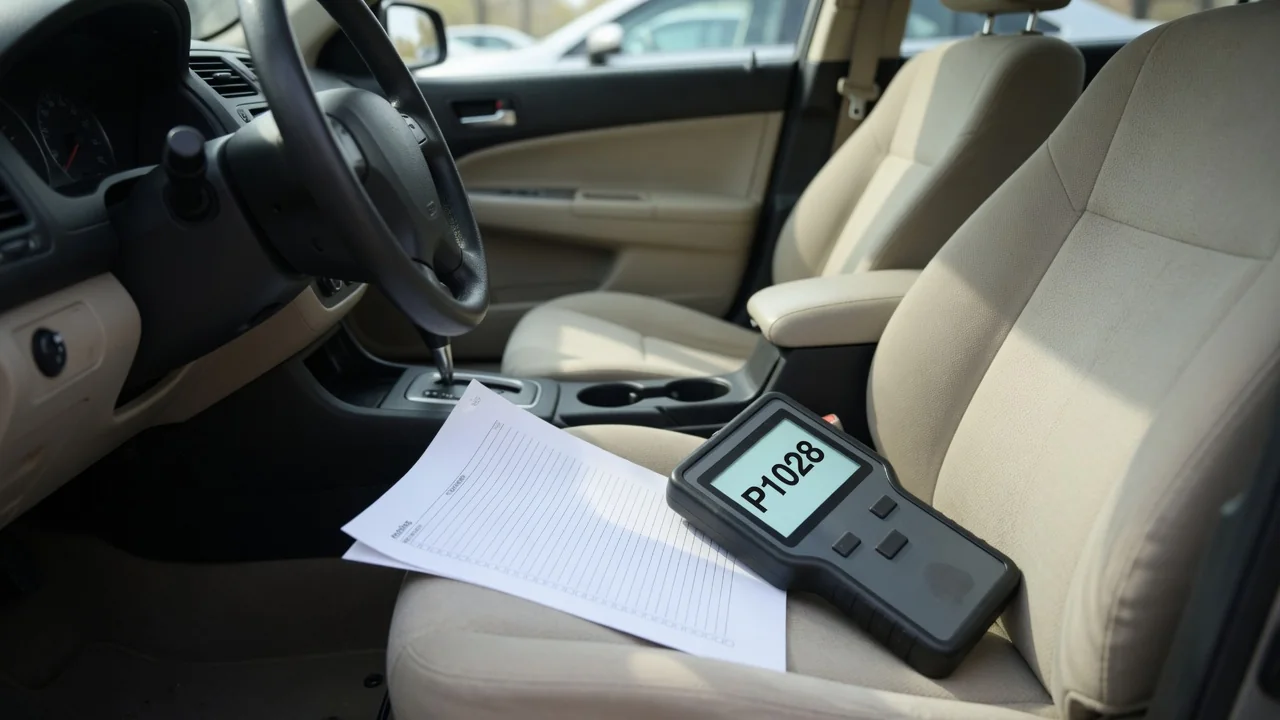
P1028 is a manufacturer-specific diagnostic trouble code, so its meaning is not the same on every vehicle. A lookup of the P1028 code should start with make, model, year, and engine rather than a one-size-fits-all label. The powertrain control module stores this result when a monitored condition is met, which is evidence to interpret. Confirming the definition, symptoms, and diagnostic trouble code status comes before any repair decision.
Verify the Vehicle-Specific Meaning of P1028
P1028 belongs to the manufacturer-specific diagnostic trouble code range, which means it cannot be assigned one universal component or a single shared fault definition across every brand. Two vehicles can report the same alphanumeric identifier while monitoring entirely different systems. Before interpreting P1028, confirm the make, model, model year, engine, and the applicable vehicle-specific service information for that calibration. The vehicle identification number helps a technician match the correct documentation so the stored result is read against the right criteria rather than a generic guess.
A generic scan tool often displays a short text string pulled from a broad database, and that wording can be incomplete, mismatched, or unsuitable for the vehicle in front of you. Manufacturer-dependent codes require vehicle-specific confirmation because the powertrain control module applies factory criteria that a universal label may not capture. Even after the definition is verified, P1028 identifies a monitored condition that was met, not a part that has already failed. Replacement is not justified by the description alone; the code is evidence that still needs testing against the documented diagnostic path.
Record the Code and Its Diagnostic Context
When P1028 appears, write down the exact code, the scanner's displayed description, and which module reported it, usually the powertrain control module on a powertrain scan. Note diagnostic trouble code status as well: a pending code can mean the monitor has not completed its full criteria, while a confirmed code indicates the condition met the stored-fault rules for that calibration. Capture whether the tool lists P1028 as current, stored, or both. That record keeps later comparison honest if the display changes after a key cycle.
Save freeze-frame data and every accompanying code before anything is cleared. Freeze-frame data snapshots engine speed, load, temperature, and related parameters at the moment the monitor set, which later helps a technician compare operating conditions rather than guessing when the event occurred. Record whether the P1028 code appeared at startup, during acceleration, at idle, or after recent service, because those circumstances can shape the test order. Other stored faults can inform a diagnostic sequence, yet they do not prove that every listed code shares one cause.
Document Symptoms Without Assuming Their Cause
Warning lights and drivability changes must be interpreted against the verified P1028 definition, not against a generic assumption about what the identifier usually means. Useful observations include how the engine starts, idle quality, power delivery under load, any unusual sounds, and whether the issue is intermittent or present every drive. Note dashboard messages exactly as they appear and whether they stay on after a restart. Those notes give a technician a timeline that scan data alone may not provide.
A stored P1028 code may be present without a noticeable driving symptom, especially if the monitor set during a brief operating window and the driver never felt a change. That absence does not make the code unimportant; it only means drivability cannot be used as the sole clue. Conversely, a stumble, hesitation, or warning lamp occurring alongside the code is not proof that the coded condition caused that symptom. Separate observations from conclusions so later testing can confirm or rule out a relationship.
Identify Possible Causes After Confirming the Definition
Any discussion of possible causes must follow the vehicle-specific monitored system and the diagnostic criteria published for that calibration. After the P1028 definition is confirmed, wiring, connectors, electrical supply, sensor signals, or mechanical operation may merit investigation only when those areas belong to the circuit or function the monitor actually watches. Treating every familiar powertrain part as a candidate because it appears in other P-codes wastes time and can create new faults. The correct starting point is the documented enable conditions, not a parts catalog.
Recent repairs, connector work, or a disturbed harness can be useful diagnostic context because a loosely seated terminal or a pinched wire may affect the same circuit the powertrain control module is monitoring. Timing alone is not proof: a job completed last week does not establish that the new or reused part is the reason P1028 set. Avoid ranking suspected causes by how often they appear in conversation, and do not recommend a component solely because its name shows up in the scanner description. The fault code remains evidence to interpret, not a parts-replacement order.
Make Safe Observations and Recognize Stop-Driving Signs
Owner checks should stay limited to recording dashboard messages and looking for readily visible damage or leaks while the vehicle is parked, switched off, and cool. Do not disconnect components, probe live circuits, open pressurized systems, or work near moving or hot parts in an attempt to chase P1028. Those actions can injure you, damage modules, and erase or alter the very data a technician needs. Visual notes about fluid spots, damaged wiring that is already exposed, or a hanging connector are enough for an owner-level record.
P1028 alone cannot establish whether continued driving is safe, because the identifier does not carry a universal severity ranking. Symptoms and manufacturer guidance in the owner's manual determine urgency, not the alphanumeric label by itself. Stop safely and arrange assistance for severe power loss, overheating, smoke, a strong fuel smell, or an oil-pressure warning. A flashing engine warning is also a stop-driving cue that should be handled according to the owner's manual rather than interpreted from a generic code chart.
Use Professional Testing to Confirm the Fault and Repair
Persistent P1028, recurring symptoms, or an uncertain code definition are reasons to involve a qualified technician who can access vehicle-specific service information. Professional diagnosis, at a high level, starts by verifying the definition for that make and calibration, reviewing freeze-frame data and diagnostic trouble code status, then performing the manufacturer-directed tests for the monitored system. Those tests may include circuit checks and functional verification that an owner should not attempt. The goal is to confirm whether the stored condition is still present and what actually produced it.
Bring the saved scan report, symptom notes, and recent service history so the technician does not have to reconstruct when the P1028 code first appeared or what else was stored with it. Clearing P1028 does not repair its cause; it only removes a stored result and can erase freeze-frame data that would have guided testing. Successful repair requires the applicable correction plus verification that the system operates within the documented criteria and that pending and confirmed code status no longer indicate the same fault. Recheck after a complete drive cycle when the service information calls for it.