P1024 Code: Manufacturer-Specific Meaning and Diagnosis
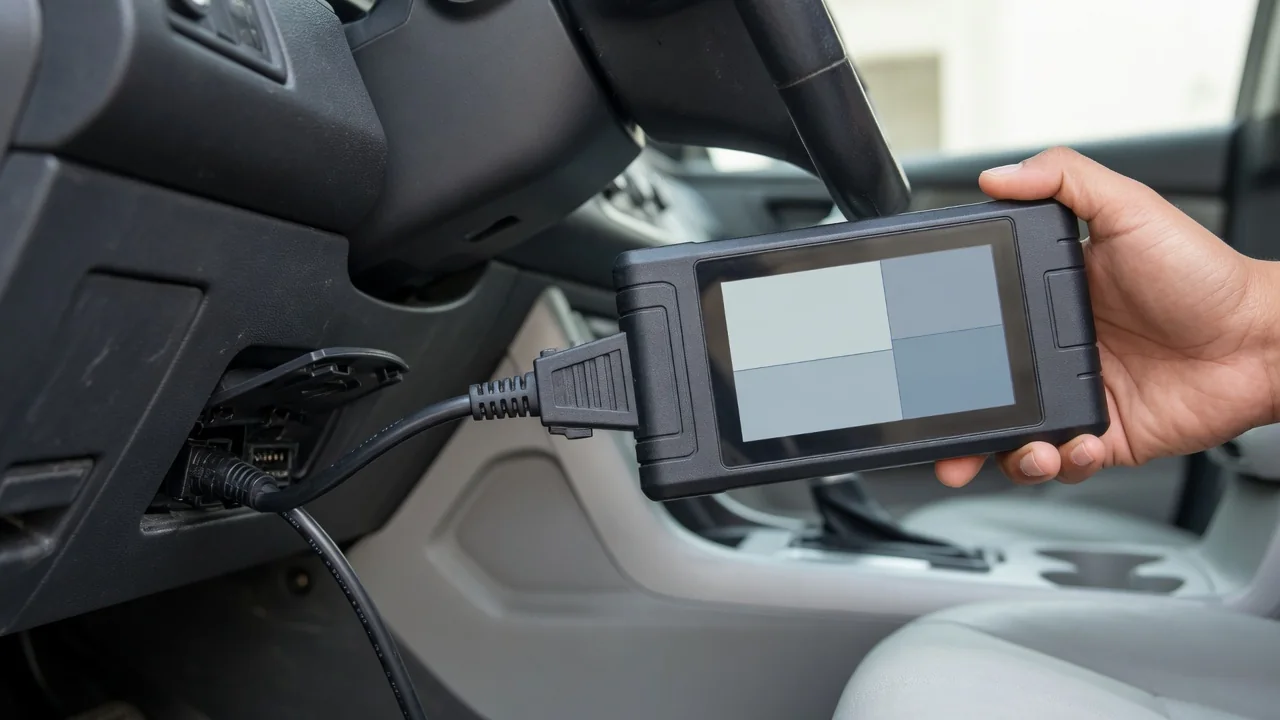
The P1024 code appears after a scan of your vehicle’s onboard diagnostics, but its message can be frustratingly vague. Unlike standardized P0xxx codes, P1024 is manufacturer-specific, meaning its definition changes across makes and models. A search result or forum post for one brand may not apply to your car. This guide explains why the code lacks a universal meaning, how to find the correct interpretation for your vehicle, and which diagnostic steps help you move forward safely and efficiently.
What P1024 Means and Why It Has No Universal Definition
Manufacturer-specific powertrain codes fall in the P1xxx range and are assigned by the vehicle maker to indicate faults that do not fit the generic P0xxx definitions. What P1024 represents on one car—perhaps a fuel pressure irregularity—could describe a completely different subsystem, such as a variable valve timing actuator, on another. The same five-character code can exist across several brands with unrelated meanings because each manufacturer develops its own diagnostic software and specifies what its powertrain control module should monitor and report.
The lack of a universal definition means that any quick lookup can mislead. A generic OBD-II database might list one meaning, but that entry could originate from a single platform or engine family. Using that interpretation to order a sensor or perform a repair risks targeting the wrong circuit altogether. Treat P1024 as a starting point that must be translated for the exact vehicle before any diagnostic conclusion or parts purchase is considered.
How to Confirm the Correct P1024 Definition for Your Vehicle
Confirming the correct P1024 definition begins with a scan tool capable of reading manufacturer-enhanced codes, not just a basic generic reader. Basic tools may display only the code, while enhanced scan tools can retrieve the text message embedded by the manufacturer, add freeze frame data, and sometimes identify the control module that set the code. Record the vehicle identification number, the exact engine code if known, the code’s status, and any accompanying trouble codes or pending codes before clearing or moving on.
Reliable definitions come from factory service information, dealer-level documentation, or a qualified shop that has access to the manufacturer’s diagnostic database. Avoid borrowing a definition from a different brand or even a different engine family within the same make, because the same numeric code can have separate assignments per platform. If a single search result gives a specific part name for P1024, treat it with suspicion until the vehicle-specific documentation confirms that meaning.
Symptoms to Note When P1024 Is Stored
Symptoms for a stored P1024 vary because the code can be connected to anything from an emissions monitor to a hybrid powertrain function. Drivers can safely note the check engine light pattern—whether it is steady, intermittent, or accompanied by a service message—and any changes in starting, idle smoothness, acceleration, or fuel consumption. Since there is no fixed symptom list for the code itself, recording what the vehicle does gives a technician useful context that narrowing the definition alone cannot provide.
Certain observations indicate that the vehicle should not be driven normally. A flashing check engine light typically signals a misfire that may damage the catalytic converter, while sudden power loss, stalling, or uncontrolled idle can create a road hazard. Writing down when symptoms occur, such as during a cold start, after warm-up, at idle in gear, or under hard acceleration, turns the symptom description into a diagnostic pattern that points toward whichever system the manufacturer linked to P1024.
Possible Cause Categories Once the Meaning Is Confirmed
Once the vehicle-specific meaning of P1024 is confirmed, the cause can be narrowed to the circuit or component that definition describes. Manufacturer codes commonly lead to broad categories: damaged wiring or corroded connectors, a sensor reading outside the expected range, an actuator failing to respond, or a software calibration issue in the powertrain control module. Those categories are only examples; the actual definition may point to a different subsystem entirely, and the same code can have several possible root causes on a single vehicle.
Related codes stored at the same time often matter more for diagnosis than P1024 by itself. One code may identify the failed circuit while another reports a secondary condition or a safety fallback. Freeze frame data from the moment the code set can show engine temperature, load, fuel trims, and other values that narrow whether the problem is electrical, mechanical, or induced by an outside factor. Without that supporting information, the code is no more than a flag.
Safe Checks You Can Do Before Visiting a Shop
Non-invasive checks before visiting a shop can preserve information and occasionally spot simple faults. Read and save the freeze frame data and any pending or history codes before clearing anything; a full cold start after clearing can erase the conditions that triggered the fault and make the technician’s job harder. Look for obviously damaged, unplugged, or loose connectors in the general area the manufacturer definition describes, and note any recent maintenance that may have disturbed wiring or vacuum lines.
A visual check has limits and cannot safely or accurately rule out most electrical or fuel-system problems. Probing wires, measuring fuel pressure, or working near high-voltage hybrid components carries injury risk and should be left to a trained technician. Basic observation can find a disconnected breather hose or a rodent-chewed harness, but a code that points to a sensor circuit often requires scope testing and manufacturer-level scan data to prove whether the sensor, the wiring, or the control module is at fault.
When Professional Testing Is Needed
A professional has both the tools and the vehicle-specific information to interpret P1024 correctly. Situations that clearly warrant a shop visit include drivability issues such as stalling or reduced power, a code that returns after being cleared, multiple related codes from the same module, or a flashing check engine light. The technician can access manufacturer-level scan data, run circuit tests with the wiring diagrams for that exact vehicle, and check whether P1024 is accompanied by test IDs or failure records that pinpoint the fault.
Before approving repairs, ask whether any technical service bulletins or software updates apply to the vehicle. Such bulletins can redefine how the powertrain control module reports a particular condition or may supersede the stored code with a calibration update. Swapping parts based on a guessed definition, a forum suggestion, or a part store scan is likely to waste money without repairing the fault. The code is evidence to be interpreted in context, not a self-contained diagnosis.