P1004 Code: Verify Its Meaning, Symptoms, and Diagnostic Steps
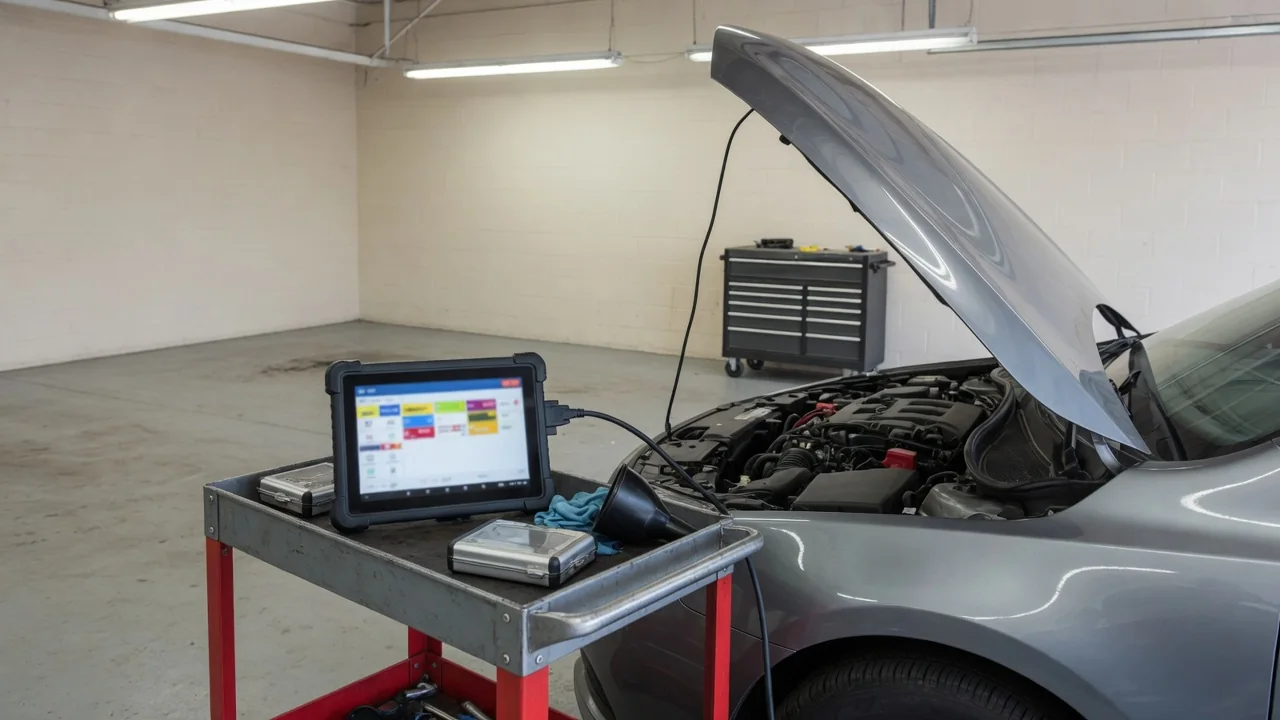
P1004 is a manufacturer-specific trouble code, so one generic definition cannot apply to every vehicle. Confirm make, model, year, engine configuration, and vehicle identification number against factory service information before interpreting the P1004 code. A check engine light with this entry is a starting point for diagnostic testing, not proof a named part has failed, and P1004 symptoms vary with the confirmed definition.
Verify What P1004 Means for Your Vehicle
P1004 cannot be assigned one universal meaning because manufacturers use the same alphanumeric identifier for different monitored conditions. A generic scan-tool description may name a circuit, a valve, or a control strategy that does not match the control module strategy on your engine configuration. The only reliable way to interpret the code is to match the vehicle identification number, make, model, model year, and engine to the OEM definition and the exact setting conditions published for that application.
Vehicle-specific service information also lists enable criteria, such as temperature, rpm, load, and how many drive cycles must occur before the check engine light is commanded on. A generic scanner cannot supply those thresholds, nor can it tell you whether P1004 is stored in an engine, transmission, or other control module. Without that context, diagnostic testing starts in the wrong system and wastes time chasing a label instead of the condition the module actually detected.
Record the P1004 Code and Its Diagnostic Context
Once P1004 is confirmed on the correct vehicle, record which control module reported it and whether the status is stored, pending, or permanent. Pending codes can appear before the check engine light stays on, while a permanent status often remains until the monitor runs successfully after a repair. That status, together with any other codes present, shows whether the module saw a single event, a repeating condition, or a related fault that should be investigated in the same diagnostic session.
Capture freeze-frame data before clearing anything. Those snapshots typically include engine speed, load, coolant temperature, and vehicle speed at the moment the condition was flagged, which later tests must be able to reproduce. Note when the warning appeared, the driving conditions at the time, and any recent service or battery interruption that could have reset learned values or interrupted a monitor. The P1004 code identifies a detected condition; it does not prove that a named component needs replacement.
Symptoms to Document When P1004 Appears
P1004 symptoms are not a fixed catalog because they depend on the verified vehicle-specific definition. On some applications the driver may notice only a check engine light, with no change in how the vehicle starts or drives. That limited presentation still matters: it confirms the module completed a monitor and stored a result, and it should be documented with the mileage, warning message, and whether the light is steady. Treating a silent warning as unimportant can erase the only evidence the owner can provide.
If drivability changes are present, record them without labeling rough running, hesitation, reduced power, or starting difficulty as universal P1004 symptoms. Note whether the issue occurs during starting, idling, acceleration, or after the engine warms up, because those windows often correspond to different enable criteria in diagnostic testing. A symptom may also come from an accompanying fault stored at the same time. Observed behavior cannot independently confirm the meaning or cause of P1004, but it can help a technician choose which monitor and operating condition to reproduce first.
Build a Cause List From the Confirmed Definition
Every proposed cause should be tied to the affected system and the diagnostic criteria for the identified vehicle, not to a generic code title. Once the factory definition is confirmed, the service procedure usually ranks tests around wiring and connectors, component operation, mechanical restrictions, or control-module logic only where those items are actually part of that monitor. A cause inventory built that way stays within the circuit or subsystem the module evaluated, instead of expanding into unrelated parts that share a similar name on other makes.
Related codes and freeze-frame operating conditions help a technician choose the next test. A companion circuit or rationality code can point toward shared power, ground, or sensor inputs, while a single isolated P1004 with a specific load and temperature snapshot can justify starting at the first step in that vehicle flowchart. Parts should not be assigned by prevalence, and a description on a scan tool is not a parts recommendation. Until directed tests support a conclusion, the named component remains a candidate, not a confirmed failure.
Safe Observations and When to Stop Driving
Owner observations should stay limited to warning messages, how the vehicle behaves, recent service history, and visible issues that can be checked without disassembly. If an under-hood look is useful, park the vehicle on a stable surface, set the parking brake, shut the engine off, and wait until it is cool before opening the hood. Look only for obviously loose connectors, damaged wiring that is already exposed, fluid leaks, or disconnected vacuum or intake hardware. Leave terminal probing, actuator commands, and cover removal to qualified diagnostic testing rather than chasing P1004 at the vehicle.
P1004 alone cannot establish whether continued driving is safe. Use the symptoms you documented and the owner's manual guidance for a check engine light. Stop safely and seek assistance if the light is flashing, if the engine shakes severely, if the vehicle stalls, overheats, or loses power in a way that affects steering, braking, or merging, or if a warning for oil pressure, temperature, or reduced propulsion appears. Those conditions are independent of the alphanumeric identifier and take priority over finishing a trip to diagnose the stored result later.
Professional Testing and Repair Verification
A technician distinguishes possible causes by using vehicle-specific service information, live scan data, and the directed tests listed for that application. After confirming the P1004 definition and reviewing freeze-frame data, the procedure may call for comparing sensor values, checking circuit integrity, or observing whether a monitor runs under the same conditions that originally set the code. Electrical probing, actuator commands, and mechanical access belong in that qualified testing environment, because incorrect connections or commanded outputs can damage a module or create a new fault.
Clearing the P1004 code or disconnecting the battery does not establish that the fault is repaired. Those actions can erase freeze-frame data, pending codes, and monitor readiness, leaving the next inspection without the evidence needed to confirm a fix. After any work, the original condition must be resolved through the applicable verification procedure, which typically includes completing the enable criteria, confirming that the monitor passes, and performing follow-up code checks. Only when the same setting conditions no longer reproduce P1004 should the repair be considered complete.