P0971 and P0968–P0970: Pressure Control Solenoid C Circuit Codes
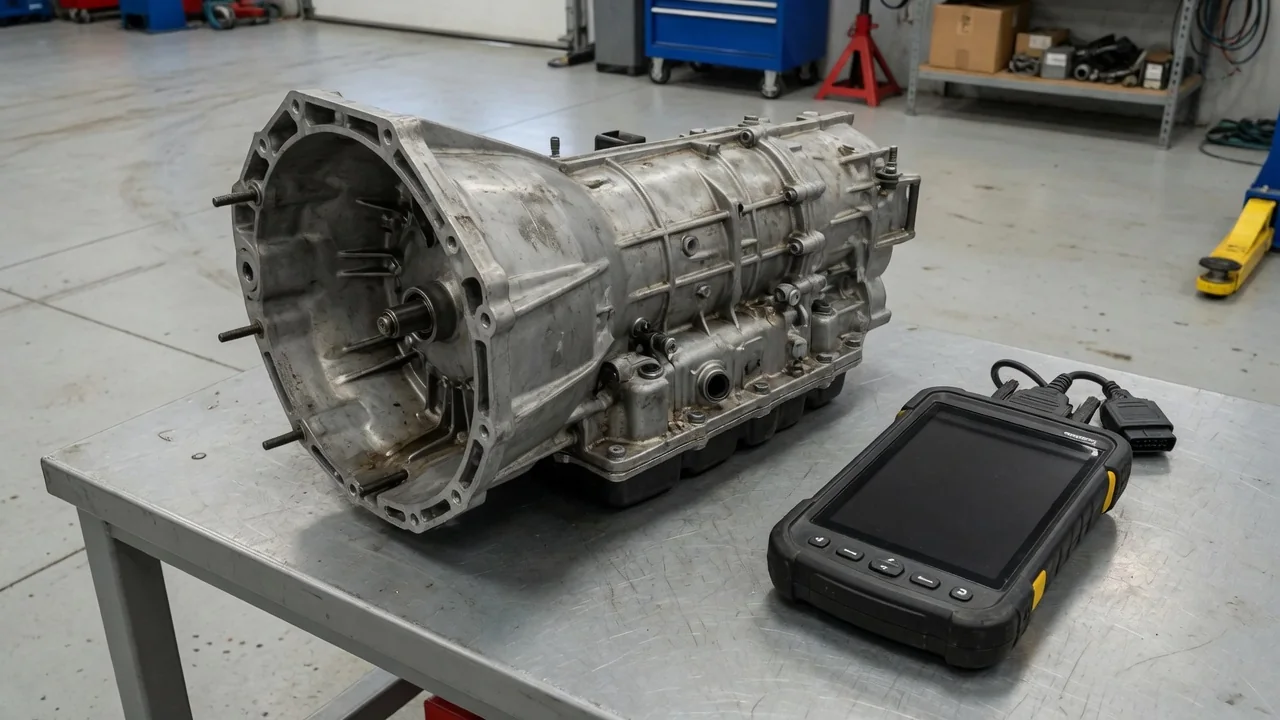
P0971 points to a control circuit high condition for pressure control solenoid C, and it sits in a family with P0968, P0969, and P0970. These codes describe how the transmission control module sees the solenoid circuit, not a confirmed hydraulic pressure reading. Confirm the exact definition for the vehicle year, model, and transmission, then use freeze-frame data and circuit tests to decide whether wiring, an electrical connector, the solenoid, or the controller deserves attention.
What P0971 Means for the Solenoid C Control Circuit
On many applications, P0971 is labeled pressure control solenoid C control circuit high. That wording belongs to the transmission control module's electrical monitoring of the solenoid driver circuit. High means the controller saw a voltage or circuit condition above its threshold, not that line pressure is actually elevated. Manufacturers assign solenoid C differently and set different enable criteria, so the same code can mean a slightly different test from one year, model, and transmission to another. Only the service information for that combination confirms what the module required when it stored P0971.
A stored P0971 is evidence of an electrical condition, not proof that pressure control solenoid C has failed. The same control circuit high result can come from the transmission wiring harness, a damaged electrical connector, a short toward voltage, an internal solenoid fault, or a problem in the controller itself. Solenoid C is a factory designation, not a universal physical location, so identifying which valve, connector cavity, or harness branch is involved requires transmission-specific diagrams. Until those sources are consulted, treating the code as a parts list leads diagnosis in the wrong direction.
Reading P0968, P0969, and P0970 in the Same Circuit Family
P0968 is commonly described as pressure control solenoid C control circuit open, meaning the transmission control module did not see the expected continuity or current path. An open circuit can exist in the harness, at a connector, inside the solenoid winding, or at the controller pin, so the label does not name the failed piece. P0969 is typically the control circuit range and performance counterpart. That title reports an electrical response outside the expected window; it does not prove a mechanical valve stick or a hydraulic leak. Both still need confirmation in the vehicle service information.
P0970 is generally the control circuit low member of the same family. Low describes an electrical reading below the controller's threshold, such as a short toward ground or a circuit that cannot be driven as commanded. It is not a diagnosis of low transmission fluid. When P0971, P0970, P0968, and P0969 appear together or in sequence, note which are current, pending, or stored and read the detection conditions for each. A pending range and performance code after a brief open-circuit event may need a different first test than a continuously current control circuit high or low fault.
Shifting Symptoms and Reasons to Stop Driving
A pressure control solenoid C circuit fault may produce harsh shifts, delayed engagement, limited gear selection, a transmission warning lamp, or failsafe operation, but not every vehicle shows those changes. The controller can limit clutch apply or lock the unit in a default range when it cannot trust the solenoid circuit. Symptoms can be intermittent if a connector or harness only misbehaves when hot, wet, or under load. Smooth shifting on a short drive does not rule out an electrical fault that already set P0971, because the module may have stored the event and returned to a usable strategy.
If the vehicle loses propulsion, engages a gear with unexpected force, produces smoke or a strong burning odor, or displays a transmission overheating warning, stop in a safe location and arrange assistance. Those signs can accompany a circuit problem that has already forced failsafe operation, and further movement can add heat or clutch damage. There is no reliable mileage that remains safe after P0968, P0969, P0970, or P0971 appears. Follow the owner guidance for warning lamps and base the next step on how the vehicle is actually behaving.
Safe Observations to Record Before Service
Before any codes are cleared, record every available powertrain and transmission code along with freeze-frame data. That snapshot can show vehicle speed, gear, temperature, and commanded solenoid state at the moment the transmission control module set P0971, P0970, P0968, or P0969, and clearing erases that context. Note whether the warning appeared at startup, during a shift, after the unit warmed, or after recent electrical or transmission work. A fault that returns only after a harness was disturbed points toward an electrical connector or wiring issue, while a cold-start event may follow a different enable path than a hot, loaded shift.
From a parked vehicle, look for fluid on the ground and for readily visible damage to the transmission wiring harness or an electrical connector at the case, without crawling underneath or touching hot parts. A pinched, chafed, or oil-soaked harness near a connector can support an open circuit, control circuit low, or control circuit high condition even when the solenoid itself is intact. Fluid inspection methods differ by transmission. Do not open fill or check plugs or add fluid unless the correct vehicle procedure and specification are in hand, because the wrong method can misread level or introduce contamination.
Professional Tests That Can Locate the Circuit Fault
A technician should obtain vehicle-specific wiring diagrams, connector identification, and test specifications before interpreting any voltage or resistance reading on the pressure control solenoid C circuit. Those documents show how the transmission control module supplies power and ground, which pin is the control circuit, and what values are valid. Following the prescribed sequence, the shop evaluates circuit power, control wiring through the transmission wiring harness, connector integrity, and possible opens or shorts. Measurements taken without that map can confuse a control circuit high result with a low or open-circuit condition on a different pin.
Supported scan-tool commands can command pressure control solenoid C and display current, duty cycle, or circuit status while the technician watches for a plausible electrical change. A commanded state does not prove the valve moved or that hydraulic pressure changed, so a range and performance concern may remain after the wiring looks intact. If shifting complaints continue once electrical findings are assessed, hydraulic or mechanical testing can be justified with the published procedure. Those tests belong after the circuit is characterized, because an open, low, or high fault can mimic poor apply pressure without a failed valve body.
Repair Decisions and Confirmation That the Fault Is Resolved
Repair should follow what the tests actually showed. Findings may support a transmission wiring harness repair, electrical connector service, solenoid-related work, or further diagnosis of the transmission control module when the circuit cannot be driven correctly from the controller side. Replacing pressure control solenoid C only because P0971, P0968, P0969, or P0970 names that solenoid can leave an open circuit, a high or low short, or a damaged connector in place. The new part then fails the same electrical monitor, and the original shifting complaint returns.
Any programming, adaptation, or clutch relearn after solenoid or controller work must follow the applicable service information rather than being assumed for every repair. Some transmissions need a scan-tool procedure so the module can relearn apply characteristics; others only require that the electrical fault be gone. Confirmation means the codes remain not current, freeze-frame no longer captures a repeating control circuit high, low, open, or range and performance event, and a professional functional check under safe conditions shows expected engagement and shift quality.