P0960–P0963: Pressure Control Solenoid A Circuit Codes
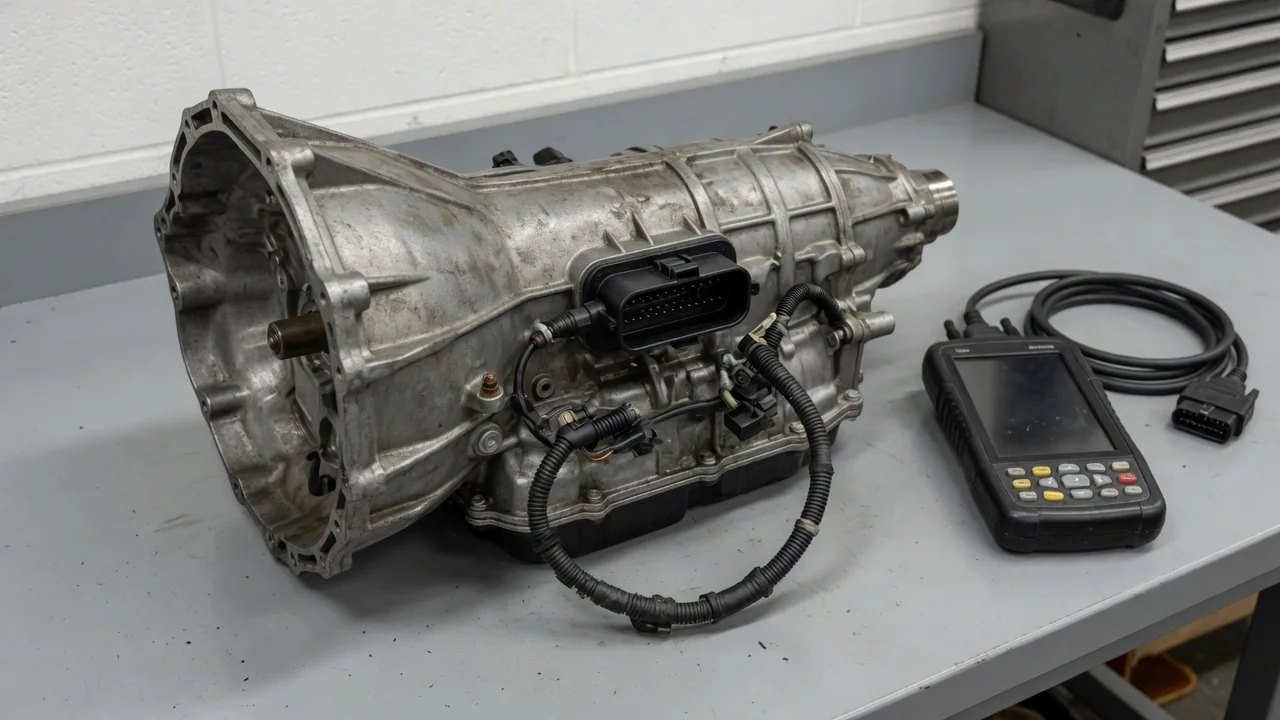
Pressure control solenoid A circuit codes P0960, P0961, P0962, and P0963 point the technician toward an electrical problem in the solenoid's control circuit rather than a finished parts list. These family codes commonly involve an open circuit, range or performance concern, a low circuit reading, or a high circuit reading. Confirm each definition in service information for the year, model, and transmission, then use symptoms, freeze-frame data, and wiring findings to decide what actually needs repair.
Verify the Vehicle’s Definitions for P0960–P0963
Before treating P0960, P0961, P0962, or P0963 as interchangeable, open the vehicle's service information for that year, model, and transmission. The published diagnostic criteria, enable conditions, and circuit descriptions can differ even when the generic labels look similar. In many applications the family is described as P0960 for a control circuit or open condition, P0961 for control circuit range or performance, P0962 for a control circuit low reading, and P0963 for a control circuit high reading. Those labels still need confirmation against the manufacturer's wording for the unit in the vehicle.
Low and high in this family describe the monitored electrical control circuit, not a direct measurement of line pressure inside the transmission. A P0962 low-circuit result or a P0963 high-circuit result therefore does not, by itself, prove that hydraulic pressure is low or high. The transmission control module has detected a circuit condition that failed its criteria. That evidence still has to be interpreted with wiring, connector, and component tests. A stored code identifies a detected condition; it does not prove that pressure control solenoid A has failed and must be replaced.
How Pressure Control Solenoid A Influences Shifting
The transmission control module commands pressure control solenoid A so hydraulic pressure can be regulated during clutch application and gear changes. When the solenoid responds as commanded, line pressure and related clutch apply pressure can follow the intended strategy. If the control circuit is open, out of expected range, electrically low, or electrically high, the commanded current or duty cycle may not produce the intended hydraulic result. Shift feel can then change because clutch or brake elements apply too quickly, too slowly, or inconsistently, without every vehicle showing the same complaint.
The letter A is a circuit designation, not a universal map to a physical location, electrical connector pin, or replacement part number. On one transmission the solenoid may sit in the valve body; on another the same family code still refers only to the assigned circuit. An electrical fault on that circuit can disturb hydraulic operation even while the mechanical valve, fluid, and clutch hardware remain intact. Until the open, range, low, or high condition is isolated, the hydraulic symptoms remain a result, not a complete explanation of the root cause.
Shifting Symptoms and Signs to Stop Driving
Drivers may notice harsh shifting, delayed engagement into drive or reverse, or restricted gear operation if the controller limits function after a circuit fault. A check-engine lamp or a dedicated transmission warning can appear with P0960 through P0963, and some vehicles enter a limited operation mode that holds a safer gear set. Those complaints also overlap with fluid, clutch, and other solenoid problems, so the code family is a starting clue rather than a unique fingerprint. An intermittent open or range/performance condition can store P0960 or P0961 even when the current drive feels almost normal.
A stored circuit code alone does not establish that continued driving is safe. Stop as soon as it is safe and arrange assistance if the vehicle loses drive, slips severely, shows an overheating warning, or produces a burning smell. Those signs can point to clutch damage, overheated fluid, or a loss of propulsion that a P0962 or P0963 electrical reading cannot rule out. If the vehicle still moves with only a mild shift-quality change, follow the owner's guidance and have the control circuit evaluated before the condition becomes more restrictive.
Safe Observations to Record Before Diagnosis
Record every stored and pending code, including related transmission and engine entries, before anything is cleared. Capture freeze-frame data so load, temperature, speed, and gear at the moment of the fault remain available for later comparison. Note dashboard warnings and whether the transmission control module has commanded limited operation mode. Those snapshots often matter more than a later retest because an intermittent control-circuit open, low, or high condition may not return on demand. Clearing first erases the only evidence of when the circuit failed the monitor.
Write down whether engagement or shift complaints appear when the transmission is cold, after it has warmed, during takeoff, or under particular driving conditions, without trying to force the fault. With the vehicle off, parked, and secured, inspect only readily accessible portions of the wiring harness and electrical connector for obvious damage, corrosion, or a loose fit. Stay away from hot exhaust, moving parts, and any area that would require crawling under an unsupported vehicle. Record visible fluid leaks and follow the owner's manual for any permitted fluid check; many transmissions have no owner-accessible dipstick procedure.
Professional Tests for Wiring, Solenoid, and Controller Faults
A technician compares the stored P0960, P0961, P0962, or P0963 criteria with the vehicle-specific wiring diagram for pressure control solenoid A. That diagram identifies power, ground, and the control circuit path between the transmission control module, the wiring harness, and the solenoid connector. Inspection then looks for poor terminal fit, continuity problems, shorts to power or ground, and supply or ground faults that could produce an open, range/performance, low, or high circuit reading. Generic pin charts and guessed resistance values are not a substitute for the manufacturer's circuit description.
Solenoid electrical testing belongs against the specifications published for that transmission, including checks that consider heat-related or intermittent faults. Scan data can show commanded versus actual circuit behavior, and supported actuator tests may confirm whether the module can drive the solenoid as intended. When the diagnostic procedure calls for it, hydraulic pressure testing can separate an electrical control-circuit problem from a true line-pressure concern. A controller fault remains possible only after those circuit and component checks fail to explain the reading. Direct-power experiments, connector bridging, and improvised resistance shortcuts are not part of a safe diagnosis.
Evidence Needed Before Repair and Afterward
Repair should follow confirmed findings: a damaged wiring harness, a faulty electrical connector, a solenoid that fails the prescribed electrical tests, or, after those items are cleared, a controller that still cannot control the circuit. P0960 through P0963 by themselves do not justify a fluid flush, a solenoid pack replacement, a valve body replacement, or a complete transmission replacement. Those jobs may become necessary later if hydraulic damage is proven, but the circuit codes only establish that the control circuit failed a monitor. Parts should wait until the open, range, low, or high condition is isolated.
If the actual repair involves a solenoid, harness, or module, confirm any programming or clutch relearn steps in that vehicle's service information; those requirements are not universal. After the work, recheck pending and stored codes, review commanded solenoid data and, when available, line pressure, and complete a controlled professional road test when it is safe. Clearing P0962 or a related family code without that verification does not prove the control circuit is healthy. Success is a completed monitor and restored shift behavior under the conditions that previously set the fault.