P0933 to P0946: Transmission Hydraulic Pressure Sensor, Unit and Pump Relay Codes
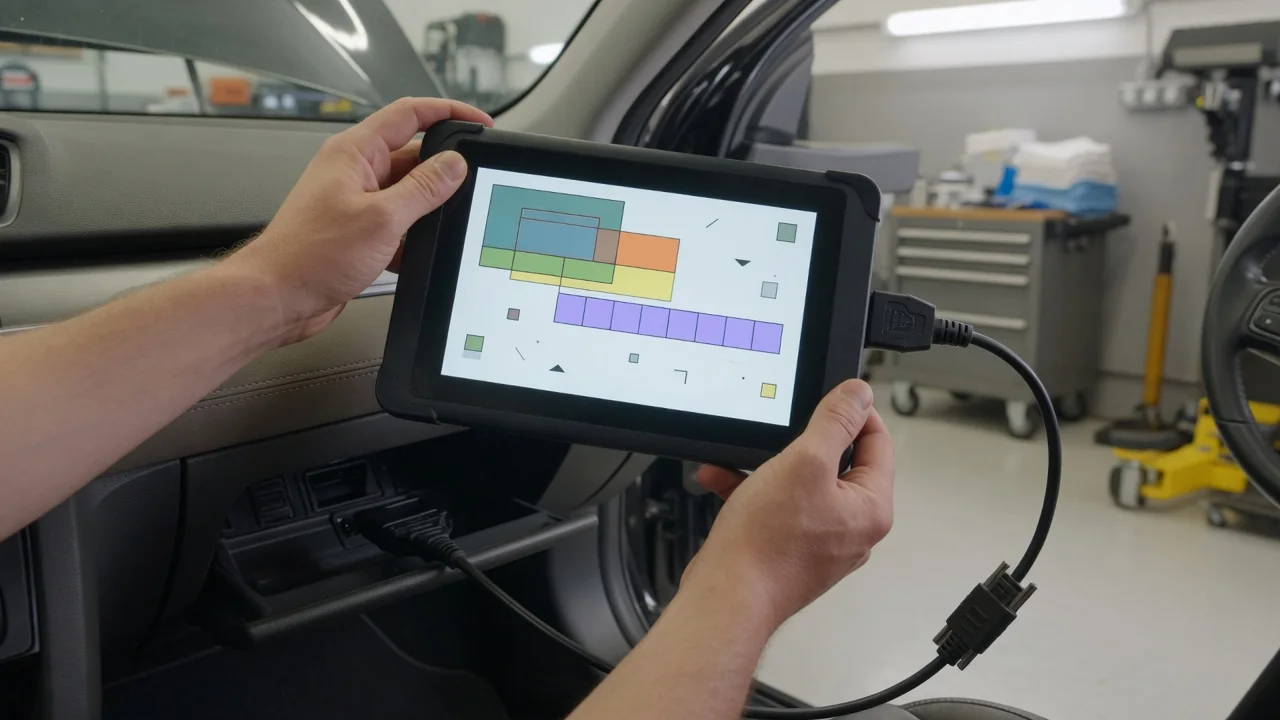
A p0934 code falls into the P0932–P0946 range that covers transmission hydraulic pressure sensors, the hydraulic pressure unit, and the pump relay. These codes often appear on automated manual and dual-clutch transmissions where an electric pump builds pressure to operate clutch and shift actuators. Drivers may notice a warning light, harsh shifting, or a limp mode. Because manufacturer definitions differ, the exact meaning for a particular vehicle must be confirmed before replacing parts. Other stored codes and freeze-frame data from the transmission control module provide essential context.
How the Hydraulic Pressure Code Range Works on Automated and Dual-Clutch Gearboxes
Automated manual and dual-clutch transmissions replace a driver-operated clutch with an electro-hydraulic system. An electric pump builds pressure, a pressure accumulator stores energy, and a hydraulic pressure sensor reports actual pressure to the transmission control module. Using that signal, the module commands clutch actuators and shift forks. If sensor voltage, relay behavior, or pressure build deviates from expected values, one of the P0932 through P0946 codes may store. These generic titles are starting labels only; each manufacturer can define, set, and prioritize them differently.
The first step is to check the code's meaning for the exact vehicle in manufacturer service information or with a scan tool that shows manufacturer-specific data. Freeze-frame data, pending or stored status, and co-stored codes such as supply-voltage or communication faults also change interpretation. A stored code with an active supply-voltage fault points first to system voltage, while a communication code could mean the module received corrupted pressure data. Reading one code in isolation often leads to wrong conclusions, so full context matters.
P0933: Hydraulic Pressure Sensor Range or Performance
P0933 means the control module sees pressure readings that do not match what it expects for the operating condition, although the exact test logic is manufacturer-defined. Possible contributors include sensor signal drift, wiring or connector problems, fluid level or condition, and real pressure problems in the hydraulic unit. A range/performance code does not prove the sensor itself has failed. Replacing the sensor on a guess can miss the real cause and waste money, because the same code can store when a sticky valve or low fluid makes actual pressure differ from the commanded target.
Drivers may notice slow or harsh shifts, a transmission warning light, or a reduced-function mode, and these symptoms vary by vehicle. One model may simply illuminate a light, while another limits gear selection to protect the clutches. Because the range/performance diagnostic runs under specific conditions such as temperature and pump duty cycle, the fault may be intermittent. Noting when the code appears—cold start, after highway driving, or during repeated stop-and-go traffic—helps a technician reproduce the condition and interpret the pressure data correctly.
P0934 and P0935: Hydraulic Pressure Sensor Circuit Low and High
P0934 and P0935 describe opposite problems in the pressure sensor circuit. Circuit low means the signal voltage is below the expected range, while circuit high means it is above the expected range; the exact thresholds are set by the manufacturer. Typical electrical causes include a damaged harness, corroded or loose connectors, a short to ground or to voltage, a sensor reference-supply problem, or an internal sensor fault. These are usually electrical faults rather than proof of low or high fluid pressure, but the vehicle-specific definition must be confirmed before assuming that.
Safe owner observations for these circuit codes are limited to visual checks. Look for obvious harness damage, rubbed insulation, or fluid contamination near connectors, and note whether the code returns after clearing and under what conditions it appears. Because sensor circuits often share a reference voltage with other components, a short in a different sensor can pull the reference line low or high and set a pressure code. A professional with a scan tool and wiring diagram can measure the circuit and isolate the fault without unnecessary part replacement.
P0944: Hydraulic Pressure Unit Loss of Pressure
P0944 indicates the system cannot build or hold the hydraulic pressure needed to work the clutch or shift actuators. Possible causes in general terms include a weak or failing pump, internal leakage, a failed accumulator or pressure unit, low or degraded fluid, and a faulty sensor giving a false low reading. A technician normally watches live pressure data while the pump runs to separate a real pressure loss from a misleading sensor signal. This prevents replacing a mechanical component when a wiring or sensor issue is actually responsible.
These hydraulic systems can store high pressure even with the engine off, so owners should not open lines, fittings, or accumulators themselves. Sudden release of stored pressure can cause injury and contaminate the system. The code can appear with loss of drive, refusal to engage a gear, or a limp mode. If the vehicle behaves unpredictably, continued driving risks further damage to clutches and synchronizers. Stopping in a safe place and getting professional assistance is far cheaper than a transmission overhaul after a low-pressure condition is ignored.
P0946: Hydraulic Pump Relay Circuit Range or Performance
P0946 means the module sees relay or pump-control circuit behavior that does not match its commands, and relay design plus diagnostic logic vary by manufacturer. Possible contributors include a sticking or worn relay, poor connections or grounds, low system voltage, a pump drawing abnormal current, or a control-module output issue. Because the relay controls the electric pump, P0946 can be linked to pressure codes such as P0944: if the pump is not running correctly, hydraulic pressure may fall and set a second fault. The order and context of stored codes matter.
Before deep diagnosis, battery and charging-system health is worth confirming first. Low voltage can affect relay pull-in and pump speed, causing the module to see unexpected behavior and store a relay code though the relay itself is fine. A weak battery that drops voltage under load can produce intermittent P0946 faults, especially during repeated stop-start driving. Checking battery voltage, alternator output, and ground connections is a quick, low-cost step that may explain several seemingly unrelated hydraulic and communication codes.
Symptoms, Warning Lights and What Drivers Can Safely Observe
Across these codes, symptoms can include a transmission or check-engine warning, a flashing gear-position indicator, delayed engagement, rough shifts, repeated pump running noise, or limp mode. Symptoms alone cannot identify which component has failed, and several of these codes can produce similar driving behavior. A low-pressure fault and a relay fault may both cause harsh shifting and a warning light. Observing exactly when the problem occurs and what else changes helps a technician choose the right diagnostic path instead of guessing.
Non-invasive observations to note for a technician include when the fault appears, temperature and driving conditions, any unusual pump sounds, and whether a battery or jump-start event happened recently. A pump that runs constantly without building pressure points to a leak or failed accumulator, while a pump that does not run at all points to a relay or circuit problem. If the vehicle will not select gears or drives unpredictably, stopping in a safe place and getting assistance is safer than forcing it to keep going.
When Professional Diagnosis Is Needed and What Testing Involves
Confirming these faults usually takes manufacturer-level scan tool functions, such as live pressure readings, pump actuation tests, and adaptation or bleeding procedures. A technician may check the sensor signal against specification, relay and pump circuit integrity, pressure build and hold behavior, and fluid condition. These tests require monitoring multiple data points at once, often while the transmission operates in specific temperature windows. A generic OBD-II scanner usually cannot command the pump or view the high-resolution pressure data needed for a reliable diagnosis.
Some repairs need calibration, relearn, or bleeding steps afterward, and clearing codes without testing can hide a problem that is getting worse. A hydraulic unit replacement may require running a special bleed routine, while a new clutch actuator may need adaptation to learn its range. Sharing the full code list, freeze-frame data, and your own notes with the repair shop helps avoid unnecessary part replacement and directs the technician to the root cause more quickly.