P0875–P0878: Transmission Pressure Sensor/Switch D Codes
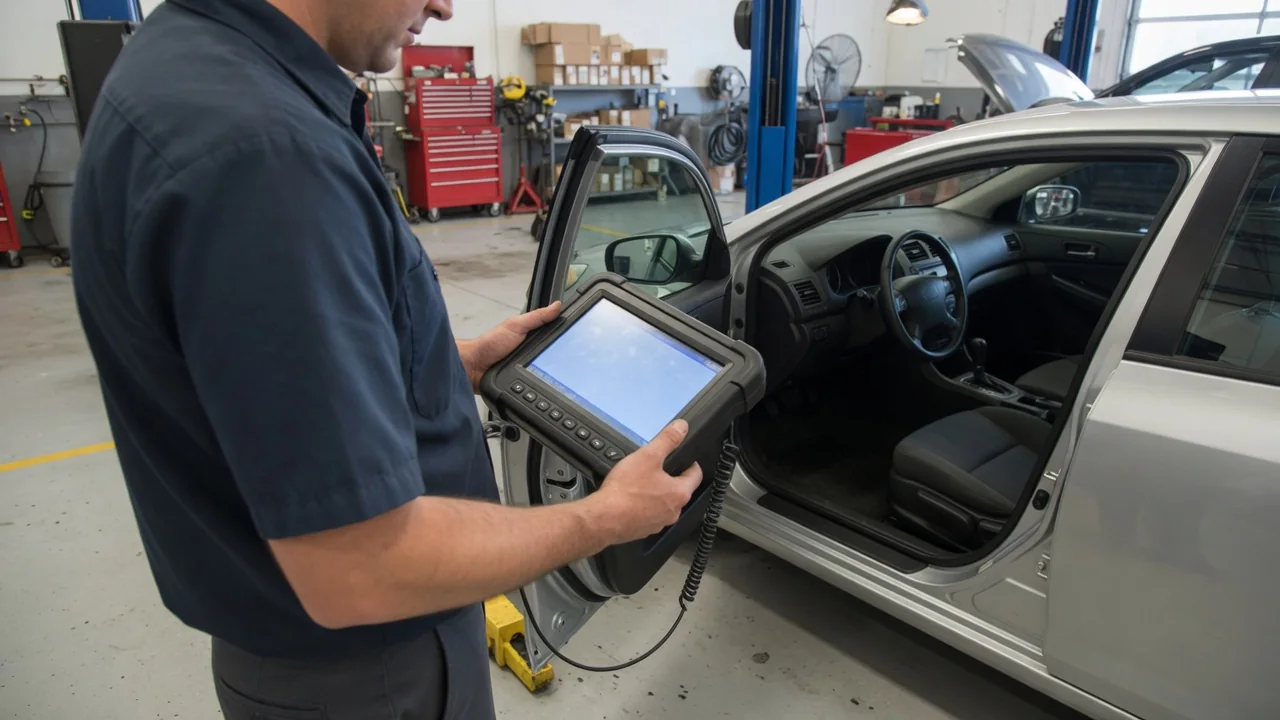
P0875, P0876, P0877, and P0878 belong to a family of diagnostic trouble codes that monitor the transmission fluid pressure sensor/switch D circuit. These codes typically flag circuit, range/performance, circuit-low, or circuit-high conditions seen by the transmission control module. They record a detected electrical or monitoring event, not a confirmed failed sensor or a measured hydraulic-pressure value. Exact meaning, sensor location, and test method depend on year, make, model, and transmission.
Verify the Vehicle’s Code Definition and Sensor D Designation
Before interpreting P0875, P0876, P0877, or P0878, compare the stored definition with factory service information for that vehicle's year, make, model, and transmission. Sensor/switch D is a manufacturer-assigned label for one monitored circuit, not a universal physical location on every gearbox. On one application the circuit may watch a dedicated pressure switch; on another it may watch a transducer that reports signal voltage related to hydraulic pressure. Location, connector identity, and required tests therefore need vehicle-specific confirmation rather than a generic parts diagram.
A stored code is evidence that the controller detected a condition that met its criteria during a drive cycle. It does not establish that the transmission fluid pressure sensor/switch D has failed, that the wiring harness is open, or that the transmission itself needs replacement. Freeze-frame data captures operating conditions at the moment of detection and should be preserved so later testing can be compared with that snapshot. Until the circuit, sensor, and hydraulic context are evaluated with the matching service procedure, replacement remains an assumption rather than a diagnosis.
P0875: Transmission Fluid Pressure Sensor/Switch D Circuit
P0875 is commonly described as a transmission fluid pressure sensor/switch D circuit fault, meaning the transmission control module saw an electrical problem on that designated circuit rather than a fully documented pressure measurement. That wording still requires confirmation in the vehicle's service information, because some manufacturers phrase the same code around an open, a short, or a general circuit malfunction. The designation D only identifies which monitored channel is involved. Without that confirmation, treating P0875 as interchangeable with P0876, P0877, or P0878 can send testing down the wrong path.
Possible contributors include a damaged wiring harness, corroded terminals, a loose connector, or a fault inside the sensor/switch itself. None of those possibilities can be ranked without inspection, because a code does not report which part of the circuit failed. A useful diagnostic procedure first identifies how that vehicle supplies power, ground, and the signal path to sensor/switch D. Only after that arrangement is known can a technician measure signal voltage and continuity against the published circuit values instead of probing at random.
P0876: Sensor/Switch D Range or Performance
P0876 is commonly described as a transmission fluid pressure sensor/switch D range/performance condition. After the vehicle-specific definition is confirmed, that usually means the monitored response did not match the behavior the transmission control module expected under the recorded operating conditions. The controller may compare signal voltage with commanded gear, engine load, or inferred hydraulic pressure. A reading that is electrically present but implausible can set P0876 even when the circuit is not fully open or shorted, which is why this code is not the same as a simple circuit-low or circuit-high flag.
Depending on the transmission's monitoring strategy, diagnosis may include circuit faults, abnormal sensor/switch behavior, or hydraulic conditions that make the reported pressure inconsistent with other data. Companion codes, freeze-frame data, and the conditions under which the fault set are needed before attributing P0876 to one component. A range/performance event recorded only during a cold start, a single gear, or a specific throttle position points toward a different investigation than a fault that appears in every drive cycle. Without that context, replacing the sensor or chasing hydraulic pressure changes remains guesswork.
P0877 and P0878: Low and High Circuit Signals
P0877 is commonly described as a circuit-low condition on the transmission fluid pressure sensor/switch D circuit, and P0878 is commonly described as a circuit-high condition on the same circuit. Both descriptions still require vehicle-specific verification. Low and high refer to the monitored electrical condition, typically a signal voltage that stayed below or above the controller's threshold, not independent proof of low or high transmission fluid pressure. A short to ground, an open, a short to power, or an internal sensor/switch fault can produce either code depending on how that circuit is designed.
Wiring damage, poor connections, and sensor/switch problems remain possible sources for P0877 and P0878, but circuit design determines how an open or a short moves the signal. On a pull-up arrangement, an open may look high; on a pull-down arrangement, the same open may look low. Electrical measurements therefore belong in a test against the manufacturer's specified circuit values and procedures, not against a generic voltage guess. Interpreting a low or high reading without that reference can condemn a good sensor while leaving a harness fault untouched.
Symptoms to Record and When to Stop Driving
A stored P0875, P0876, P0877, or P0878 event may illuminate a warning lamp, produce harsh or delayed shifts, restrict operation, or coincide with a loss of drive. Not every vehicle will show those symptoms, and some will store the code with little more than a lamp. Record whether any change appears when the vehicle is cold, after it warms, during gear engagement, or under particular driving conditions. Do not try to recreate unsafe behavior such as aggressive launches or continued driving with severe slipping just to observe the fault.
Stop safely and arrange assistance if the vehicle loses propulsion, slips severely, produces smoke, shows a significant fluid leak, or displays an overheating warning. Those conditions are safety issues independent of which sensor/switch D code is stored. The presence of P0877, P0878, or a related circuit or range/performance code cannot by itself establish whether continued driving is safe, because the same electrical flag can appear with a minor connection problem or with a transmission that is already compromised. Treat the code as a reason to investigate, not as permission to keep driving through worsening shift quality.
Safe Checks and Professional Diagnostic Next Steps
Before any scan tool is used to clear data, preserve stored and pending codes, freeze-frame data, and warning messages, and note any recent transmission or electrical work. Owner checks should stay limited to visible leaks and accessible external damage with the vehicle parked, off, and supported as the owner's manual describes. Do not crawl under an unsupported vehicle or disconnect transmission components. Check fluid level only when the owner's manual provides a suitable owner procedure. Some transmissions require a professional level check, and guessing fluid specifications can add a hydraulic problem to an electrical one.
Professional diagnosis uses vehicle-specific wiring information, connector inspection, circuit testing, scan data, and hydraulic testing when the monitoring strategy indicates it. Signal voltage, power, and ground should be compared with the published arrangement for sensor/switch D rather than assumed from a similar code on another model. Parts should be replaced only after evidence points to that component. After the repair, confirm that the recorded fault condition and the associated symptoms are gone using the applicable verification procedure, which may include a monitored drive cycle rather than a simple code erase.