P0800, P0801, P0802 and P0899: Transfer Case and Transmission Control Circuit Codes
Diagnostic trouble codes P0800, P0801, P0802, and P0899 point to the control circuits that let the transfer case control module or transmission control module talk to the engine control module. They do not describe worn gears or clutch material. Instead, they flag wiring, communication, or voltage problems that can confuse the powertrain. Because these codes often appear with few obvious driving changes, a careful reader may wonder whether the transfer case is failing or merely sending a request the engine computer cannot hear. Answering that requires understanding the request circuits and the symptoms each code actually monitors.
What This Group of Transfer Case and Transmission Control Codes Covers
Codes in the P0800 through P0899 range generally cover control circuits and communication between modules rather than internal mechanical wear. The transfer case control module and transmission control module need to exchange information with the engine control module, and when one side cannot complete that handshake, a code appears. The fault may sit in a wire, connector, power feed, or ground, not inside the gearset. This distinction matters because replacing a transfer case or transmission for a circuit code rarely fixes the problem.
A separate transmission or transfer case module often cannot light the check engine lamp on its own. Instead, it sends a signal over what is commonly called a MIL request circuit, and the engine control module turns the warning on. If that request line is open, shorted, or carrying an unexpected voltage, the engine module may record a code for the request itself, not for the original fault. Confirming each code’s vehicle-specific definition is essential, since manufacturers use the same numbers with different meanings.
P0800: Transfer Case Control System MIL Request
The commonly used definition of P0800 is that the transfer case control module requested the check engine light because it has stored its own fault. On many vehicles, this is a pointer code; the useful details sit in the transfer case module’s fault memory, which basic scanners cannot reach. Drivers may notice a 4WD or AWD indicator warning, a transfer case mode that will not engage or disengage, or no obvious change at all. The absence of symptoms does not mean the circuit is fine, only that the module saw a condition worth reporting.
Because P0800 often acts as a flag, the actual problem may involve a shift motor, encoder, speed sensor, or internal transfer case logic that the module monitors. However, the code itself only proves a request reached the engine module; it does not prove which component failed. Reading all modules before condemning the transfer case, shift motor, or encoder is the correct first move. Vehicle-specific service information will say whether P0800 is a simple request signal or a broader transfer case control system MIL request.
P0801: Reverse Inhibit Control Circuit
A reverse inhibit system exists on some manual-transmission vehicles to prevent the driver from moving the shift lever into reverse when road speed is too high. An electronic control unit usually holds a solenoid or lockout that blocks the reverse gate above a threshold, then releases it when the vehicle slows enough. P0801 generally points to an electrical fault in that control circuit, such as an open wire, a short to power or ground, or an out-of-range signal. The code does not automatically mean the transmission has internal damage or that the lockout solenoid is stuck.
Drivers may find that reverse is difficult to select, that reverse remains available when it should be locked out, or that only a warning light appears. Because not every vehicle uses this system, the exact set conditions and circuit design differ. A P0801 on one model may reference a relay control wire, while on another it may be a direct solenoid driver fault. Manufacturer service information is required to confirm what the circuit looks like and where to begin testing before replacing any part.
P0802 and P0899: Transmission Control System MIL Request Circuit Faults
P0802 commonly points to an open or fault in the circuit the transmission control module uses to ask the engine control module to turn on the malfunction indicator lamp. When the request line is broken, shorted, or carrying an implausible signal, the engine module sees a problem with the request itself and stores P0802. P0899 is often the high-voltage variant of the same MIL request circuit, meaning the engine module detects battery voltage or an unwanted voltage level where a different signal should be. Manufacturer wording can vary, so one vehicle may call P0899 a general circuit high while another names it a specific solenoid or sensor circuit high.
It is important to separate a fault in the request circuit from a transmission fault that the module is trying to report. If the transmission module wants to turn on the lamp because of a bad shift solenoid, that is a transmission problem; if the wire that carries that request is broken, the engine module may record P0802 or P0899 even though the transmission itself is working properly. Symptoms may include a check engine light with few other signs, absent transmission codes in the engine module, or additional transmission warning behavior such as harsh shifts or limp mode.
Common Causes: Wiring, Connectors, Power, Ground and Module Communication
The most common causes behind these codes involve wiring and connectors rather than expensive control units. A harness that runs near the transmission or transfer case can chafe against a bracket, melt on exhaust heat, or collect water inside a connector. Corroded terminals, loose pins, and broken insulation create high resistance or intermittent continuity that confuses module communication. A poor ground at the transmission, transfer case, or engine block can shift reference voltages and make a normal request look like a circuit fault.
Low system voltage, a weak battery, or a failing alternator can also produce confusing module and circuit codes. When supply voltage drops during cranking or under load, modules may reset, lose communication, or send corrupted request signals. Module software issues or failed control modules are possible causes, but these should be reached only after the wiring, connectors, power, and grounds have been tested. Avoid buying a transfer case control module, transmission control module, or engine control module based on the code title alone, because the fault frequency heavily favors external circuit problems.
How These Codes Are Diagnosed Safely
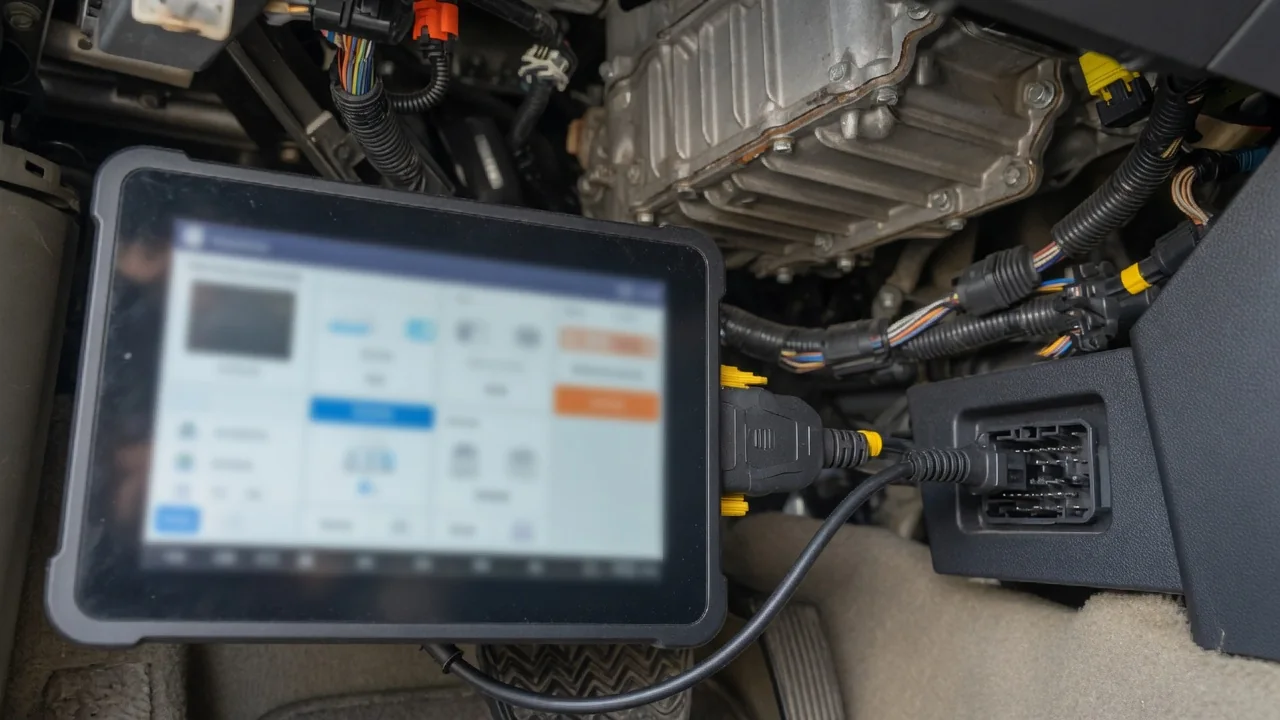
A proper diagnosis starts with a scan tool that can read transmission and transfer case modules, not just the engine computer. Saving freeze frame data and all stored codes before clearing anything is important because the conditions present when the fault was set often point directly at the cause. A basic code reader that only sees powertrain codes may miss the companion code stored in the transfer case module, leaving the real problem invisible. Owners can safely note when the light appears, check battery condition and terminal tightness, and visually inspect reachable connectors with the engine off and the key removed.
Professional diagnosis usually involves wiring diagrams, circuit testing, module communication checks, and technical service bulletin lookups. A technician may backprobe the MIL request wire, load-test the ground, or use a scope to watch the signal while wiggling the harness. Those steps require manufacturer service information and proper tools. Do not probe live circuits, unplug modules while driving, or work under a raised vehicle without proper equipment and support. A shorted circuit can damage a module if tested incorrectly, and some transfer case and transmission connectors carry high current.
Is It Safe to Drive, and When to Get Professional Help
Whether these codes are safe to drive with depends on which system reported the fault and whether the vehicle’s behavior has changed. If the transfer case cannot shift out of four-wheel drive or the transmission shifts erratically, continuing to drive may worsen the problem or create a traction risk. A reverse lockout fault that allows reverse at speed is dangerous, while a P0800 that only leaves a 4WD warning light may be drivable for a short distance. Stop and get professional help if the vehicle shifts erratically, will not select gears as it should, has a disabled 4WD in conditions where traction matters, or shows flashing warnings.
Reading these codes on your own gives useful direction but not a complete answer. Clearing the code without repairing the underlying circuit usually means the light returns, often at a worse moment. When a scan tool cannot read module-level codes, or when circuit tests require manufacturer service information, a qualified technician can perform the diagnosis without wasting parts. Because exact code titles and set conditions differ by manufacturer, model year, and powertrain, a professional who can access the correct service data is often the fastest and least expensive route to a lasting repair.