P0760 to P0764: Shift Solenoid C Codes Explained
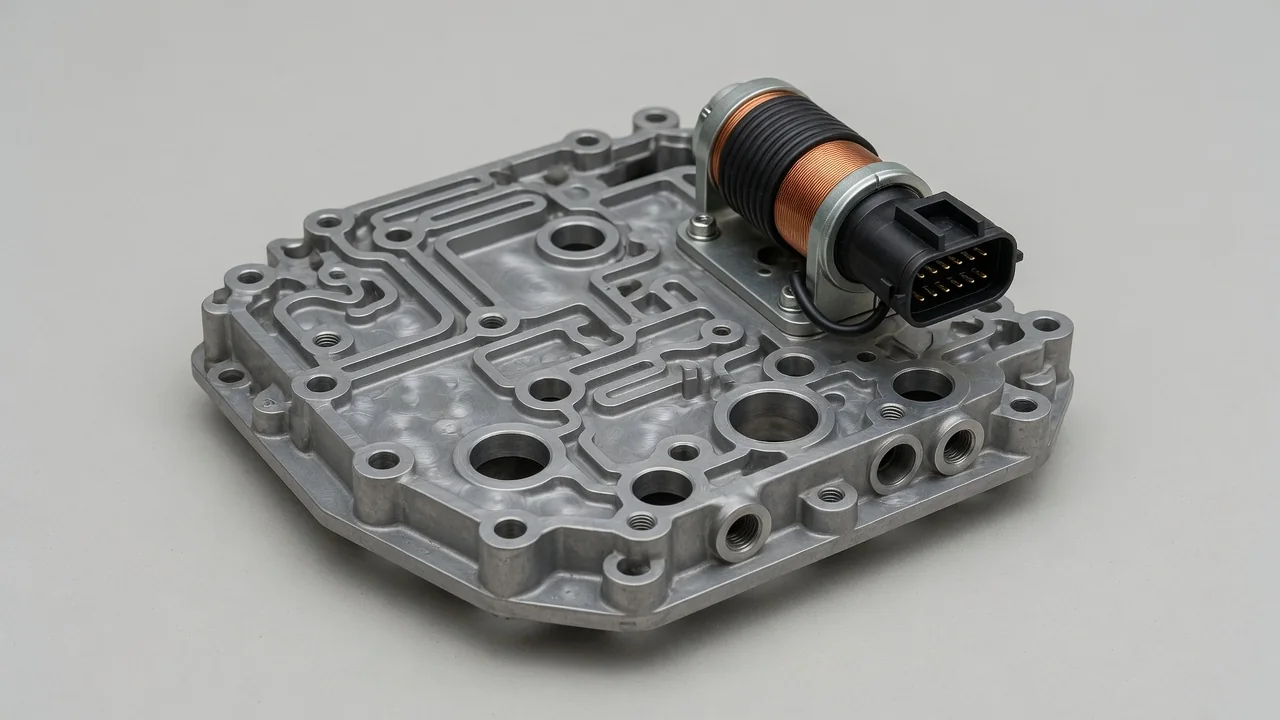
P0760 through P0764 belong to the shift solenoid C family of transmission codes. P0761 is often a performance or stuck-off condition, while P0760, P0762, P0763, and P0764 describe related malfunction, stuck-on, electrical, and intermittent events. Each code is evidence the transmission control module recorded an unexpected solenoid circuit or shift response. Confirm the manufacturer definition for that vehicle and transmission before treating any part as failed.
What P0760 Means and How to Verify the Solenoid C Designation
P0760 generally identifies a shift solenoid C malfunction, yet that wording is only a starting point. The exact definition and diagnostic procedure depend on the vehicle and transmission, so confirm the label in the applicable service information before interpreting it. Electrically controlled solenoids help the transmission control module regulate hydraulic pressure and clutch or band application. When a solenoid opens or closes a fluid path in the valve body, it influences which gear the unit can produce.
The letter C is a diagnostic designation used by the controller, not a universal map of a physical part. Location, connector identification, and service naming for shift solenoid C require vehicle-specific information. A stored P0760 code is evidence of a recorded malfunction related to that designation, not proof the solenoid has failed. Hydraulic restrictions, wiring, valve body issues, or control problems can produce the same code, so replacement is not justified by the number alone.
P0761: Shift Solenoid C Performance or Stuck Off
After the vehicle-specific definition is confirmed, P0761 is commonly described as a shift solenoid C performance problem or a stuck-off condition. That description means the transmission control module compared commanded gear and observed response and found a mismatch consistent with the solenoid remaining inactive when expected to act. The controller does not directly watch a plunger freeze in place. It infers the fault from electrical feedback, pressure-related behavior, or shift timing that does not match the command.
Possible contributors include hydraulic restrictions, a solenoid that does not move as commanded, contaminated or incorrect transmission fluid, and internal faults that change apply pressure. None of those possibilities can be ranked from the code alone. Diagnosis has to connect P0761 with freeze-frame data, the commanded gear at the time of the fault, and the actual shift behavior observed. Without that comparison, a performance or stuck-off label remains an untested inference.
P0762: Shift Solenoid C Stuck On
P0762 is generally described as shift solenoid C stuck on, but that title still has to be confirmed against the applicable transmission's code definition. The transmission control module sets the code when monitored operation looks as if the solenoid remained applied when it should have been released. The fault label describes a detected operating condition, not a proven mechanical jam. A coil, a valve, or a hydraulic circuit can leave the unit applied without the solenoid being physically locked.
Solenoid circuit faults, a sticking valve in the valve body, restricted passages, degraded transmission fluid, or a control-output problem can all produce a stuck-on indication. Likelihood cannot be assigned from the code number. Professional testing has to establish whether commanded operation and transmission response agree under the conditions that set P0762. If command and hydraulic result diverge, further inspection is needed; if they agree, the inference of a jammed solenoid C is not supported.
P0763: Shift Solenoid C Electrical Fault
P0763 is generally an electrical fault for shift solenoid C, after the manufacturer's definition and detection criteria are verified. The transmission control module typically monitors the solenoid circuit for unexpected voltage, current, or continuity rather than for shift feel. Wiring damage, corroded or loose connectors, an open or shorted solenoid coil, and a control-circuit fault at the module can all produce that result. The code remains evidence of a circuit discrepancy, not a completed diagnosis of which path component failed.
Circuit testing for P0763 must follow the correct wiring diagram and manufacturer specifications for that solenoid circuit. Universal resistance or voltage values are not a substitute, because coil design and control strategy differ among transmissions. A technician can check circuit integrity, connector condition, and whether the transmission control module can command and monitor the circuit as designed. Improvised power application or jumper methods are not a substitute for the published procedure and can damage the control system.
P0764: Shift Solenoid C Intermittent Fault
P0764 is generally described as an intermittent shift solenoid C fault, and controller documentation still has to confirm what is monitored. An intermittent code means the condition appeared and then receded within the detection window, not that the problem has disappeared. Heat, vibration, and changing load or temperature can accompany that pattern without proving the cause. A connector that loses contact when hot, a coil that opens under vibration, or a hydraulic event in one gear can all look intermittent.
Freeze-frame data, code status, and a record of when symptoms appear give a practical timeline for a P0764 event. Note speed, temperature, commanded gear, and whether the fault returned after a heat cycle or rough road. A stationary inspection can find a damaged connector or leak, yet it can find nothing if the fault depends on load or temperature. That is why an intermittent solenoid circuit concern often requires monitored professional testing during the conditions that originally set the code.
Symptoms, Safe Observations, and When to Stop Driving
A shift solenoid C concern can illuminate a warning lamp, produce harsh or delayed shifts, allow slipping, restrict available gears, or place the transmission in fail-safe operation. Symptoms vary by transmission and by whether P0760, P0761, P0762, P0763, or P0764 is stored with other codes. Fail-safe operation is a protective strategy that may hold a single gear or limit shifting so the vehicle can still be moved. The same code family can also be present with little drivability change.
Record when the warning appears and whether the shift follows a cold start, highway speed, or a particular commanded gear. Visible leaks can be noted from a safe standing position; do not crawl beneath an unsupported vehicle. Owner fluid checks should follow only procedures the owner's manual explicitly permits, because some transmissions require specialized conditions and equipment. Stop safely and arrange assistance for lost propulsion, severe slipping, an overheating warning, or unpredictable engagement; no remaining travel distance is guaranteed.
The Diagnostic Evidence Needed Before Authorizing Repairs
Before authorizing repairs, identify the exact vehicle and transmission, then retrieve every relevant code and the stored operating data. Do not clear P0760 through P0764 until freeze-frame data and companion codes have been recorded. Technicians use associated codes, transmission fluid condition, solenoid circuit findings, and commanded-versus-observed operation to decide which test comes next. A performance code with burnt-smelling fluid points in a different direction than an electrical code with a damaged harness.
Manufacturer-prescribed hydraulic or internal testing becomes necessary when circuit checks are sound and commanded gear still does not match observed operation. Those procedures belong in an equipped shop and should not be improvised at roadside or on an unsupported hoist. Repair selection should follow confirmed findings, whether a solenoid circuit repair, a permitted fluid service, valve body work, or deeper internal correction. Clearing the warning lamp is not verification. The repair is confirmed only when the same operating conditions no longer reproduce the fault.