P0750 to P0754: Shift Solenoid A Codes Explained
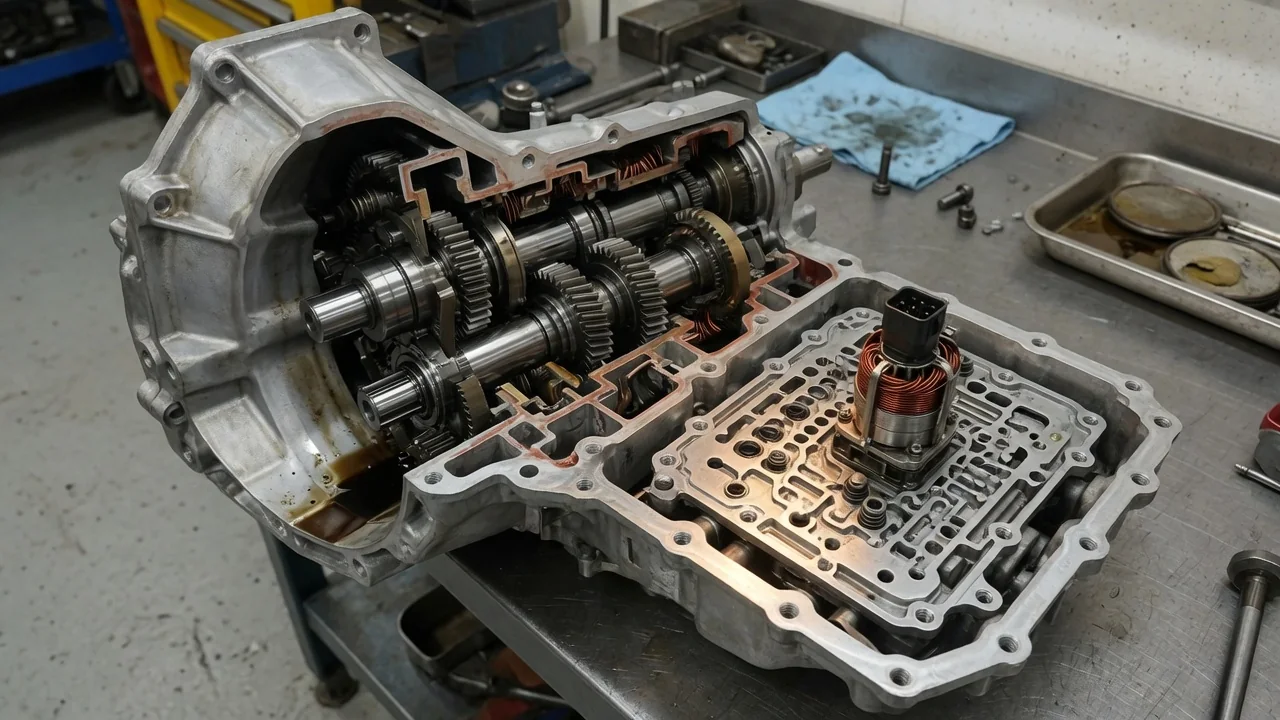
A stored P0750, P0751, P0752, P0753, or P0754 code means the transmission control module detected a problem involving shift solenoid A. The family covers malfunction, performance, stuck-off, stuck-on, electrical, and intermittent conditions in the same hydraulic circuit. Each code is a starting point for diagnosis, not proof that the solenoid itself has failed, and the exact meaning depends on the vehicle and transmission.
Verify What the Shift Solenoid A Code Means for Your Vehicle
P0750 through P0754 form a related set of diagnostic trouble codes tied to shift solenoid A. That solenoid is an electrically operated valve the transmission control module uses to route hydraulic pressure through circuits that apply and release clutches or bands as the commanded gear changes. Confirm the exact code definition and the published diagnostic procedure for the vehicle's year, make, model, and transmission before treating any generic description as the last word. Manufacturer wording and test steps can differ even when the same P0750 code number appears.
The letter A is a circuit label used in service information, not a universal map of where the part sits in the valve body or which gear it exclusively controls. Two transmissions can assign shift solenoid A to different passages, connectors, or replacement assemblies. A stored P0750 code, P0751 code, P0752 code, P0753 code, or P0754 code reports that the control system detected a fault condition. That report is evidence to interpret. It does not by itself prove the solenoid has failed, so parts should not be replaced until testing supports that conclusion.
P0750: Shift Solenoid A Malfunction
After the vehicle-specific definition is confirmed, a P0750 listing commonly describes a shift solenoid A malfunction. The transmission control module expected a particular electrical or hydraulic result from that circuit and did not see it. Drivers may notice harsh or delayed shifts, limited gear availability, a transmission warning lamp, or reduced-power operation. Those symptoms overlap with many other gearbox problems, so feel and noise alone cannot identify the cause. The scan result still needs to be matched to the conditions that were present when the fault set.
Possible contributors include an open or shorted solenoid circuit, a solenoid that does not respond, restricted or leaking hydraulic pressure in the valve body, contaminated or incorrect transmission fluid, or internal mechanical wear. None of those should be assumed most common. Accompanying codes, gear-ratio faults, and freeze-frame data showing speed, temperature, commanded gear, and load help a technician choose the next test instead of swapping parts at random. A P0750 code that appears with electrical faults points in a different direction than one stored only during a failed shift event.
P0751 and P0752: Performance, Stuck Off, and Stuck On Conditions
A P0751 listing commonly describes shift solenoid A performance or a stuck-off condition, while a P0752 listing commonly describes a stuck-on condition, subject to the manufacturer's exact wording. Those titles often mean the transmission did not behave as expected when the module commanded the circuit on or off. A stuck-state description can reflect observed hydraulic response, delayed application, or a gear that remains engaged, not proof that the solenoid is physically jammed. Confirming a P0751 code or P0752 code still requires matching the stored definition to that vehicle.
Contributors can include a solenoid that does not open or close as commanded, debris or varnish restricting valve-body passages, hydraulic leakage past seals or apply components, and low, overfilled, or degraded transmission fluid. A technician typically compares commanded operation with actual transmission response, then uses the specified hydraulic tests for that unit. If commanded gear changes on the scan data but the vehicle stays in the wrong ratio, the problem may be hydraulic or mechanical rather than a simple coil failure. The opposite pattern can point back toward the solenoid circuit.
P0753 and P0754: Electrical and Intermittent Faults
A P0753 listing commonly indicates an electrical fault in the shift solenoid A circuit, and a P0754 listing commonly indicates an intermittent fault, after those titles are verified for the vehicle. The transmission control module monitors voltage, current, or driver feedback on that solenoid circuit and sets the code when the reading falls outside the specified window. Potential problems include damaged wiring, corroded or loose connectors, an open or shorted solenoid winding, and a fault in the control circuitry itself. None of those findings justify a replacement until testing isolates the failed portion.
A P0753 code that remains current is often easier to pin down than a P0754 code that appears only under heat, vibration, or a particular load. An intermittent open can disappear when a harness is flexed, a connector is reseated, or the unit cools, so a normal reading at one moment does not close the case. Circuit testing belongs in a shop that can follow manufacturer specifications for voltage drop, driver control, and continuity. Jumper-wire activation, casual connector probing, and universal resistance charts are not a substitute, because those shortcuts can damage drivers or mislead the diagnosis.
Safe Observations and Signs to Stop Driving
Before any parts are disturbed, record warning messages, how the transmission shifts, and whether the concern appears cold, fully warm, or only under specific driving conditions such as light throttle, heavy load, or highway speed. Note whether reduced-power operation or limp-style limited gears are present. Preserve every stored code and all available freeze-frame data before clearing anything. Those snapshots of commanded gear, vehicle speed, and fluid-related temperatures are often the only remaining record of the moment the P0750 family set, and erasing them can force a technician to wait for a repeat event.
If the owner's manual describes an accessible dipstick check, fluid level and odor can be noted with the vehicle on level ground and at the temperature the manual specifies. Temperature-dependent or sealed-system checks should be left to a shop with the correct procedure. Severe slipping, complete loss of drive, overheating, burning odor, or unpredictable engagement are reasons to stop safely and arrange transport rather than continue. Driving through those conditions can overheat remaining clutches and turn a solenoid-circuit concern into internal damage that a later repair cannot reverse with a simple electrical fix.
Confirming the Cause and Verifying the Repair
A useful diagnostic sequence starts with vehicle identification, a full-system scan for related powertrain codes, and a visual inspection of harnesses and connectors at the transmission. Electrical inspection of the solenoid circuit comes next, followed by targeted solenoid or hydraulic testing specified for that valve body. Repair options should match confirmed findings: circuit repair when wiring or a driver is at fault, solenoid service when that component fails its tests, valve-body work when passages or valves are restricted, or internal transmission repair when clutches, seals, or pumps cannot hold hydraulic pressure.
Fluid service alone is not an established cure for a P0750, P0751, P0752, P0753, or P0754 concern. A fluid and filter service may still be appropriate after diagnosis if the specification and procedure for that transmission call for it, but dumping fluid without confirming the fault can leave the original circuit problem in place. Repair verification requires the specified functional checks, a road test that reassesses shift quality across the gears that previously failed, and a rescan for returning codes. Clearing the warning lamp without those steps does not confirm that the hydraulic circuit is healthy.