P0715–P0719 Codes: Input Speed Faults and Brake Switch Diagnosis
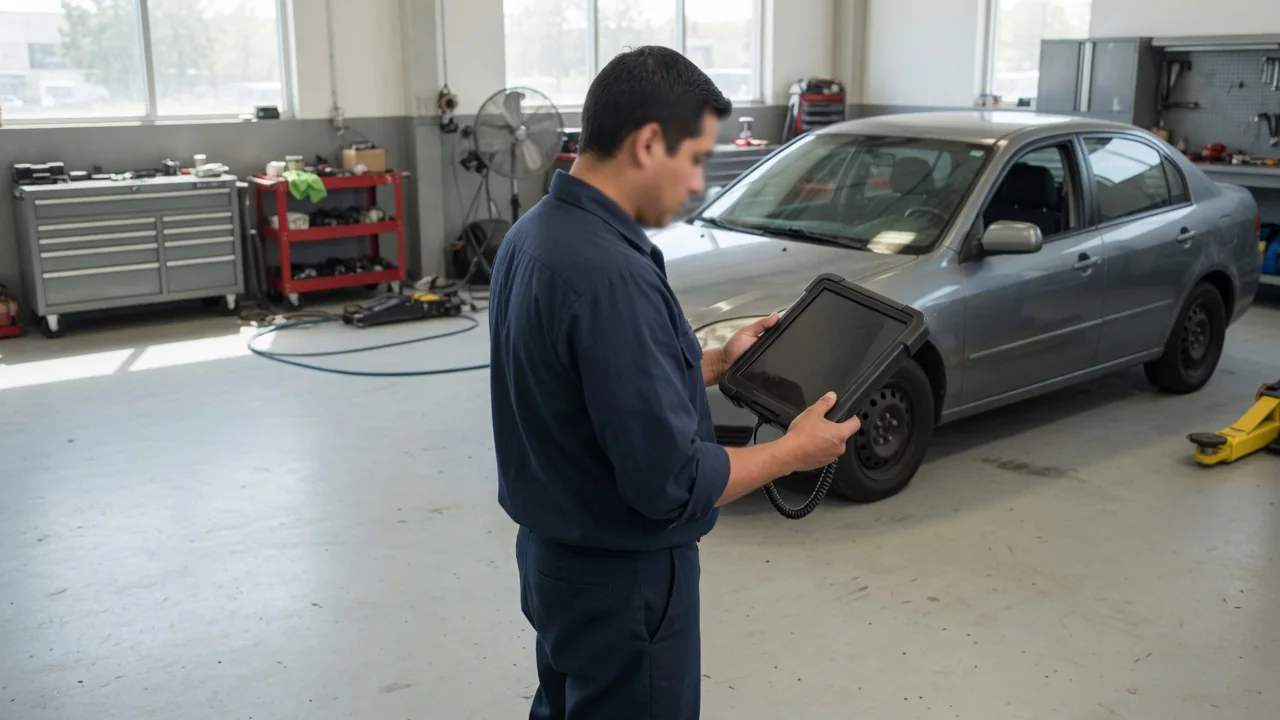
P0715 through P0719 codes often appear during transmission diagnosis, yet they do not all describe the same circuit. P0715, P0716, P0717, and P0718 typically involve the transmission input speed sensor or turbine shaft speed circuit, while P0719 points to a brake switch B circuit condition. Treat each stored code as evidence for the transmission control module to interpret, then confirm the vehicle-specific definition before replacing parts.
Identify the Code and Confirm Its Vehicle-Specific Meaning
A P0715 code generally identifies an input or turbine speed sensor A circuit fault. That circuit designation is a starting point, not a completed diagnosis. The transmission control module monitors the sensor circuit and stores the code when its criteria are met, but a circuit fault does not prove the sensor itself has failed. Connector corrosion, a damaged wiring harness, a poor ground, or an internal module concern can produce the same result. Read the exact description and circuit letter from the vehicle's service information before assuming which component is at fault.
Within the same family, a P0716 code generally indicates a range/performance fault, P0717 indicates no signal, and P0718 indicates an intermittent speed signal on the input or turbine shaft speed sensor A circuit. A P0719 code generally identifies a brake switch B circuit low condition, so it sits outside that speed-sensor group even when it appears in the same scan. Manufacturer-dependent wording and enable criteria still vary. Confirm the code definition, circuit designation, and diagnostic steps for the specific vehicle and transmission before interpreting any of these faults.
P0716: An Input Speed Signal Outside Expected Operation
Range/performance on the input circuit is what a P0716 code generally reports: the controller saw input or turbine shaft speed behavior that did not match its expected criteria. Those setting conditions depend on the application, so the same numeric code can be enabled at different speeds, temperatures, or gear commands on different transmissions. Live transmission data helps put the complaint in context. Compare input speed with engine speed, output speed, and commanded gear, remembering that expected relationships change with converter clutch state, selected range, and whether the unit is in a shift.
When the procedure supports it, investigate signal quality, the wiring harness, sensor mounting, and internal mechanical conditions rather than jumping to a unit replacement. An implausible input speed reading can come from a loose sensor, a damaged reluctor or tone wheel, fluid contamination at the connector, or a genuine ratio error inside the transmission. A P0716 code alone cannot confirm clutch slip, internal damage, or a need to replace the transmission. Follow the vehicle-specific diagnostic path and use supporting data before deciding what failed.
P0717: No Input Speed Signal and Possible Driving Symptoms
When the controller looks for turbine shaft speed and finds none, it stores P0717. That is a no-signal condition under the module's monitoring criteria, not a confirmed sensor failure. The missing reading can originate in the transmission input speed sensor, an open or shorted circuit, a failed sensing target, a power or ground problem, or another application-specific issue. Until circuit tests and live data isolate the path, the stored P0717 code is only evidence that the expected speed pulse was absent when the controller looked for it.
P0717 symptoms vary with the control strategy. Drivers may see a warning light, feel harsh shifts or delayed engagement, or notice the vehicle restricted to certain gears in a reduced-function mode sometimes called limp mode. Some applications continue to move with degraded shift quality, while others lock a fail-safe range to protect the unit. Note whether the complaint appears at startup, after the transmission warms, or during a particular shift. Do not recreate unsafe driving conditions to force the code; record what happened in normal, legal operation and compare it with freeze-frame data.
P0718: An Intermittent Input Speed Signal
Intermittent dropouts are the focus of P0718, which flags an unstable input or turbine speed sensor A circuit signal. The reading may vanish for a moment and then return, so the vehicle can shift normally by the time it reaches a bay. That does not mean the fault was imaginary. Freeze-frame data and the stored code preserve operating context such as vehicle speed, gear, temperature, and engine speed at the moment the controller lost confidence in the signal. Capture that snapshot before clearing anything, because an intermittent speed signal often refuses to fail on demand.
Possible causes still need evidence. Loose connections, a chafed wiring harness, fluid intrusion at the connector, a cracked sensor body, or a temperature-sensitive component can all create brief dropouts. Professional signal capture and circuit testing may be required to catch a dropout that lasts only milliseconds. Replacing the transmission input speed sensor or clearing P0718 without testing can leave the true cause unresolved, especially if the sensing target or harness is at fault. Work from the stored snapshot and the vehicle's circuit tests rather than from the assumption that the part is bad.
P0719: Check the Brake Switch Circuit Definition First
A P0719 code generally identifies a brake switch B circuit low condition, which is a different circuit from the input speed sensor group. Verify the vehicle-specific meaning of brake switch B and the conditions that set a low-circuit fault before selecting tests or parts. Some applications use more than one brake signal, so circuit B may not be the same feed that turns on the stop lamps. Brake pedal status can inform transmission control, including torque converter clutch apply and release where that clutch is equipped, which is why P0719 still belongs in a transmission diagnosis.
With the vehicle securely parked, observing brake-light operation is useful, but working lights do not prove every brake switch circuit is functioning. Brake input on the scan tool and electrical testing help distinguish a misadjusted or failed switch, a connector problem, a wiring-harness fault, and a control-module concern. Do not bypass the switch or defeat safety interlocks to silence the code. A false brake-applied or brake-released status can affect converter clutch behavior and shift scheduling, so treat P0719 as a control-input problem that still needs a correct circuit identification.
Preserve Diagnostic Evidence and Decide When to Stop Driving
Before clearing a P0715 code, P0716, P0717, P0718, or P0719, save every powertrain code, its status, and any freeze-frame data. Accompanying faults can change direction: an output-speed code, a solenoid circuit fault, or a module communication error may explain why the input speed reading looks wrong. Safe observations include looking for fluid under a parked vehicle, recording warning messages, noting delayed or harsh engagement, and listing recent repairs that disturbed the harness or pan. Those notes help a technician choose the right tests without guessing from the code number alone.
Sensor location, access, electrical specifications, and fluid-check methods vary by transmission, so professional diagnosis should follow the applicable service information rather than a generic parts swap. Severe shifting, loss of drive, overheating warnings, or unreliable vehicle response warrant stopping safely and arranging recovery. Failed brake lights also require attention before the vehicle returns to the road. After repair, confirm the work by reviewing live transmission data, verifying normal operation under safe conditions, and checking that the original fault does not return on a subsequent drive cycle.