P0703 Code: Brake Switch B Circuit Meaning and Next Steps
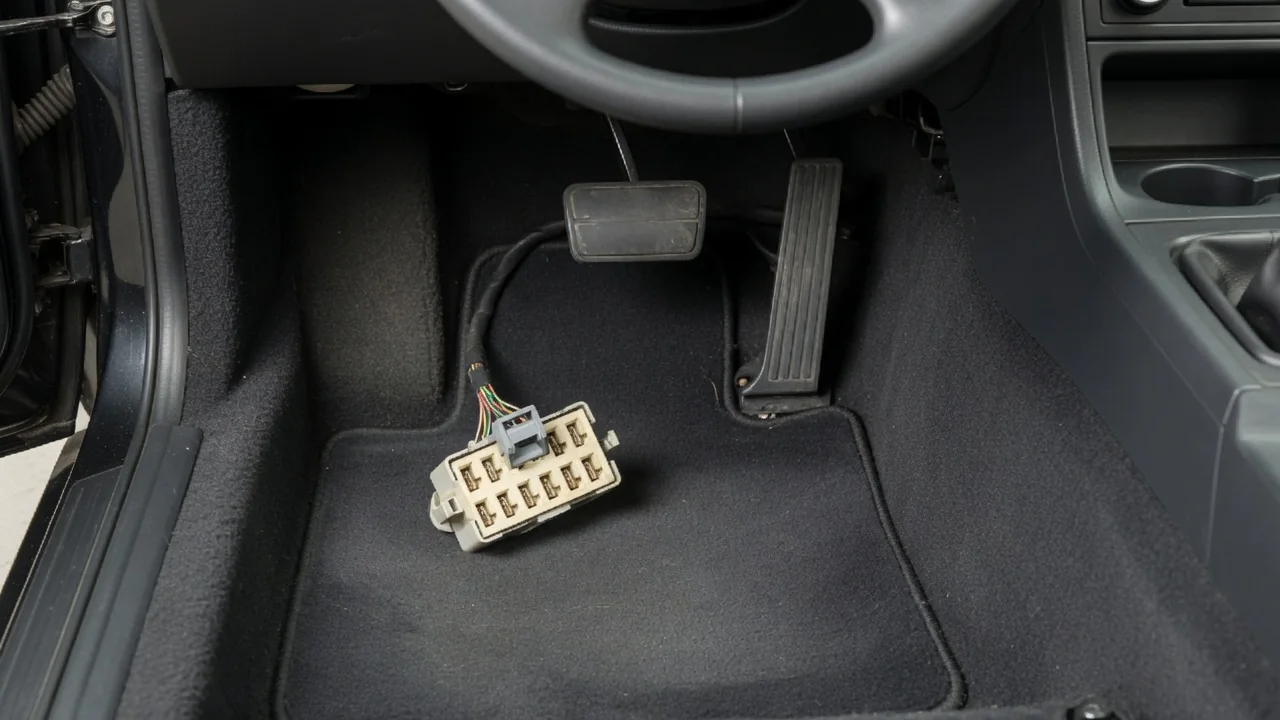
A P0703 code typically flags a concern in the brake switch B circuit used for torque converter clutch, stop lamp signaling, and related inputs. The stored fault is a starting point for diagnosis, not a parts list. Nearby scan entries such as a P0704 code or a P0724 code need their own vehicle-specific definitions. Confirm the exact meaning for year, make, model, and powertrain before deciding next steps.
What P0703 Means on Your Vehicle
On many vehicles, P0703 is described as a torque converter or brake switch B circuit concern, yet that label is not universal. Control modules apply manufacturer-specific detection rules, so the same five-character code can describe different monitored paths from one platform to another. Before interpreting the result, match the definition to the vehicle’s year, make, model, and powertrain using service information for that calibration. Treating a generic code title as a complete diagnosis skips the confirmation step that keeps testing aimed at the actual circuit.
The B designation identifies a particular monitored signal or circuit, not a second pedal in the cabin. That path may share hardware with the brake pedal switch, or it may be a separate contact, sense line, or module input whose physical arrangement only the wiring diagram can confirm. A circuit code records an electrical or signal problem as the module saw it. It does not establish that the brake pedal switch has failed internally or that replacement is the required repair.
Symptoms That May Accompany a Brake Switch Signal Fault
Drivers sometimes notice brake lamps that stay on, fail to light, or flicker, because the implicated path can carry a stop lamp signal. That pattern is not guaranteed with every P0703 fault, and lamps can behave normally while the monitored B circuit still looks implausible to a module. Cruise control cancellation, shift interlock, and torque converter clutch control may also change when those systems read the same input. A lamp that works in the mirror therefore cannot prove that every switch contact and control-module input is healthy.
If brake lamps do not work, or braking feels abnormal, stop using the vehicle and arrange professional assistance rather than continuing to drive on an unconfirmed lighting or pedal concern. Those conditions raise safety issues that a stored code cannot rank or explain by itself. Other drivability complaints, including unexpected cruise dropout or a shifter that will not leave Park, still need a technician’s interpretation. Symptoms overlapping a P0703 code cannot establish a shared cause without circuit testing that matches the vehicle’s design.
Safe Observations Before a Service Appointment
With the vehicle parked securely and the parking brake applied, an owner can watch brake lamp response from a reflection or with a helper standing well clear of traffic. Note whether the lamps follow pedal travel, stay dark, or remain lit after the pedal is released. Record whether the concern is constant or intermittent and whether it appeared after work near the pedal area, a wiring connector, or the steering column. Those notes help a technician recreate the conditions without guessing.
Save every stored code and any freeze-frame snapshot before clearing memory. Freeze-frame captures operating conditions at the moment the module set the fault and can show whether the pedal was applied, how the transmission was commanded, and related input states. Limit owner inspection to accessible visual observations of the pedal, switch body, and nearby connectors. Do not install switch bypasses, wiring jumpers, or a forced shifter release, and do not road-test in a way intended to provoke the fault.
How Professional Testing Identifies the Circuit Fault
A technician starts with the correct wiring diagram so switch contacts, circuit supplies, grounds, connectors, and receiving modules are identified before any part is disturbed. Scan-tool brake switch inputs are then watched as the pedal moves, comparing commanded and reported states against the diagram’s expected behavior. Vehicle-specific electrical testing confirms whether voltage, continuity, and signal quality match that design. The diagram also shows whether the B circuit is a dedicated sense line or shares pins with stop lamp or interlock functions.
Findings can include switch misadjustment, a damaged wiring connector, an open or shorted harness, or a missing supply or ground, and none of those outcomes should be ranked as most likely without measurements. An intermittent P0703 code may appear only under the reported conditions, so the technician reproduces those conditions safely rather than substituting parts. A control module should not be condemned from the code alone; modules fail, but they also record faults created upstream in switches, wiring, and connectors. Confirmation comes from tests that isolate the failing path.
When Switch Adjustment or Replacement Is Appropriate
Switch adjustment is appropriate only when the vehicle’s switch design allows it and testing has already shown an installation or position problem rather than an internal open or short. Some brake pedal switches are adjustable at a plunger, bracket, or threaded body; others are fixed and must be replaced as an assembly if position is wrong. Universal gap measurements do not transfer from one application to another. The correct procedure and rest position come from that vehicle’s service information, not from a generic switch description.
Confirmed internal switch failure can justify replacement, while damaged wiring or connectors require repair of the diagnosed circuit fault instead of a parts swap that leaves the open, short, or poor ground in place. The replacement must be the correct part for the exact vehicle, including connector style and contact arrangement. After the repair, a technician should verify brake lamps, scan-tool switch input data, shift interlock, and cruise control cancellation, then check whether the P0703 code returns under professional supervision. Recurrence points back to an unresolved circuit path.
Making Sense of P0704 or P0724 in the Scan Report
A scan report may also list P0704, a clutch switch input circuit code commonly encountered in the same searches as P0703. That title still requires confirmation of the exact vehicle-specific meaning, because clutch-pedal monitoring on a manual application is not the same strategy as a brake switch B circuit on an automatic. The P0704 code has its own enable conditions, wiring, and module inputs. It does not independently prove why P0703 set, even when both appear after work around the pedal cluster.
P0724 commonly indicates a torque converter or brake switch B circuit high condition, meaning the module saw the monitored signal stuck or biased in the high state relative to that vehicle’s detection criteria. Those criteria still must be verified in service information. Like P0703, a P0724 code is evidence to interpret, not proof the switch has failed. Give the technician the full list of codes, freeze-frame, and symptom notes, then keep diagnosis centered on the P0703 circuit path unless testing shows the other code shares that path.