P0691–P0694 Cooling Fan Control Circuit Codes Explained
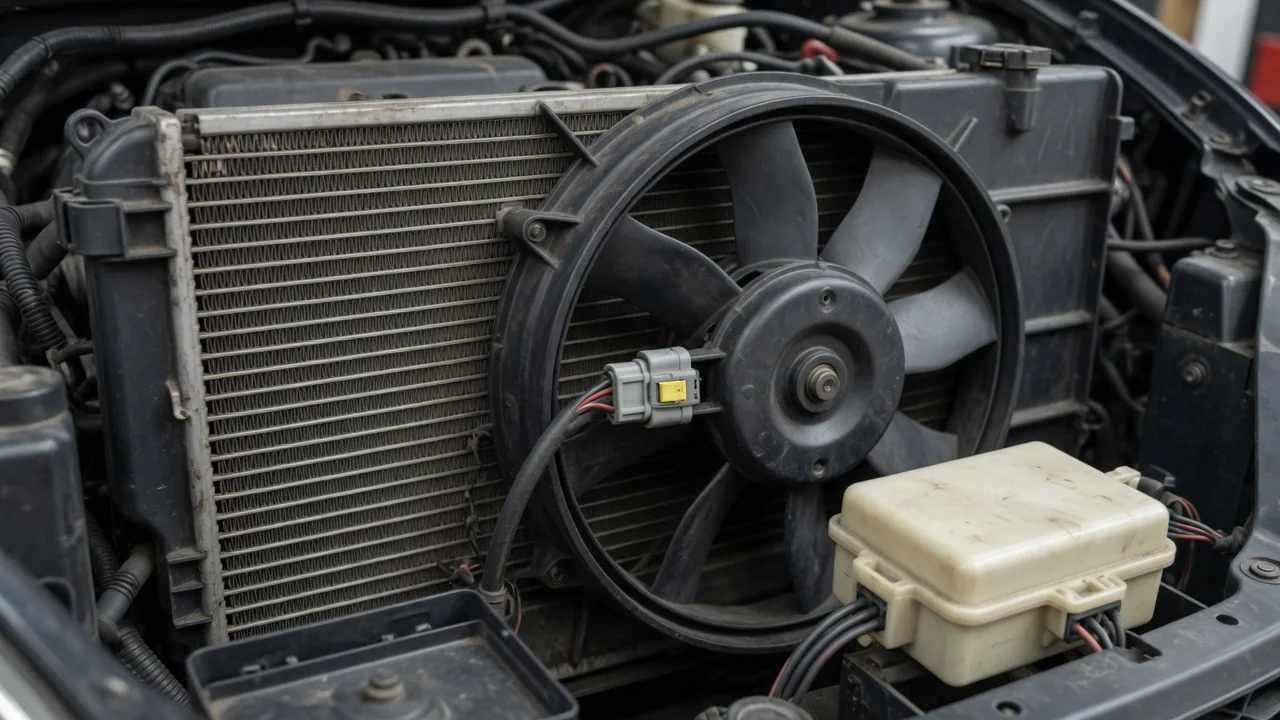
P0691 through P0694 report electrical problems on a cooling fan control circuit, not a confirmed failed radiator fan motor. A P0691 code or P0693 code describes a low circuit condition on fan 1 or fan 2, while a P0692 code or P0694 code describes a high circuit condition. These manufacturer-dependent codes need vehicle-specific confirmation because fan labels, circuit voltage strategy, and commanded fan operation vary by design.
P0691 and P0693: Cooling Fan Control Circuit Low
The standard description for P0691 is fan 1 cooling fan control circuit low, and the matching description for P0693 is fan 2 cooling fan control circuit low. Those labels belong to the control circuit the powertrain controller monitors, not to a measured fan speed or a coolant-level reading. Low means the monitored electrical condition sat below the expected range for that design. Before treating either code as a specific hardware failure, check the vehicle's service information for how that manufacturer identifies each fan control circuit.
Fan 1 and fan 2 wording does not establish physical fan location under the hood and does not prove that two separate fan motors are installed. Some vehicles use one motor with dual-speed control, a fan control module, or shared relay paths that still report two circuit identifiers. Vehicle-specific diagrams show which circuit is fan 1, which is fan 2, and how circuit voltage is supposed to behave during commanded fan operation. Without that confirmation, swapping a radiator fan motor because a P0691 code or P0693 code appeared is guessing rather than diagnosis.
P0692 and P0694: Cooling Fan Control Circuit High
P0692 identifies fan 1 cooling fan control circuit high, and P0694 identifies fan 2 cooling fan control circuit high. High describes the monitored electrical condition, not proof that the fan is spinning fast or running continuously. A P0692 code or P0694 code can appear when voltage, current, or driver feedback sits above the range the controller expects for that circuit. Code-setting criteria differ by manufacturer, so the vehicle's circuit design and enable conditions must be verified before treating a high reading as a particular failed part.
None of these codes by itself identifies a failed fan relay, radiator fan motor, wiring section, or controller. The same high-circuit report can come from a short to voltage, an open that leaves a driver at an unexpected state, a stuck relay contact, or a control-module output problem, depending on architecture. Interpret P0692 and P0694 only after confirming how that vehicle commands the circuit and what electrical fault the monitor actually flags. A high description is still only evidence of a circuit condition, not a completed diagnosis.
Symptoms to Record When a Fan Circuit Code Appears
When a cooling fan control circuit code appears, useful observations include an illuminated warning light, rising coolant temperature, weaker air-conditioning performance, an apparently inactive fan, or continuous fan operation. Those symptoms can travel with P0691, P0692, P0693, or P0694, yet none of them by itself names the defective component. Fan behavior also depends on coolant temperature, A/C request, and commanded fan operation, so a stationary fan at one glance does not establish a fault. Record what the cluster showed and what the fans appeared to do under the conditions you actually saw.
Continuous fan operation can be a protective strategy after an electrical fault, a stuck command, or normal running under high load or A/C demand. Do not assume always-on means the motor is healthy, and do not assume a quiet fan means the circuit is open. Note when symptoms occur, which dashboard warnings stay on, and whether several codes appeared together, without deliberately driving the engine into overheating to reproduce the problem. Those notes help a technician compare freeze-frame coolant temperature and circuit status with the control strategy instead of chasing a one-time observation.
Relay, Wiring, Motor, and Control Module Fault Paths
Damaged wiring, a loose wiring connector, corrosion, or a short can pull the monitored cooling fan control circuit out of the expected range and set P0691 through P0694. The defect may sit on a control wire, a power feed, a ground, or a shared harness that also serves a fan relay or fan control module. Circuit voltage at the monitor can look low or high for reasons that never involve the motor itself. Visual clues such as chafed insulation or a burned connector help, but they still need to be tied to the circuit the code actually names.
Relay and relay-control faults matter only on vehicles that still use that architecture; other designs drive the radiator fan motor through an electronic fan control module. A motor problem can change operation or electrical load, yet it is not proven by the control-circuit wording alone and needs evidence linking load or motion to the reported code. Power supply, ground, and controller faults remain possible on both low and high reports. The words low and high describe the monitored condition; they do not locate the defect in the relay, motor, wiring, or module.
Safe Observations and Professional Electrical Diagnosis
Save all stored codes and available freeze-frame information before clearing anything, because those details show coolant temperature, engine speed, and circuit status when the monitor failed. Owner inspection should stay limited to safely visible damage or obstruction with the vehicle off and cool. Keep hands and tools clear of the fan area, since electric fans may start unexpectedly even after shutdown. Do not open a hot cooling system or attempt live circuit work; those steps belong to a technician using the correct diagram.
A technician connects P0691, P0692, P0693, or a P0694 code to an actual failure with the matching wiring diagram, scan-tool commanded fan operation, and circuit measurements of power, grounds, relay or module control, wiring integrity, and motor load. Those checks stay professional electrical diagnosis, not owner jumper tests or direct power to the motor. After a repair, confirmation means restored fan operation under the conditions the control strategy uses, plus completion of the relevant fault checks. Clearing a code alone does not confirm the electrical fault is gone.
When to Stop Driving and Arrange Service
Stop safely and shut the engine down if an overheating warning, steam, or an abnormal temperature rise appears while a fan circuit code is present. Stay away from moving fans and do not open a hot cooling-system cap while investigating symptoms, because pressurized coolant and unexpected fan start can cause injury. A P0691, P0692, P0693, or P0694 report with a still-normal temperature reading does not prove continued driving is safe. Follow the vehicle's warning guidance and arrange prompt diagnosis rather than waiting for the gauge to climb.
If overheating is already underway, roadside assistance is the safer choice than continuing toward a shop with rising coolant temperature. An always-running fan does not guarantee adequate cooling, because airflow, coolant circulation, and heat load still have to match operating conditions. A silent fan during a heat warning is equally inconclusive until a technician confirms commanded fan operation and circuit integrity. Treat these codes as a reason to stop adding heat to the system and to have the cooling fan control circuit diagnosed before the next long trip.