P0685–P0690 ECM/PCM Power Relay Control and Sense Circuit Codes
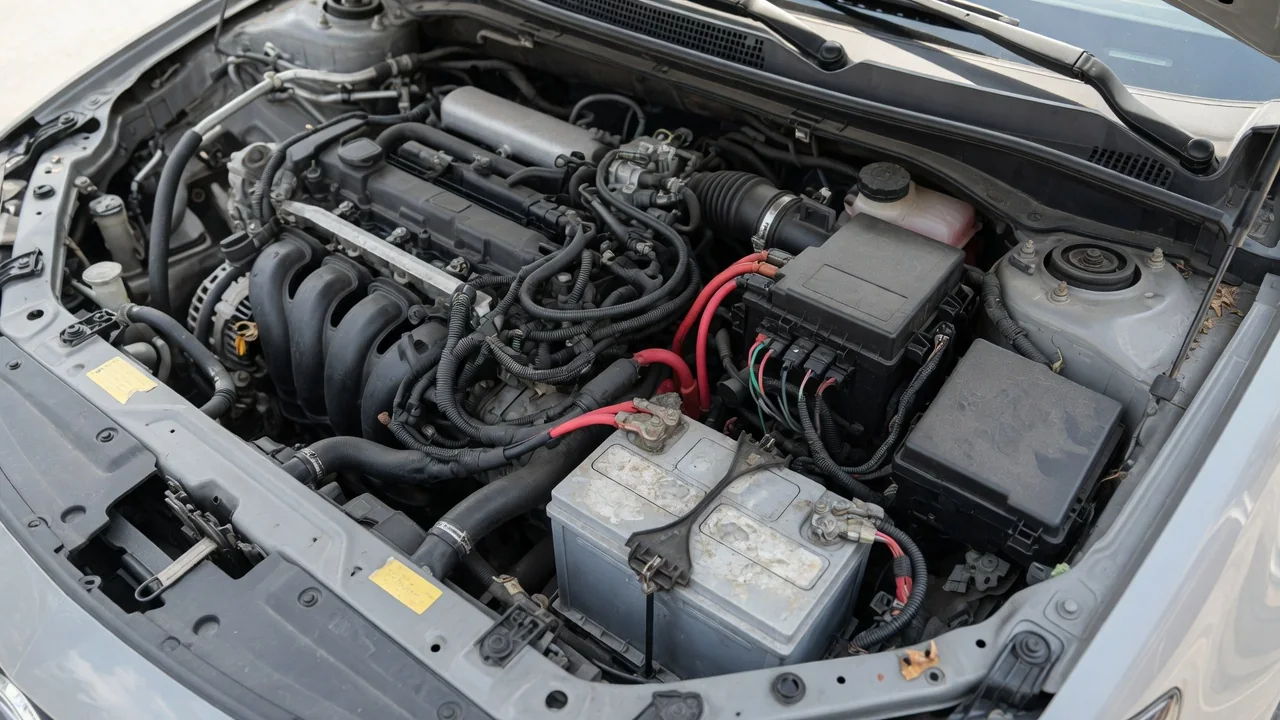
The P0685 through P0690 codes concern how the engine control module, or ECM/PCM, is powered and how that power is monitored. Control-circuit codes P0685, P0686, and P0687 describe problems commanding the module power relay. Sense-circuit codes P0688, P0689, and P0690 describe problems reading relay feedback. These results can accompany no-start, stalling, or intermittent power loss, but each still needs vehicle-specific confirmation.
Confirm the Code Definition for the Vehicle
A P0685 code, P0686 code, or P0687 code does not mean the same circuit layout on every vehicle, and neither does P0688, P0689, or P0690. Service information for the exact year, make, model, and engine must define each stored result and its diagnostic path before anyone treats the label as a parts list. ECM and PCM both refer to the engine control module that needs a stable operating supply. That supply commonly passes through a power relay whose coil is commanded and whose switched output feeds the module.
Relay arrangement, monitoring strategy, and circuit layout are manufacturer-dependent. Some vehicles use a plug-in relay in a fuse box; others integrate the switching function on a board or inside a power distribution module, so a universal terminal map should not be assumed. Before any codes are cleared, record every stored and pending result along with freeze-frame data. Those snapshots show engine speed, voltage, and operating state when the ECM/PCM power supply fault set, which later testing needs in order to compare command, sense, and battery conditions.
P0685, P0686, and P0687 Power Relay Control Circuit Meanings
After the vehicle's definition is confirmed, P0685 is commonly described as ECM/PCM power relay control circuit/open. P0686 is commonly the same control circuit low, and P0687 is commonly the control circuit high. The control circuit is the path the module uses to command the relay coil on or off so operating power can reach the ECM/PCM. Open usually means the module did not see the expected continuity or activity on that command path. Low and high describe voltage that stayed below or above the calibrated window for the design.
That command path is not the same as the switched battery feed the relay is supposed to deliver. A driver inside the module typically grounds or supplies the coil according to the verified circuit description, and the power relay control circuit is watched for shorts, opens, and unexpected voltage. P0685, P0686, or P0687 is evidence of an electrical condition, not proof the relay has failed. A broken wire, high-resistance connector, short to ground or power, or a module driver problem can produce the same codes until testing isolates the cause.
P0688, P0689, and P0690 Power Relay Sense Circuit Meanings
Once the vehicle's service information is checked, P0688 is commonly ECM/PCM power relay sense circuit/open. A P0689 code is commonly sense circuit low, and a P0690 code is commonly sense circuit high. The sense circuit is a feedback path used to monitor whether the relay has actually applied power, often by reading relay feedback voltage on a dedicated pin or a shared supply sense line. Open means the expected feedback path was not seen. Low and high again describe voltage outside the window the strategy expects for the present key and engine state.
Expected sense voltage depends on design and operating state. With the relay commanded on, the module usually expects supply presence; with it off, it may expect little voltage on that line. A high P0690 reading does not prove the charging system is over-voltage, because a short to battery, a stuck-closed relay, or incorrect wiring can raise the sense input. Likewise, P0688 or P0689 does not prove battery failure. A blown feed, open sense wire, poor battery connections, or a relay that never closes can starve the sense circuit.
No-Start, Stalling, and Intermittent Power Symptoms
A P0685 through P0690 result may light a warning lamp, prevent a start, cause stalling, or create intermittent power loss, but no single code guarantees all of those symptoms. Some vehicles still crank and run while the monitor reports a control or sense mismatch; others lose the ECM/PCM power supply and shut down immediately. Note whether the starter turns the engine, whether a stall happens right after start or later, and whether the complaint followed battery replacement, jump-starting, or other electrical work. Those details help separate a cranking-circuit issue from a module-supply interruption.
No-start and stalling still have many other causes, including immobilizer faults, fuel delivery problems, and unrelated sensor failures, so symptoms alone cannot confirm a bad relay. Intermittent power loss can come from a loose battery cable, a heat-sensitive connection, or a relay that chatters without a hard failure. If the engine stalls repeatedly, stop in a safe location and arrange assistance rather than continuing to drive. Do not try to reproduce a power-loss event on the road; a sudden stall removes power steering and can leave the vehicle without a controlled restart.
Safe Observations Around the Battery, Fuses, and Wiring
Owner checks should stay visual, with the ignition off and the owner's manual used for any fuse box or cover access. Look at battery connections for corrosion, white or green deposits, and cables that appear loose at the posts. Inspect accessible insulation for cuts, moisture, or heat discoloration near the battery and power distribution area. Do not touch exposed conductors, pry on terminals, or disturb harnesses. A voltage drop from a poor connection can starve the ECM/PCM even when the battery still holds a charge, so cable condition matters.
Use only the vehicle's documented fuse and relay identification when looking at covers and labels. A fuse that looks intact can still be open, and a relay that looks normal can still have a failed coil or welded contacts, so appearance cannot confirm continuity or operation. Do not bypass a relay, bridge terminals, probe live circuits, install a higher-rated fuse, or keep replacing a fuse that opens again. Melted plastic, a burning smell, or a fuse that blows repeatedly points to an overload or short that needs professional inspection rather than another parts swap.
Professional Testing and Repair Confirmation
A technician starts with the wiring diagram and the vehicle-specific procedure, then evaluates battery supply, fuses, grounds, relay command, and sense feedback in the order the manufacturer specifies. Voltage-drop testing is used because a circuit can show battery voltage with no load and still collapse when the ECM/PCM draws current through a corroded joint or undersized path. Circuit checks under specified key-on, crank, and run conditions compare the power relay control circuit command with sense-circuit feedback so mismatches can be located.
Relay replacement or ECM/PCM condemnation should wait for evidence that those parts, not wiring or connections, are at fault. High connection resistance, pinched harnesses, and intermittent supply interruptions can set P0685 through P0690 without a failed module. After a verified repair, confirmation includes restored starting and stable engine operation, a code recheck with the monitor allowed to run, and proof that the original electrical fault no longer occurs under the same conditions captured in freeze-frame data. Clearing codes without that confirmation can hide an intermittent power-supply problem that will return.