P0641–P0643, P0651–P0653, P0697 and P0698: Sensor Reference Codes
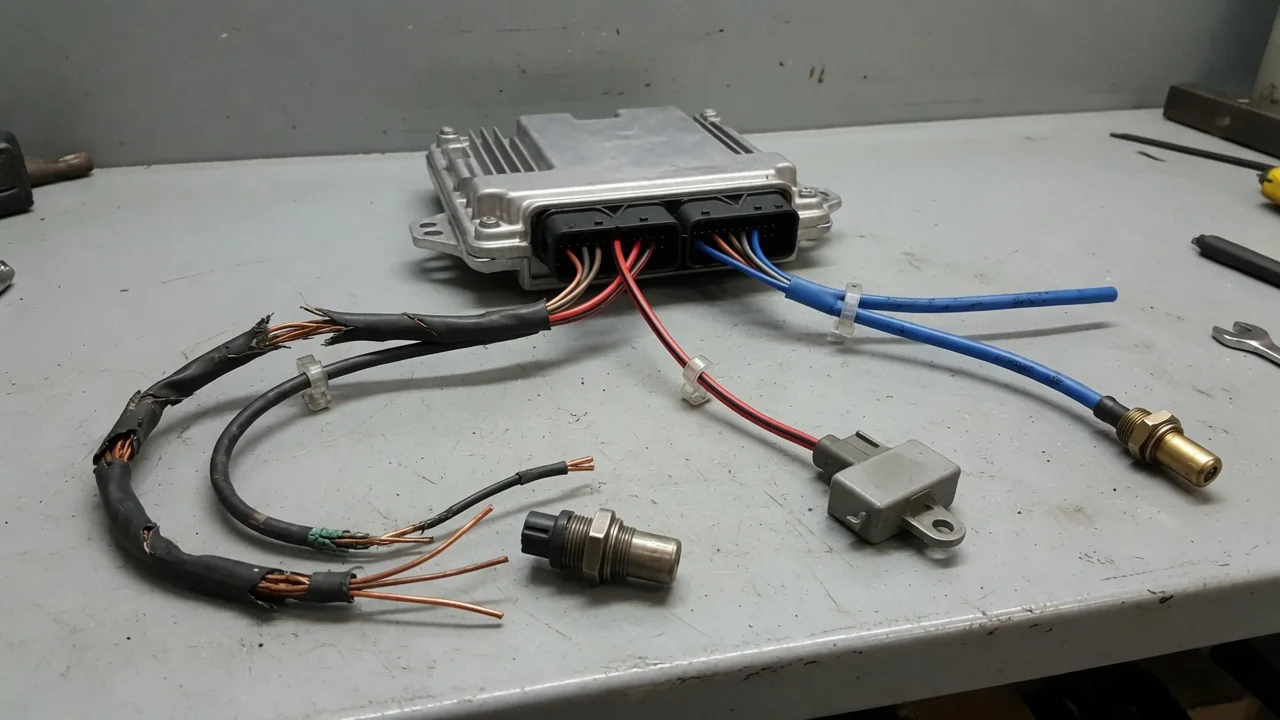
When a control module reports a sensor reference voltage problem, several sensors sharing one regulated supply can all look wrong. Codes such as P0641, P0642, P0643, P0651, P0652, P0653, P0697, and P0698 point to circuit groups A, B, or C, not a single named part. Related entries like a P0657 code, P0658 code, or P0696 belong to different families and need confirmation first.
P0641: Understanding Sensor Reference Circuit A
A regulated 5-volt reference circuit gives connected sensors a stable electrical baseline so the control module can interpret their signals. When several devices share that sensor reference voltage, a fault on one shared sensor supply branch can distort multiple readings at once. The P0641 code is commonly described as sensor reference voltage A circuit/open, but the exact diagnostic wording and test steps must be confirmed for the vehicle before the result is interpreted.
Letters A, B, and C identify circuit groups, not a universal list of parts. Which sensors sit on reference A, and how they splice back to the control module, comes from the vehicle-specific wiring diagram. An open circuit flag such as P0641 does not identify a failed sensor and does not prove a wire is physically broken. Loss of continuity, a disconnected pin, connector corrosion, or a module that is not supplying the circuit can all produce the same stored result.
P0642 and P0643: Low or High Voltage on Circuit A
After the applicable vehicle definition is confirmed, a P0642 code typically means sensor reference voltage A is low, while a P0643 code typically means that same circuit is high. A shorted sensor, damaged wiring, a short to ground, or connector corrosion can drag a shared sensor supply down until the module stores P0642. Because several sensors may hang on that branch, their individual readings can collapse together even though only one path is pulling the reference low.
A high-reference condition such as P0643 can appear when the circuit has an unintended short to voltage, or when regulation inside the supply path is no longer holding the intended level. Code-setting thresholds and the operating conditions required for detection come from vehicle-specific service information. Neither P0642 nor P0643 identifies the failed component by itself. The stored result is evidence that circuit A left its expected window, and the sensor, harness, connector, and control-module supply still need isolation.
P0651, P0652 and P0653: Tracing Reference Circuit B
Subject to confirmation for the vehicle, a P0651 code commonly maps to sensor reference voltage B circuit/open, P0652 to circuit low, and a P0653 code to circuit high. The sensors, splices, and control-module pins that belong to circuit B cannot be guessed from the letter. The correct wiring diagram is what shows which devices share that 5-volt reference circuit and where the harness can be opened for testing.
A single shared-supply fault can generate several sensor-related codes at the same time. That pattern does not establish that several sensors have failed. Associated codes and freeze-frame data help a technician decide which branch to inspect first, including whether the fault set at idle, under load, or after a key cycle. Those clues still do not justify replacing a sensor or the control module. P0652 and P0653 remain circuit-voltage findings until the supply, sensor ground, and wiring on that group are evaluated.
P0697 and P0698: Reference Circuit C Faults
With vehicle-specific confirmation before diagnosis, P0697 is commonly identified as sensor reference voltage C circuit/open, and a P0698 code as circuit low. The P0697 code does not name the sensors on that group. Circuit C's connected devices and routing cannot be inferred from the letter designation; only the matching wiring diagram shows the splices, connectors, and module terminals that belong to that shared sensor supply.
Possible contributors include loss of continuity, a shorted sensor, harness damage, or connector corrosion on that branch. None of those causes is established by the code itself. Related sensor faults and the physical layout of the harness guide professional isolation of the affected circuit C path. The technician uses those clues to decide where to open the circuit, then checks whether the remaining reference recovers, rather than treating P0698 as proof that one particular part has failed.
Confirm the Separate Circuits Named by P0696, P0657 and P0658
P0696 generally identifies fan 3 control circuit high and does not belong to the sensor reference C family that includes P0697 and P0698. Seeing P0696 next to a P0697 code in a scan list is not evidence that they share a circuit. A P0657 code is commonly described as actuator supply voltage A circuit/open, and a P0658 code as actuator supply voltage A circuit low. Those titles still require confirmation of the vehicle's exact definitions before any test is chosen.
An actuator supply code does not establish a fault in the regulated 5-volt sensor reference supply used by the A, B, and C sensor groups. P0657 and P0658 describe a different power path, even when they appear in the same freeze-frame snapshot as P0641 or P0651. Diagnosis should follow the vehicle-specific procedure written for the actuator supply or fan control circuit that actually set, rather than folding those entries into sensor-reference isolation work.
Symptoms and Information to Record Before Diagnosis
Symptoms depend on which sensors sit on the affected 5-volt reference circuit. A driver may see a warning light, reduced power, poor running, stalling, or a no-start condition if throttle, pressure, or position sensors lose a usable baseline. Those complaints do not identify P0641, P0642, or P0652 as the cause by themselves, because other faults can produce the same driving feel. Record every stored code, its status, and available freeze-frame data before clearing anything.
Note whether the fault appeared after recent work, rain, vibration, or a particular operating condition. Timing can suggest where to look first, such as a connector disturbed during service, but it is not proof of cause. If the vehicle stalls, the accelerator response becomes unreliable, or reduced power is severe, stop safely and arrange assistance. Continuing to drive with an unstable sensor reference voltage can leave the driver without predictable throttle or engine control.
Safe Observations and Professional Circuit Isolation
With the vehicle safely parked and switched off, owner checks should stay limited to accessible visual observations: loose connectors, visible chafing, moisture, or damage near recent work. Do not unplug sensors with the ignition on, add jumper wires, probe unfamiliar terminals, or apply external voltage. Those actions can create a short to ground or a short to voltage on a shared sensor supply and may damage the control module. Controlled electrical testing belongs with a technician using the published procedure.
Professional isolation follows the vehicle-specific shutdown and disconnection sequence, opens one branch at a time, and watches whether sensor reference voltage recovers. Recovery after isolating a branch implicates that path, but the sensor, connector, and wiring on that path still need evaluation. Before a control module is condemned, the reference supply, sensor ground, and wiring integrity must be confirmed. After repair, the relevant conditions from freeze-frame data should be reproduced to verify that P0641, P0651, P0653, or P0698 no longer returns.