P0597, P0598 and P0599: Thermostat Heater Circuit Faults
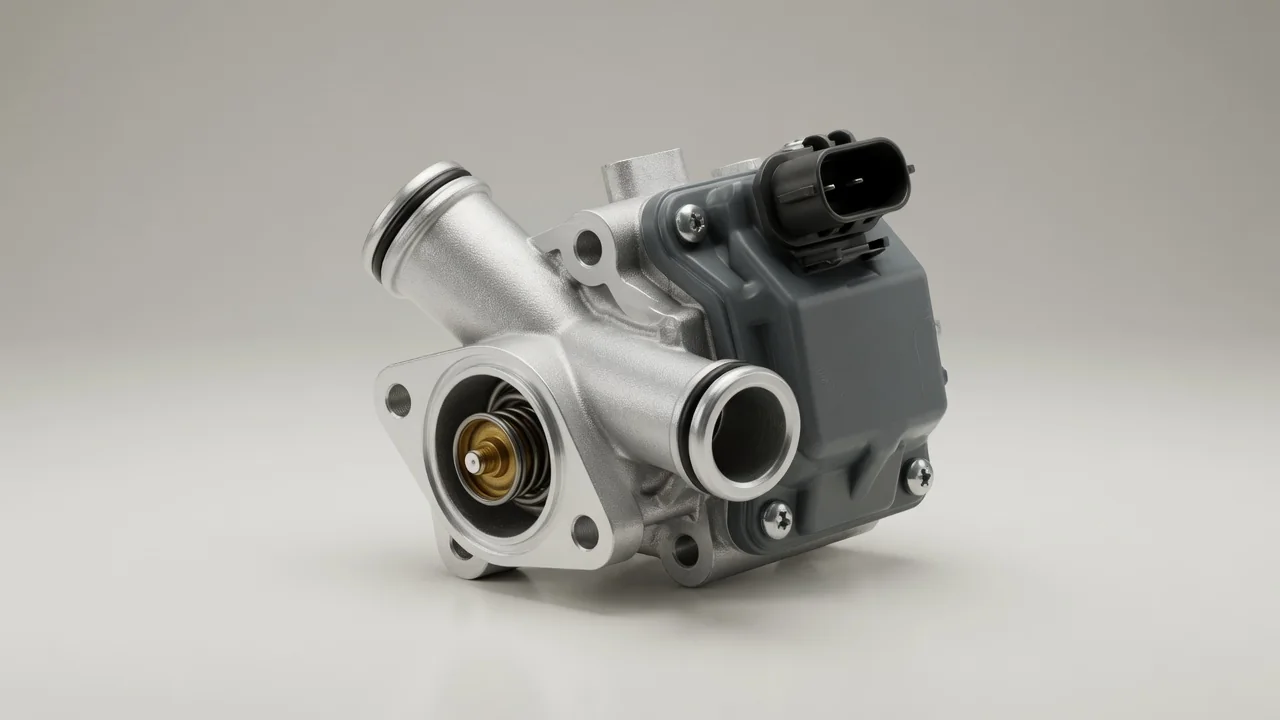
P0597, P0598, and P0599 point to thermostat heater circuit problems on vehicles that use an electronically controlled thermostat. A P0597 code typically flags an open circuit, while a P0598 code and a P0599 code describe circuit low and circuit high conditions. These faults can influence coolant temperature and fuel economy, yet they remain electrical findings that still need vehicle-specific interpretation.
What P0597, P0598 and P0599 Identify
On many platforms, P0597 identifies a thermostat heater control circuit/open condition, P0598 identifies thermostat heater control circuit low, and P0599 identifies thermostat heater control circuit high. Those labels come from generic diagnostic naming, not from a guaranteed match to every powertrain. Before treating a stored result as a failed heater, compare the exact vehicle's service information for code wording, circuit design, and the criteria the engine control module uses to set each code.
Circuit low and circuit high describe monitored electrical conditions on the thermostat heater circuit, such as voltage or current outside the expected range. They do not mean coolant is low, and they do not report coolant temperature by themselves. An open circuit finding likewise describes a control path the module cannot complete. These codes identify a circuit concern. They do not establish that the thermostat assembly has failed or that replacement is required.
How the Thermostat Heater Affects Coolant Regulation
An electrically heated thermostat element lets the engine control module influence when the thermostat opens under specified operating conditions. Heat applied to the wax or similar actuator can change how quickly the valve moves, so the controller can request a different operating temperature than a purely mechanical unit would hold. That influence is limited to the heater circuit's assigned role. It is not a substitute for the mechanical spring-and-wax action that still exists in the assembly.
Loss of heater control can disturb intended temperature regulation without stopping all mechanical thermostat operation. If the heater cannot be commanded, the valve may still open from coolant heat alone, so the engine can continue to circulate coolant. Actual coolant temperature then depends on thermostat design, load, ambient conditions, and the underlying fault. The heater circuit should not be confused with coolant temperature sensing; a temperature sensor reports temperature, while the heater is an actuator the module tries to drive.
Symptoms and Possible Fuel Economy Effects
P0597 symptoms may be limited to a check-engine light even when the driver notices no change in engine behavior. The same can be true of a P0598 or P0599 result. Abnormal warm-up, unexpected temperature gauge readings, and weaker or delayed cabin heat are possible observations, but they need corroboration from temperature data and cooling-system condition. A circuit code by itself cannot establish overheating, a thermostat stuck open, or a thermostat stuck closed.
Fuel economy may suffer if operating temperature is affected, because an engine that stays cooler than intended can run richer or take longer to reach efficient temperature. That possibility is not a measurable loss and not a fixed percentage, and some vehicles show no economy change at all. Driveability can remain normal while the module still stores the circuit fault. Treat economy complaints as a reason to inspect temperature regulation, not as proof of a failed heater.
Safe Observations and Signs to Stop Driving
Record warning lights, temperature-gauge behavior, and the conditions when symptoms occur, such as idle, highway speed, or cold start. Do not try to force overheating to reproduce a code. Check the coolant reservoir level only with the engine fully cooled and according to the owner's manual; never open a hot cooling system. Limit visual checks to accessible areas with the engine off and cool, looking for obvious leaks or connector damage without touching fans or dismantling components.
An overtemperature warning, steam, or a steadily rising temperature gauge is a reason to stop safely, shut the engine down, and arrange assistance. Those signs matter even if the stored result is an electrical circuit code rather than a mechanical cooling failure. Do not treat the vehicle as safe to drive solely because P0597, P0598, or P0599 concerns a thermostat heater circuit. Circuit faults can still coincide with poor temperature control, leaks, or other cooling problems that need immediate attention.
How Professional Testing Locates the Circuit Fault
Preserve stored codes, related codes, and freeze-frame data before clearing anything. Freeze-frame data records the operating conditions present when the fault set, including coolant temperature when that parameter is stored, which helps a technician recreate the same window. Vehicle-specific wiring diagrams and diagnostic procedures then guide checks of the heater, connector, wiring harness, power supply, and control circuit. Those documents also define how the engine control module drives and monitors the heater path.
Professional electrical testing looks for continuity, shorts, and heater integrity with the methods specified for that vehicle. That work stays inside published procedures and does not involve improvising power to the heater. Live coolant temperature data and any supported command tests help show whether temperature regulation is actually affected while the circuit is faulted. Circuit and component faults must be ruled out before attributing the problem to the engine control module itself.
Repair Decisions and Confirmation After Service
Repair decisions should follow confirmed findings, which may involve a damaged wiring harness, a corroded connector, or the thermostat heater assembly rather than a default parts swap. Because electronically controlled thermostats are application-specific, the correct replacement configuration must be verified for the exact vehicle instead of assuming shared fitment from a code number. If service opens the cooling system, the specified coolant and filling procedure apply, and a qualified professional should handle that work when the system is not a simple closed refill.
Confirmation after service includes leak checks, temperature monitoring during a proper warm-up, and completion of applicable diagnostic monitors. Clearing the light alone does not prove the thermostat heater circuit is healthy. If P0597, P0598, or P0599 returns, the unresolved circuit condition needs renewed diagnosis rather than another unconfirmed replacement. Successful repair should restore the module's ability to command the heater when conditions call for it, and coolant temperature behavior should match what the vehicle's control strategy intends.