P0540–P0543 Codes: Diesel Intake Air Heater Circuit Faults
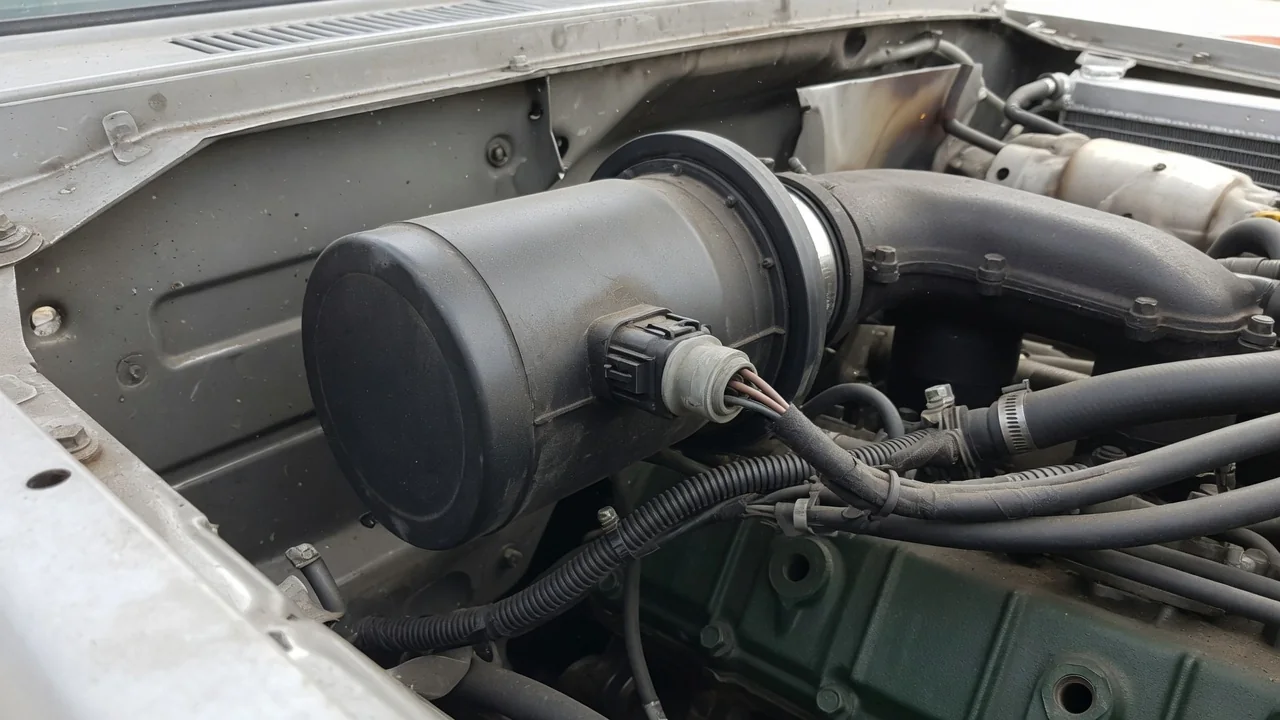
Diesel engines that use an electric intake air heater can set P0540, P0541, P0542, or P0543 when the control module sees a problem in the heater circuit. A P0542 code is one of several circuit-voltage reports, not a diagnosis of a failed grid heater. These codes often appear around cold-start conditions, but they still require year, engine, and manufacturer confirmation before any part is blamed.
P0540: Confirm the Intake Air Heater Circuit Fault
A P0540 code should never be read as a universal sentence. Service information for the exact year, engine, and manufacturer defines the diagnostic criteria, the monitored circuit, and what intake air heater A means on that vehicle. Some platforms use a grid heater in the intake tract; others use a different electric heater layout. Until those definitions are confirmed, P0540 only indicates that the module flagged the heater control circuit under its own test conditions.
An electric intake air heater warms incoming air so combustion can start more readily when the engine is cold. A grid heater is one implementation: a resistive element in the air path that draws substantial current when commanded. That function does not turn a circuit fault into a failed heater element. P0540 reports an unexpected electrical condition. Wiring, a heater relay, a control output, or the element itself can produce the same code, so replacement is not justified by the label alone.
P0541: What a Circuit Low Indication Can Mean
A P0541 code generally points to intake air heater A circuit low, but that wording still belongs to the vehicle's service definition. Diagnostic criteria describe when the module samples circuit voltage, which heater command is active, and what low means for that heater control circuit. On one engine the test may run only during a commanded heat event; on another it may include key-on checks. Interpreting P0541 before that confirmation can send diagnosis toward the wrong branch of the circuit.
Circuit low describes a monitored electrical condition, not a low intake air temperature. The module is reacting to voltage, current, or related feedback that fell below a programmed threshold during the test. A short toward ground, a high-resistance connection, a weak supply, a poor ground, a stuck or open heater relay, or a control-side fault can all look low, depending on circuit design. Those possibilities remain hypotheses until the wiring harness and switching path are tested against the diagram.
P0542: Interpreting a Circuit High Indication
P0542 is often the first code found in this cluster and typically designates intake air heater A circuit high. Monitoring logic still has to come from that vehicle. The module compares measured circuit voltage or related feedback with expected behavior while the heater is commanded on, off, or both. A P0542 code means the reading sat above the allowed range under those criteria. It does not name the failed component or which side of the circuit is at fault.
Circuit high does not establish that the heater element or the intake air is overheating. Unexpected voltage can appear if a supply is shorted onto a sense line, a switching device stays closed, a control driver cannot pull the circuit down, or the wiring harness raises the monitored signal. Because P0542 cannot distinguish those paths, treating it as proof of a failed grid heater or heater relay skips the tests that separate those faults.
P0543: Understanding an Open Circuit Report
A P0543 code should be defined from the same service information used for P0540 through P0542. In general terms it reports intake air heater A circuit open, meaning the module did not see continuity or expected current along the path it monitors. That path is a design choice: some systems watch the power feed through the heater relay, others watch element current or a control-side return. Until the diagram identifies which path is monitored, open remains a label rather than a location.
An open circuit is a detected interruption in the expected electrical path. Disconnected or damaged wiring, a corroded connector, open heater relay contacts, a lost supply path, or an interrupted heater element can all produce that report. Each cause still requires confirmation because the code does not isolate which segment is open. A heater element that failed internally is only one possibility, and P0543 does not prove it any more than a wiring-harness break would be proven without testing.
Cold-Start Symptoms and Reasons to Stop Driving
Cold-start symptoms associated with these codes can include extended cranking, rough running right after the engine fires, and visible startup smoke. Those complaints fit inadequate intake-air heating, but they are not proof the intake air heater failed. A warning light may appear with little starting trouble, especially if ambient temperature is mild and the heater is not being asked to work hard. Symptoms often track weather and heater operating conditions more closely than they track a stored code.
Battery condition, fuel delivery, and other starting-system problems can produce the same hard-start picture. That overlap is why freeze-frame data and ambient conditions matter more than a single cold-start story. Smoke from wiring, a burning electrical odor, or visible heat damage around the heater circuit is different: those signs justify stopping safely and seeking assistance because a high-current heater path can be involved. A P0540, P0541, P0542, or P0543 code by itself cannot establish whether continued driving is safe.
Safe Observations and Professional Circuit Testing
Before anything is cleared, record stored and pending codes, freeze-frame data, ambient temperature, and when starting symptoms occur. That snapshot is often the only evidence of the conditions under which the heater control circuit was tested. Owner inspection should stop at what can be seen without touching heater components, removing covers, or disturbing high-current connections: obvious harness damage, an already accessible loose connector, or discoloration around a visible relay location. Anything beyond that belongs on a professional diagnostic path.
A technician evaluates the circuit with the correct wiring diagram and the manufacturer's activation conditions. That work typically includes checking power and grounds, heater relay operation, circuit integrity, and whether the heater element draws current when commanded. Those tests are vehicle-specific because command strategy differs by engine. Relay bridging, applying battery power directly to the heater, bypassing a fuse, and probing or dismantling a high-current heater circuit are not owner procedures; they can create shorts, fire risk, or control-module damage.
Repair Decisions and Confirmation That the Fault Is Resolved
Repair choices should follow a confirmed wiring, connection, heater relay, heater element, or control fault, not the code label. P0540 through P0543 only describe how the monitor classified the circuit. Parts selection and any required procedures depend on the exact engine and heater system; a grid heater, relay, or harness piece from another application is not assumed compatible. Replacing the element because a P0542 code or P0543 code was stored, without proving that component, leaves the original electrical problem in place.
After a confirmed repair, check for returning codes and confirm heater operation under the manufacturer's specified conditions. Those conditions often include cold ambient temperature, a particular key cycle, or a commanded heat event that a single warm restart will not reproduce. Clearing a code, or completing one uneventful start, does not establish that a cold-condition fault is resolved. Recheck freeze-frame data against the original complaint so the same P0541 code or P0540 code is not simply waiting for the next cold morning.