P0513 Incorrect Immobilizer Key: Why It Sets and What to Check
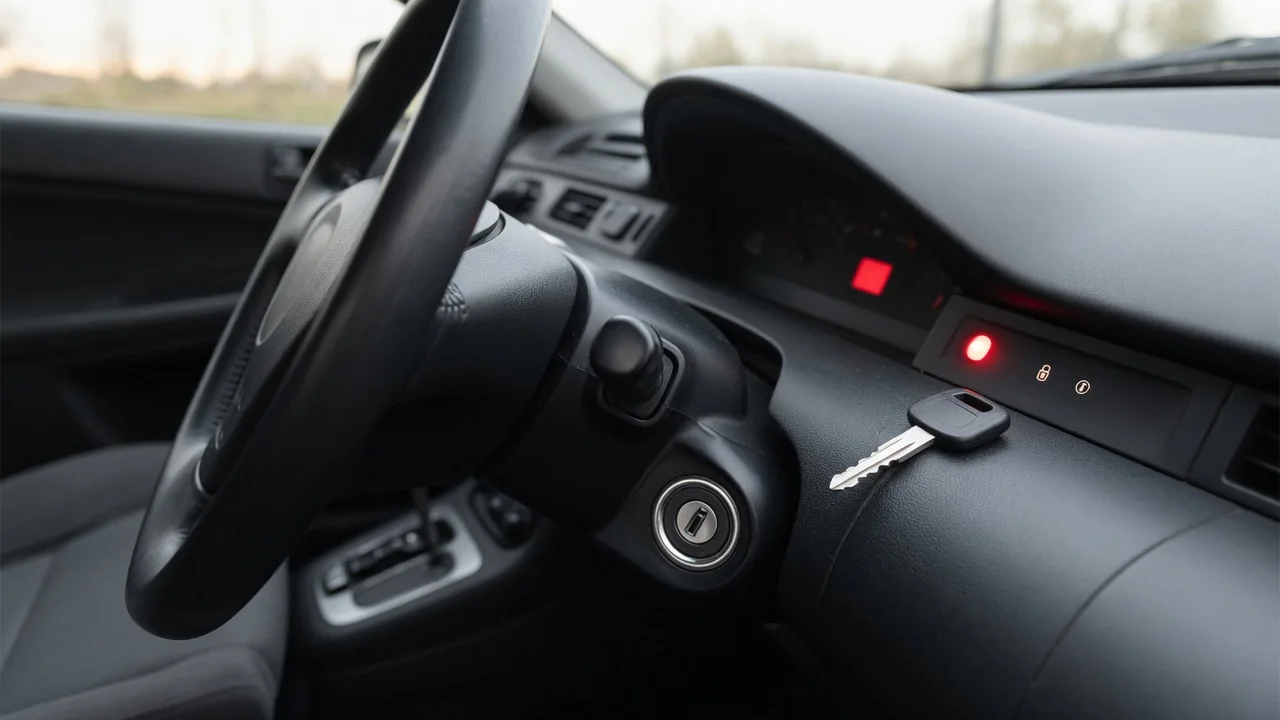
P0513 is commonly described as Incorrect Immobilizer Key, a stored indication that the vehicle did not authorize the presented key for engine operation. The P0513 code is a starting point for diagnosis, not a parts list. Exact definition and setting criteria vary by manufacturer, so the vehicle's service information must be checked before assuming which circuit or security function is involved.
What P0513 Means for Your Vehicle
On many platforms, P0513 is labeled Incorrect Immobilizer Key, meaning the control strategy did not accept the transponder key that was presented during a start request. That label is a common description, not a universal legal definition. Before interpreting freeze-frame data or replacing hardware, confirm the exact wording, enable conditions, and related modules in that vehicle's service information. Immobilizer communication typically begins as soon as the ignition is switched on, when the system attempts key recognition and decides whether fuel, spark, or starter enable may proceed.
The immobilizer's job is authorization, not engine mechanical diagnosis. A stored P0513 code records that the expected match between key data and vehicle security data did not occur, or that the attempt could not be completed. It does not by itself prove the key is defective, the reader is open, or a module has failed. A damaged transponder, a programming mismatch, a communication dropout, or a supply problem can all produce the same stored result. Treat the code as evidence of an authorization problem that still needs vehicle-specific confirmation.
Starting Symptoms and Security-Light Clues
When authorization fails, the result depends on how that vehicle's immobilizer strategy is written. Some designs refuse to crank. Others crank without starting, or start briefly and then stall as fuel or spark is withdrawn. A security indicator that stays on or flashes often accompanies these no-start condition patterns, but lamp behavior is not standardized across brands. The owner's manual is the correct reference for what a steady, flashing, or delayed security light means on that instrument cluster during a start attempt.
Write down whether the failure is constant or intermittent, which transponder key was used, and any dashboard messages that appeared with the P0513 code. Those notes help a technician compare key recognition history against a second authorized key later. A no-start condition by itself cannot establish an immobilizer fault. Weak battery voltage, a failed starter circuit, fuel delivery problems, and unrelated engine codes can produce similar cranking complaints. The combination of stored security data, indicator behavior, and starting pattern is more useful than the stall or no-crank event alone.
Key, Antenna Ring, and Electrical Fault Possibilities
A damaged, unrecognized, or incorrectly programmed transponder key can prevent authorization even when the mechanical blade still turns the cylinder. The chip inside the key must answer the reader; if the transponder is cracked, water-soaked, or never learned to that vehicle, key recognition fails and P0513 may set. Where an immobilizer antenna ring is fitted around the ignition lock or start button area, that coil is the usual path for immobilizer communication with the key. A broken ring, poor mounting, or interrupted signal can look identical to a bad key until both sides are evaluated.
Power-supply, wiring, connector, and module-communication faults belong on the same list. Low voltage at a body or security module, a corroded connector at the reader, or a bus interruption can stop the authorization handshake without any change to the key itself. Recent key replacement, module work, battery trouble, or physical key damage is useful diagnostic context, not proof of a cause. Those events raise the probability of a programming mismatch or a supply dip, but testing still has to show whether the reader, the key, or the network failed to complete immobilizer communication.
Safe Checks Before Scheduling Diagnosis
Confirm the key in hand actually belongs to that vehicle, then inspect the fob or blade for cracks, missing covers, and signs of moisture. Try an already programmed spare using the normal starting procedure. If the spare starts and the original does not, the clue points toward that first key, but it still does not conclusively identify a failed transponder versus a local reader problem that only appears with one key position. Keep other transponder keys and electronic accessories away from the key reader during the attempt so a second chip does not confuse key recognition.
Consult the owner's manual for any approved backup key-detection procedure, such as holding the fob in a marked position. Remote-control battery operation and immobilizer authorization are not always the same function; a dead fob cell can stop lock buttons while the transponder still answers, or the reverse can occur depending on design. Record codes and symptoms, including P0513, before clearing anything. Stop repeated starting attempts if the battery is weakening, because low voltage can add extra communication faults and make the original authorization problem harder to separate.
What Professional Immobilizer Testing Should Establish
A basic engine-code reader may display P0513 and still miss the security or body-module data that explains why authorization failed. Professional diagnosis often needs bidirectional access to key-recognition status, reader communication flags, and related network codes using vehicle-specific procedures. Battery condition and module power supplies should be checked at the same time, because a sag during cranking can interrupt immobilizer communication even when the key is valid. Related codes in other modules help show whether the problem is isolated to the immobilizer path or part of a wider supply or bus issue.
Testing should establish whether the problem involves the key, the immobilizer antenna ring or reader, electrical supply, communication, or authorization data before parts are replaced. Swapping a reader or ordering a transponder key without that split wastes money and can add programming work that was never required. Seek professional help when all authorized keys fail, the vehicle remains immobilized, or the P0513 code returns after ordinary owner checks. A qualified shop can compare live key status against documented enable criteria instead of treating the stored code as proof that one component has failed.
When Key Programming or Relearning Is Appropriate
Replacement keys and certain module replacements may require key programming or synchronization according to that vehicle's documented procedure. The P0513 code alone does not establish a need for reprogramming. If the transponder, immobilizer antenna ring, wiring, or power supply is physically damaged, programming cannot repair that hardware. Relearning is appropriate after a new authorized key is introduced, after a security or body module is replaced and must share authorization data, or when service information shows the stored mismatch is a learned-data problem rather than a failed reader.
Arrange service with a qualified automotive locksmith or repair facility and ask in advance what proof of ownership and existing keys to bring. After the documented procedure, confirm normal starting, expected security-indicator behavior, and that P0513 does not return under the same conditions that originally set it. Bypass methods and security-access instructions do not restore proper immobilizer communication and are not a repair. The goal is restored authorization with the vehicle's intended keys, verified by starting performance and code status, not a workaround around the security system.