P0512, P0615, P0616 and P0617: Starter Circuit Codes Explained
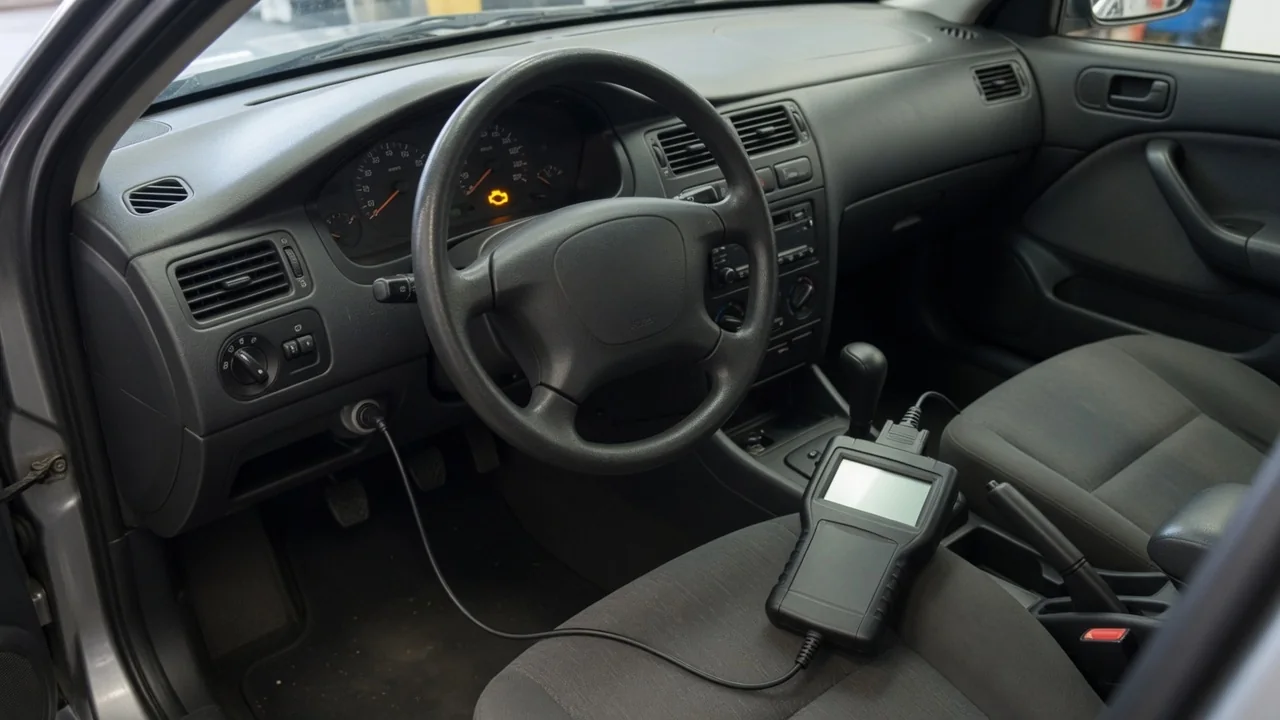
When a scan tool reports P0512, P0615, P0616, or P0617, it is reporting a problem in the starter request circuit or starter relay control circuit, not a finished diagnosis of the starter motor. A P0615 code, P0616 code, P0617 code, or P0512 code can appear with a no-crank condition, delayed crank, or intermittent start authorization trouble. Confirm each definition and detection rule in service information for that vehicle before replacing parts.
What P0512, P0615, P0616 and P0617 Identify
P0512, P0615, P0616, and P0617 are manufacturer-dependent circuit codes. Their exact wording and enable conditions must be confirmed in service information for the vehicle's year, make, model, and powertrain before any interpretation. P0512 is commonly described as a starter request circuit concern, while P0615 is commonly described as a starter relay circuit or starter relay control circuit concern. An open circuit can be a monitored fault on some applications, but not every P0615 definition explicitly means open, so the published criteria for that calibration should be read first.
P0616 and P0617 typically distinguish a low or high condition on the verified vehicle-specific monitored circuit, which may be the relay coil drive, a sense line, or another assigned path depending on the design. Low and high describe the electrical state the control module observed under specified operating circumstances, not a guess about battery health. A circuit code identifies an abnormal monitored condition. It does not prove that the starter relay, starter motor, ignition switch, or control module has failed and must be replaced.
Starting Symptoms and Details Worth Recording
A no-crank condition is a common reason these codes are investigated, but not every stored code produces every symptom. Some vehicles fail to crank at all. Others crank after a delay, crank only on some attempts, or set a warning light while still turning the engine. Intermittent wiring faults can make the starter request circuit look healthy one moment and unauthorized the next. Record what the vehicle actually does rather than assuming a P0616 code or P0617 code always means a dead starter.
An engine that cranks normally but will not start needs a different diagnostic path. A stored starter circuit code may be leftover history and may not explain a fuel, spark, or immobilizer no-start. Note whether the symptom is consistent, whether a click is heard at the relay or starter, and whether dashboard lights dim during a normal start attempt. Also note security messages, park or gear-position indications, clutch pedal position on a manual, and the conditions around the failure. Those observations guide testing; they are not proof of a particular part.
How the Starter Request and Relay Control Path Works
A start request often begins at the ignition switch or start button and then passes through vehicle modules and start authorization logic before the starter relay is commanded. The control module may look at the park/neutral position switch on an automatic or the clutch pedal switch on a manual before granting permission to crank. If those inputs disagree with the selected range, the starter relay control circuit may never be energized even though the driver is requesting a start. Authorization and the request path are therefore separate from the high-current starter power path.
The relay control circuit is a relatively low-current command path. The starter motor itself is fed by a high-current circuit from the battery through cables and the relay or solenoid contacts. A control circuit code cannot establish starter motor condition because the motor's current path is not the same monitored line. Circuit voltage reported as low or high refers to the assigned monitor under specified operating circumstances. It is not automatically a statement about overall battery voltage, though poor battery connections can still disturb both the request path and the high-current feed.
Faults That Can Set P0615, P0616 or P0617
An open wire, poor connector contact, damaged insulation, or a short can set P0615, P0616, or P0617 when those conditions match the circuit design and the code's detection criteria. A starter relay that will not pull in, a blown or poorly seated fuse, a missing power feed, or a corroded ground can produce the same monitored result. Relevance still depends on which conductor the module is watching. Visible corrosion is a clue, not a completed diagnosis, and a click from the relay does not prove the coil circuit meets specification.
Ignition switch, start button, park/neutral position switch, or clutch pedal switch faults can interrupt the starter request circuit or start authorization without directly causing every listed code on every vehicle. Weak circuit voltage from a discharged battery or loose battery connections can distort what the module measures and should be evaluated with evidence. Control module faults remain possible after power, grounds, and wiring have been shown to be sound. Speculative replacement without confirming the monitored circuit is not a reliable repair, and the code number alone does not rank which cause is most common.
Safe Checks Before Professional Electrical Testing
Before any clearing or probing, save all codes, their status, and any freeze-frame data the scan tool provides. Note recent battery work or electrical repairs, because disturbed battery connections can introduce intermittent wiring faults that later appear as a P0615 code. With the engine off, visually inspect accessible battery connections and nearby wiring for obvious corrosion, looseness, or damaged insulation. Do not disconnect connectors or probe terminals at this stage. The goal is to record what is already visible without changing the circuit.
Use the owner's manual to identify relevant fuse locations and ratings. Do not bypass the starter relay, bridge terminals, defeat a park/neutral or clutch interlock, or substitute a higher-rated fuse. Stop start attempts and arrange assistance if there is smoke, a burning smell, hot cables, or a starter that continues operating after the request ends. Those conditions can damage wiring and create a safety hazard. Safe visual checks and documentation prepare a technician to test the starter relay control circuit properly; they are not a substitute for vehicle-specific electrical diagnosis.
What Professional Diagnosis and Repair Verification Should Establish
Professional diagnosis should begin with a vehicle-specific wiring diagram and the published code test procedure. Those documents identify the monitored circuit, the relay arrangement, start authorization inputs, and the expected electrical behavior for that powertrain. A technician then evaluates battery condition, power and grounds, start-request inputs from the ignition switch or start button, park/neutral or clutch status, authorization results, and the relay command using appropriate test equipment. Comparing actual circuit voltage to the specified enable conditions is how a P0616 code or P0617 code becomes a located fault instead of a parts guess.
Controlled circuit tests and voltage-drop measurements can locate an open, high resistance, or short that a visual check misses. A relay click or a connector that looks clean cannot confirm electrical integrity by itself. After a confirmed repair, verify a normal start and rescan under the conditions that previously set the code. Clearing codes alone does not establish a fix; the starter request circuit and starter relay control circuit must behave correctly when the fault conditions are repeated. If the code returns, the original cause was not isolated.