P0491 and P0492: Secondary Air Injection Insufficient Flow Codes
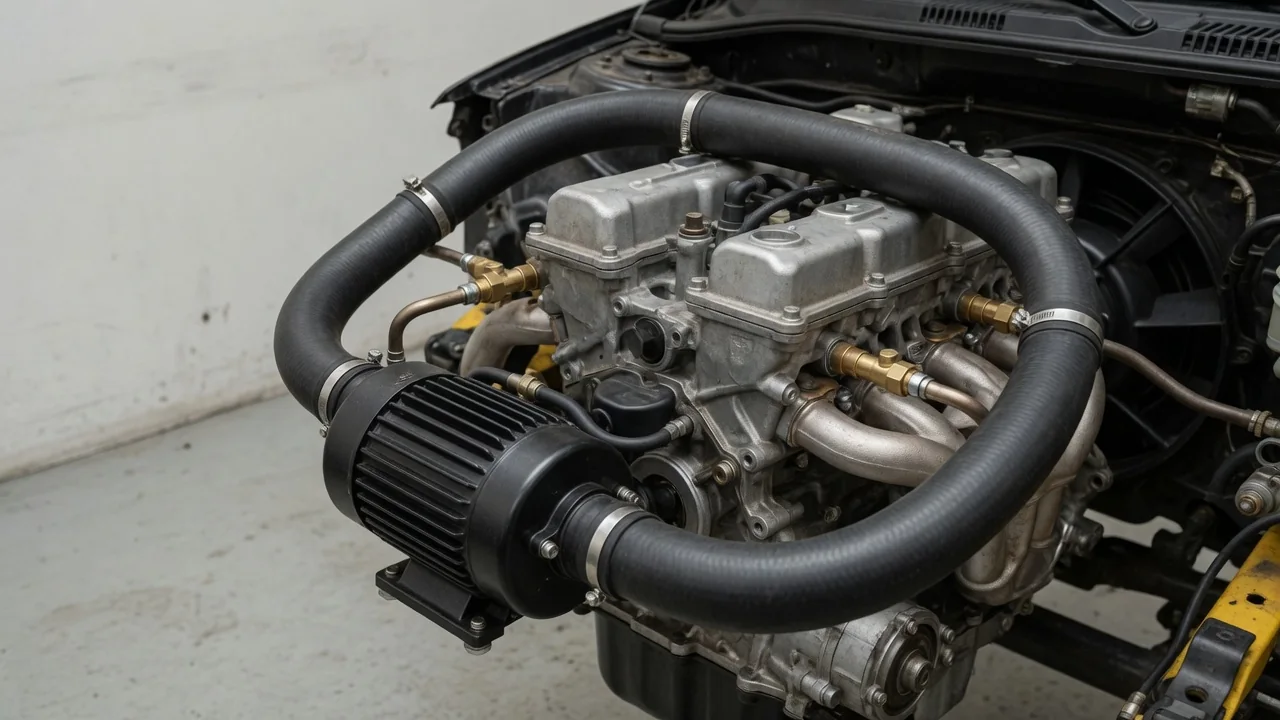
When a scan tool reports P0491 or P0492, the engine controller has judged secondary air injection flow insufficient on one cylinder bank. A P0491 code points to bank 1, while a P0492 code points to bank 2. Neither result names a failed pump or valve by itself. Confirm the vehicle's code text, engine layout, and air-injection layout before treating the reading as a parts list.
What P0491 and P0492 Mean on Your Vehicle
On many vehicles, P0491 means the secondary air injection system did not deliver enough air to bank 1, and P0492 means the same shortfall on bank 2. Those are standard SAE-style descriptions, not a guarantee that your controller uses identical wording. Pull the manufacturer's code definitions for that year, engine, and secondary air configuration before you map the result to a side of the engine. Layouts differ: some engines feed both banks from one pump, others use separate paths, and some skip secondary air entirely.
Bank 1 is the cylinder bank that contains cylinder 1; bank 2 is the opposite bank on a V-type or horizontally opposed engine. Physical location still has to be checked because cylinder 1 can sit toward the firewall, the radiator, or either side depending on the engine family. These codes report a failed flow-related monitor, not a named failed part. Insufficient air flow on one bank can come from plumbing, a valve, a pump, a passage, or the measurement method, so the stored code is evidence to interpret, not proof that the air injection pump has failed.
Why Secondary Air Flow Matters During a Cold Start
Secondary air injection adds extra oxygen to the exhaust during specified cold-start emissions windows so unburned hydrocarbons and carbon monoxide can oxidize more readily before the catalyst is fully warm. Typical hardware includes an air injection pump, delivery hoses, and an air switching valve or similar control valve that opens the path into the exhaust. A check valve is often fitted to keep exhaust gas and moisture from traveling back toward the pump. Not every vehicle uses the same combination, so confirm which pieces are actually installed before assuming a missing component is the problem.
The engine controller judges whether the system responded as expected using vehicle-specific monitoring strategies, which may watch oxygen-sensor behavior, pressure, current, or other signals during the commanded event. Because operation is conditional, a silent pump during an arbitrary warm-engine check does not prove a fault. Many designs run secondary air only after a cold start, for a limited time, and only when temperature, load, and other enable criteria are met. Finding no activity on a hot idle is therefore expected on some vehicles and is not, by itself, confirmation of insufficient air flow.
Symptoms and What They Can Tell You
A P0491 code or P0492 code often presents first as an illuminated check-engine light, with little noticeable change in how the vehicle drives. Secondary air is an emissions aid during a cold start, so many drivers feel no stumble, hesitation, or loss of power once the engine is warm. Unusual pump noise at startup can still be a useful observation: a pump that never whirrs, or one that sounds strained, grinding, or unusually loud, may hint at electrical, mechanical, or airflow trouble. Noise alone still needs confirmation through testing rather than immediate part replacement.
Rough running, stalling, or reduced power should prompt a wider look rather than attributing every complaint to secondary air flow. Additional misfire, fuel, ignition, or sensor codes may be present, and those faults can affect drivability far more than a cold-start air-injection shortfall. Arrange diagnosis for a steady warning light so freeze-frame data and related codes are not lost to another drive cycle. Stop safely if the engine runs poorly enough to be unsafe, the warning light flashes, or you notice smoke or a burning smell, because those signs point beyond a simple flow monitor result.
Pump, Valve, and Passage Faults That Can Restrict Flow
A pump that never runs, runs weakly, or cannot move enough air can produce insufficient air flow even when valves and passages are intact. Power, ground, fuse, relay, or control-circuit problems can leave a sound pump silent, so electrical supply has to be verified before the pump itself is condemned. Disconnected, cracked, collapsed, leaking, or obstructed hoses can dump commanded air before it reaches the exhaust, or they can starve the pump inlet. Visual damage is useful evidence, but a hose that looks intact can still leak at a fitting or be blocked internally.
Valves that fail to open keep delivered air from reaching the intended bank, while a check valve that sticks open can allow exhaust moisture and soot back toward the pump. Some designs use vacuum to move an air switching valve; others use electric actuators, so vacuum-control checks apply only where that hardware is fitted. Blocked air passages in the head, manifold, or injection ports can limit flow even when the pump operates and the hoses are sound. Sensor or circuit faults can also set a flow code, and each possibility needs evidence before any component is named as the cause.
Diagnosing a P0491 Code or P0492 Code
Diagnosis should start with a complete code scan, including pending and stored status, freeze-frame data, and the relevant vehicle service information, before any codes are cleared. Freeze-frame data captures engine temperature, load, and related conditions when the monitor failed, which helps confirm whether the event occurred in a cold-start window. The affected bank then guides testing: P0491 directs attention toward bank 1 paths, and P0492 toward bank 2. Both codes together can justify inspecting shared components such as the pump, relay, or common hose, without proving that one shared part has failed.
Owner checks should stay limited: record whether the pump seems to run at a cold start, and inspect visible hoses for cracks, disconnection, or collapse with the engine off and cool, staying away from belts, fans, and hot exhaust parts. Professional testing can command the pump, verify electrical supply, check valve response, and measure system response under the conditions the monitor actually uses. Bank-specific passage inspection or sensor evaluation is warranted when shared hardware looks sound yet only one bank fails. Direct battery powering, circuit bypasses, and hot-exhaust disassembly are not appropriate owner procedures.
Confirming the Repair and Preparing for an Emissions Test
A lasting repair needs a documented test result that ties the work to the flow fault, rather than parts replaced only because P0491 or P0492 names the secondary air injection system. If moisture intrusion, a stuck check valve, or blocked air passages contributed to pump damage, those conditions must be corrected when confirmed; otherwise a new pump can fail the same way. The goal is to restore commanded air to the affected bank under the enable conditions the controller uses, then show that the monitor no longer sees insufficient flow.
Verification means operating the vehicle through the specified conditions so the secondary air monitor can run to completion, then scanning again for returning or pending codes. A passing drive that never meets enable criteria does not prove the repair. Clearing codes resets readiness information and turns the warning light off without establishing that the fault is gone or that the vehicle is ready for an emissions inspection. Until the monitor completes and stays clear, treat the P0491 code or P0492 code as unresolved, even if the engine feels normal.