P0470–P0474 Exhaust Pressure Sensor Codes: Meaning and Diagnosis
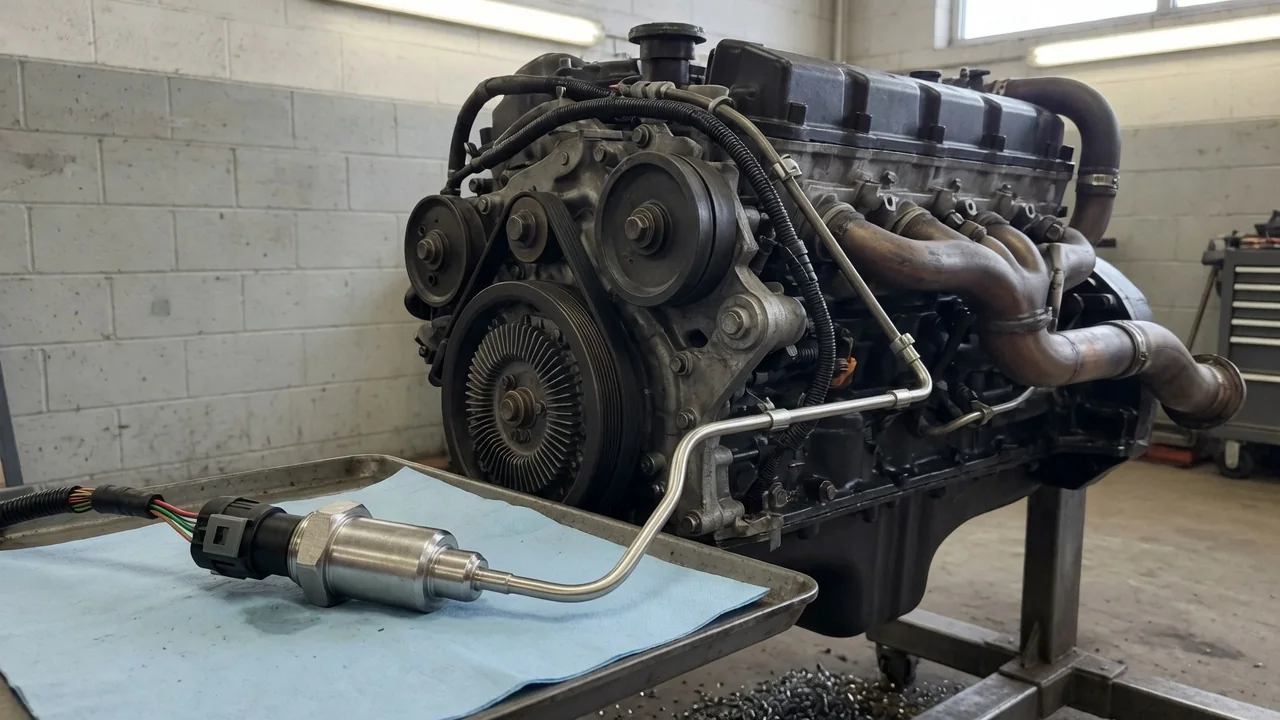
Diesel engines using exhaust pressure feedback can set P0470 through P0474 when the exhaust back pressure sensor circuit does not behave as expected. P0471 often indicates range or performance; P0472, P0473, and P0474 describe low, high, or intermittent circuit conditions. Related P0475 and P0476 codes involve the exhaust pressure control valve. Confirm each definition for the vehicle before treating any code as a failed part.
Verify the Vehicle’s Code Definition and Understand P0470
Before interpreting a P0470 code, confirm the exact description and diagnostic procedure for that vehicle's year, make, model, and engine. Manufacturer-dependent definitions can differ, and the same number may not describe the same circuit on every platform. P0470 generally identifies an exhaust pressure sensor A circuit malfunction, meaning the controller saw a problem in the electrical path that reports exhaust pressure. The stored code is evidence to interpret, not proof the exhaust back pressure sensor has failed.
On applicable diesels, exhaust pressure feedback helps engine management control aftertreatment, turbocharger behavior, or an exhaust pressure control valve when those systems are fitted. The sensor converts pressure into a signal voltage compared against expected operating conditions. Component location, connector layout, and whether a pressure sensing tube is used remain vehicle-specific. Treat P0470 as a request to verify the sensor circuit and how that vehicle uses exhaust pressure information.
P0471: Exhaust Pressure Signal Range or Performance
After the vehicle-specific definition is confirmed, a P0471 code generally means the reported exhaust pressure did not satisfy the controller's expected range or performance. The signal may be biased, slow to change, or inconsistent with other engine data. Possible contributors include sensor bias, a restricted pressure sensing tube where fitted, wiring faults, or actual pressure that does not match expected behavior. None of these is a confirmed cause from the code alone.
Freeze-frame data helps a technician see engine speed, load, and temperature when the P0471 signal became implausible, including whether it failed during boost, regeneration, idle, or a transient. Replacing the exhaust back pressure sensor without checking its pressure connection and electrical circuit can leave a blocked sensing path or a wiring fault unresolved. Diagnosis compares the live signal against vehicle-specific expected behavior rather than assuming the sensor is the failed part.
P0472 and P0473: Low or High Circuit Input
A P0472 code generally indicates low sensor circuit input, and a P0473 code generally indicates high input, subject to the verified vehicle definition. Those designations describe the electrical signal received, not proof of low or high exhaust pressure in the pipe. A short, an open, lost reference voltage, a poor ground, or an internal sensor fault can drive signal voltage to an extreme. The effect of an open or short depends on that circuit's design.
Connector corrosion, damaged wiring, a missing reference supply, or a failed sensor element remain possible until professional circuit testing is complete. Vehicle-specific specifications are required before recommending replacement. Treat a P0472 or P0473 result as a circuit-input finding: the controller saw voltage outside its valid window. Confirming whether wiring, power, ground, or the sensor caused that window violation is a diagnostic step, not a conclusion from the stored code.
P0474: Intermittent Exhaust Pressure Sensor Signal
Once the vehicle's definition is verified, a P0474 code generally designates an intermittent exhaust pressure sensor signal rather than a continuously out-of-range reading. The controller saw a drop-out or unstable signal voltage that later returned toward a plausible value. An intermittent electrical connection, heat-damaged wiring, or an internal sensor fault that appears only when hot or vibrating can produce that pattern. The event may occur only under certain speeds, loads, or temperatures.
A normal reading during a parked inspection does not rule out an intermittent P0474 condition. Document when warning lights or power changes appear, including road speed, engine temperature, and whether the event followed hard acceleration or a long idle. Preserve freeze-frame data rather than clearing codes before a shop can review them. A technician can then compare those captured conditions with vehicle-specific circuit checks without assuming the sensor must be replaced on the first visit.
P0475 and P0476: Related Exhaust Pressure Control Codes
A P0475 code and a P0476 code typically address the exhaust pressure control valve rather than the pressure sensor. Exact meaning and component terminology still must be verified for the vehicle. P0475 is usually an electrical malfunction designation for the control circuit, while P0476 is usually a range or performance designation for how that valve responded. Neither assigns a universal failed part. When they appear with P0470 through P0474, the control side of exhaust pressure management also needs diagnosis.
These control codes matter most when found alongside the sensor circuit faults already discussed. The control system still needs its own diagnosis, including valve wiring, actuator movement where fitted, and whether commanded position matches reported exhaust pressure. Simultaneous sensor and control codes do not establish which fault occurred first, and they do not prove one repair will resolve both. A restricted sensing path, a biased sensor, or a valve that is not following commands can set a combination of related-looking codes.
Symptoms and Conditions That Need Prompt Attention
Vehicles that set P0470, P0471, P0472, P0473, or P0474 may illuminate a warning light, reduce available power, or change throttle and boost response. Some diesels show no obvious drivability change even while a sensor circuit fault is stored, so a smooth idle does not dismiss the code. Symptoms alone cannot identify a failed exhaust back pressure sensor and cannot confirm an exhaust restriction. Fueling, turbocharging, or aftertreatment faults can produce similar lamps and power loss.
Severe power loss, overheating, heavy smoke, or exhaust fumes entering the cabin are reasons to stop safely and seek assistance rather than continue driving to diagnose a pressure sensor. Follow the vehicle's warning guidance when multiple lamps appear or the engine enters reduced power. There is no blanket assurance that a stored P0471 or related circuit code is safe to ignore until the next service. Match the next step to symptom severity and to the messages the cluster displays.
Safe Observations and Professional Diagnostic Next Steps
Record every stored code, its status, and any freeze-frame data before clearing anything. That snapshot is often the only record of the operating point when a P0470-family fault set. Owner observations should stay limited to accessible wiring and connectors with the engine off and cool. Note visible damage or a disconnected plug without unplugging, probing, or dismantling components. Opening hot exhaust connections, applying pressure to sensors, bypassing circuits, or forcing emissions-system operations is not a safe owner task.
Technicians may check signal plausibility, reference voltage, ground integrity, and the pressure sensing path using the manufacturer's vehicle-specific procedure. That work can include comparing live signal voltage with other engine data and inspecting a sensing tube for restriction where one is fitted. Repair verification means confirming the fault and original symptoms remain resolved under the manufacturer's specified test conditions, not merely that the lamp stays off when parked. A code that returns on the next comparable drive cycle still needs further investigation.