P0455 Engine Code: Diagnosing a Large EVAP Leak
What P0455 means
P0455 is an On-Board Diagnostics II (OBD-II) trouble code that reports a large leak in the evaporative emission control (EVAP) system. The powertrain control module (PCM), sometimes called the engine control module (ECM), ran a leak monitor and found that the fuel-vapor system could not hold the expected vacuum or pressure. The code names a size class of leak, not a failed part.
EVAP is the sealed network that keeps gasoline vapors in the vehicle instead of venting them to the air. It typically includes the fuel tank, filler neck, fuel cap or capless seal, vapor hoses, a charcoal canister that stores vapors, a purge valve that meters vapors into the engine, and a vent valve that opens the canister to atmosphere when the system is not under test. When any of those pieces lets in too much air, the monitor can set P0455.
The same code can appear for a loose or missing fuel cap and for a split hose, cracked tank, or stuck valve. Leak-size labels, test method, and related codes are manufacturer- and model-year-specific. On many vehicles P0455 is the “gross” or large-leak code, while other P0440-series codes cover a general EVAP fault, a smaller leak, or a purge-flow problem. Confirm the definition and freeze-frame data for the year, engine, and market of the vehicle you are working on.
What usually causes a large EVAP leak
Because the monitor looks at the whole vapor circuit, the first place to look is the most common opening: the fuel filler. After that, inspect every vapor path that can dump the test vacuum or pressure in a hurry.
Loose, missing, damaged, or wrong-type fuel cap, or a worn capless-filler seal; Cracked, disconnected, or collapsed EVAP hoses and rubber elbows, especially near the tank, canister, and engine bay; Failed purge valve (stuck open) or vent valve (stuck open or not sealing); Damaged charcoal canister, leaking canister close valve, or broken canister mounting that stresses the lines; Fuel-tank, filler-neck, or sending-unit gasket leak; aftermarket accessories that disturb the filler or tank vent path; Corroded or unplugged EVAP electrical connectors, or a fault that makes the PCM misread a good system as leaking
A recent fill-up, a cap left off, or work around the tank can set P0455 even when no part has failed. Clear the code only after the seal is restored and the monitor has a chance to run again; some vehicles need several drive cycles with the tank in a specified fill range before the EVAP monitor completes.
How to diagnose it without guessing
Start with the scan tool, not with parts. Record freeze-frame data (engine temperature, fuel level, vehicle speed, and which monitors had run) and note any companion EVAP codes. Those details tell you whether the large-leak test failed cold, after a fill, or during a purge event, and they keep you from treating P0455 as a generic “replace the cap” job when the PCM also reported a purge or vent circuit fault.
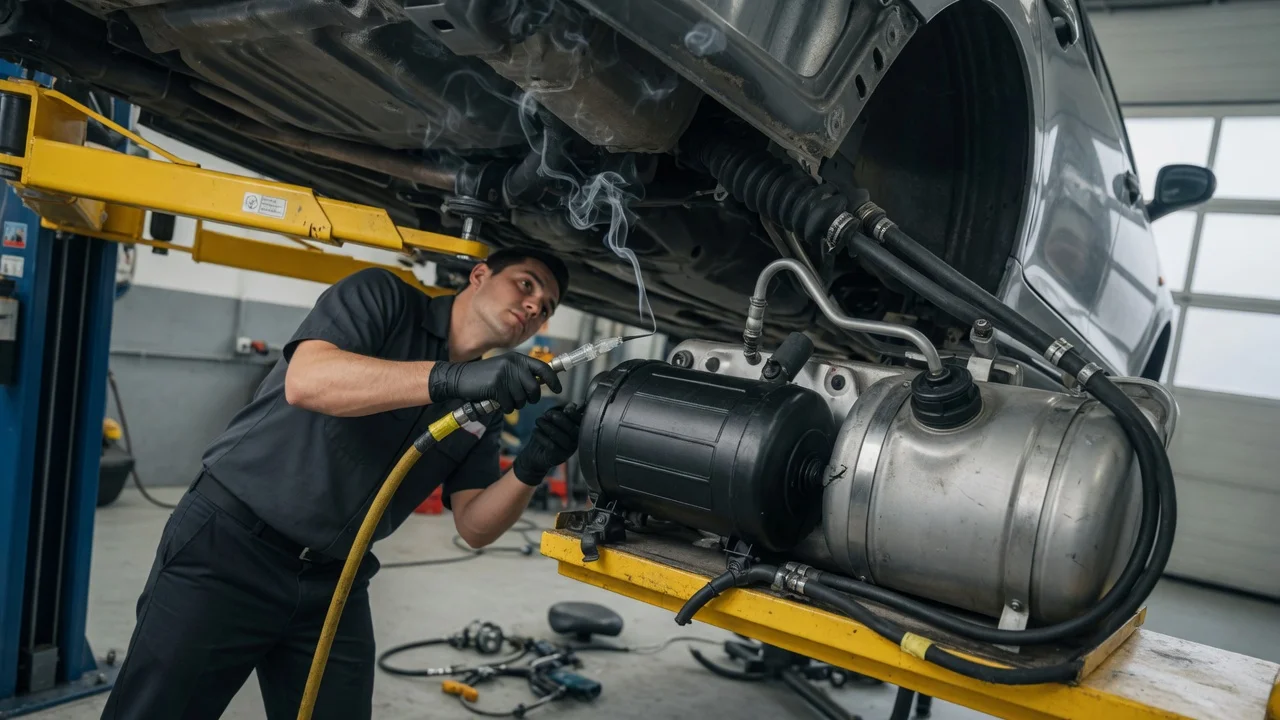
Verify the fuel cap or capless seal: install a known-good cap, click it until it ratchets, and inspect the filler-neck sealing surface for cracks or debris. Do a visual and tactile inspection of EVAP lines from the tank and canister to the engine, looking for dry rot, rodent damage, disconnected quick-connects, and hoses resting on hot or sharp surfaces. Command the purge and vent valves with a bidirectional scan tool if the vehicle supports it, and listen or feel for click and flow. A purge valve stuck open can pull a large leak during the monitor; a vent valve that will not close can never seal the system. Smoke-test the EVAP system only with equipment and a port intended for EVAP, at the pressure the service information specifies for that vehicle. Watch the filler, tank top, canister, and engine-bay junctions for smoke. Do not pressurize the tank with shop air. If no smoke appears, follow the factory pinpoint test for that model year: some designs require the vent to be closed, the purge to be sealed, and a specific fuel-level window before the test is valid.
Service information for the exact vehicle is required for smoke-test pressure, valve pinouts, and monitor enable criteria. Those values are not universal, and using the wrong pressure or skipping a commanded-valve step can miss a leak or damage a component. If freeze-frame fuel level is very high or very low, the EVAP monitor on some vehicles is disabled or unreliable until the tank is in the allowed range.
What to do next
If the cap or a disconnected hose was the cause, repair the seal, clear the code, and drive until the EVAP monitor reports complete and P0455 does not return. If valves, the canister, or the tank are implicated, replace only the part that failed the pinpoint test, then recheck for leaks. An illuminated malfunction indicator lamp (check engine light) from P0455 typically means the vehicle will not pass an OBD-II emissions inspection until the code is gone and the monitor is ready. Fuel odor, a hard-to-tighten cap, or a whistle at the filler are useful clues, but they are not a substitute for a leak test.
P0455 does not, by itself, prove a fuel-economy problem or an engine misfire. It means the vapor system is open enough for the large-leak monitor to fail. Treat it as an emissions-system seal problem, confirm it on the vehicle in front of you, and do not assume a part is bad because it is a common failure on a different make or year.