P0455 Engine Code: Diagnosing a Large EVAP Leak
What P0455 means
P0455 is a generic OBD-II (on-board diagnostics) powertrain code that reports a large leak in the evaporative emission control system, commonly called EVAP. EVAP is the sealed fuel-vapor system that holds gasoline fumes in the tank and charcoal canister and later draws them into the engine to be burned. The code means the leak monitor ran and the vapor system could not hold the expected seal. It does not name the leaking part, and the size that counts as large is set by that vehicle’s monitor, not by a single industry-wide measurement.
What the EVAP system does
Fuel in the tank gives off vapor. The EVAP system keeps that vapor from escaping into the air by routing it through hoses, valves, and a charcoal canister. During certain driving conditions the engine control module (ECM or PCM) opens a purge valve so the engine can ingest stored vapor. A vent valve or similar control lets the system breathe in a controlled way and is closed when the computer tests for leaks. A large opening anywhere in that sealed path—cap, filler neck, hose, canister, tank, or a valve stuck open—can set P0455.
How the code is set
The leak check is an OBD monitor, not a continuous gauge on the dash. After the enable conditions for that model are met (typically a defined fuel level, engine-off or running window, temperature range, and other manufacturer rules), the control module seals the EVAP system and watches pressure or vacuum with a fuel-tank pressure sensor or an equivalent strategy. If the pressure change is too large or the seal cannot be established, the module stores P0455 and turns on the malfunction indicator lamp (check engine light) after the required number of failed trips. Exact enable criteria, fail thresholds, and trip counts are vehicle-specific.
What you may notice
Many vehicles show only the check engine light. Drivability is often unchanged because EVAP is an emissions path, not a primary air-fuel control loop while you are driving. A fuel smell near the tank, filler, or engine bay can appear if vapors are escaping. In regions that require an emissions inspection, an incomplete or failed EVAP monitor, or an illuminated lamp, can keep the vehicle from passing until the leak is repaired and the monitor runs successfully.
Common causes
Loose, missing, cracked, or poorly sealing fuel cap (gas cap); Damaged filler neck, cap seal, or locking cam on the filler; Split, disconnected, or crushed EVAP hoses and quick-connects; Purge valve stuck open, so the system cannot seal; Vent valve stuck open or a damaged vent hose or filter; Cracked charcoal canister or leaking canister close valve; Leaking fuel tank, sending unit seal, or roll-over valve; Aftermarket or ill-fitting cap, or a cap left off after refueling
Practical first checks
Start with the fuel cap, because it is the most accessible seal in the system. Confirm it is the correct cap for the vehicle, that the gasket is intact, and that it clicks or tightens fully per the owner’s information for that model. After a cap repair, the lamp may stay on until the EVAP monitor completes another pass; clearing the code without a completed monitor does not prove the leak is gone. Inspect visible EVAP lines at the tank, canister (often near a rear wheel or the tank), and the engine-bay purge connection for cracks, rubbing, or fittings that have popped off. Do not pry on plastic vapor lines or tank fittings with sharp tools; they break easily. Avoid open flame or sparks around the filler and tank.
How shops typically confirm a large leak
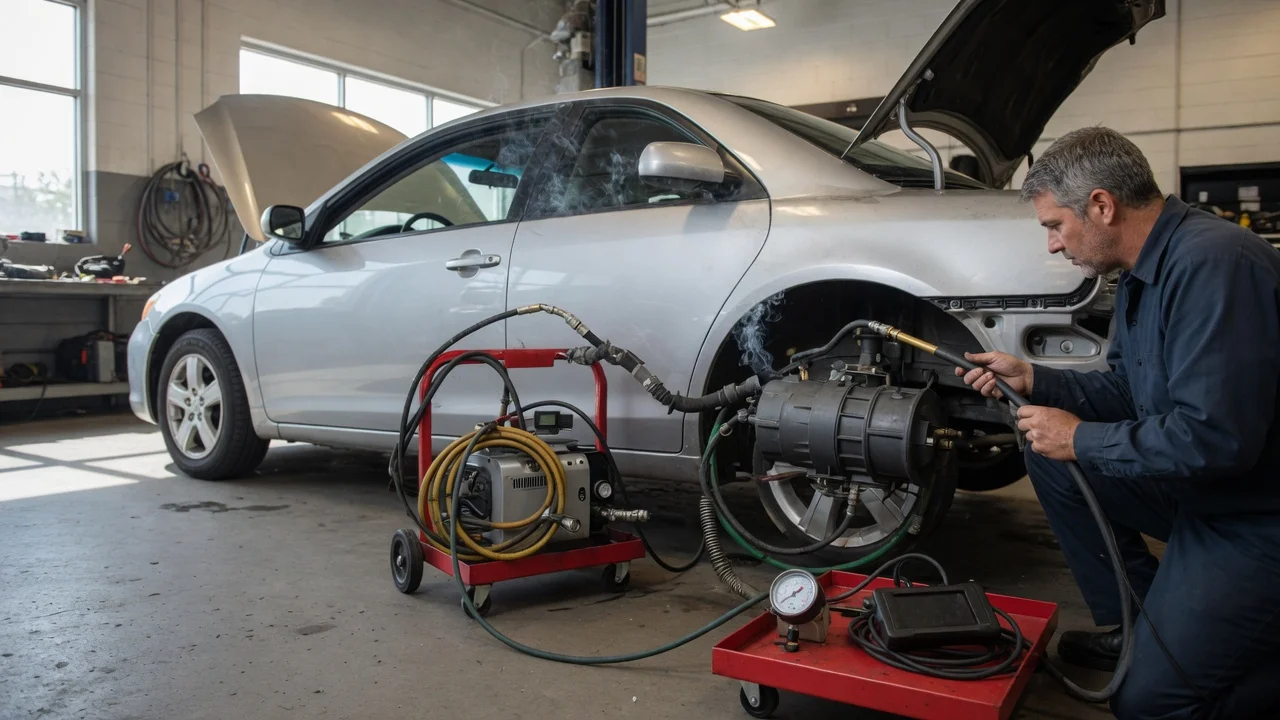
A scan tool is used to read P0455, freeze-frame data, and related EVAP codes, and to command the purge and vent valves. A smoke machine or equivalent leak detector is then introduced into the EVAP service port or a specified test point so escaping smoke can show the opening. Forcing smoke into the wrong port, or at a pressure the system is not designed for, can damage components; follow the service procedure for that model year, engine, and market. Electrical checks of the purge valve, vent valve, and tank pressure sensor separate a mechanical leak from a valve that never closes or a sensor that misreports pressure. Replace parts only after the leak path or the failed control is identified.
Related codes and what P0455 does not tell you
P0455 is a generic SAE code on OBD-II vehicles that implement it; the message text in a scan tool may vary slightly by manufacturer. Other generic EVAP codes, such as those often used for smaller leaks or for purge and vent circuit faults, point to different monitor results or electrical problems and are not interchangeable with P0455. A large-leak result can still be caused by a small part (a missing cap) or by a large opening (a disconnected hose). The code does not measure fuel economy, does not prove a liquid fuel leak, and does not by itself condemn the charcoal canister. Hybrid, motorcycle, and some late-model systems may use different EVAP hardware and monitor names; apply the procedure published for that configuration.