P0455 Engine Code: How to Diagnose a Large EVAP Leak
Before you start
A P0455 code means the vehicle's powertrain control module has detected a large leak in the evaporative emission control system, often called the EVAP system. The check usually runs while the vehicle is parked or under specific driving conditions, so the fault may be present even when the engine seems to run normally. This procedure assumes you can access the diagnostic connector and the fuel filler area safely. Avoid smoking or working near open flames because fuel vapor can be present around EVAP components.
Step-by-step instructions
Work through the checks from the simplest causes to the less accessible components. If a step reveals a fault, repair the confirmed problem and clear the code only after the repair is complete.
1) Record the code and freeze frame data
Connect an OBD-II scan tool and record P0455 along with any other stored codes. Freeze frame data can show whether the fault was detected at idle, during highway driving, or after refueling. If other EVAP codes are present, diagnose the code with the most specific description first.
2) Inspect the fuel cap and filler neck
Remove the fuel cap and inspect the seal for cuts, cracks, dirt, or distortion. A dry or cracked O-ring can prevent the cap from sealing tightly. Reinstall the cap until it clicks, then check the filler neck for rust, paint damage, or a bent sealing surface that could allow vapor to escape.
3) Perform a visual inspection of accessible EVAP lines
With the engine off, look at the EVAP canister, purge valve, vent valve, and the hoses connected to them. Look for disconnected hoses, cracks, chew marks, or loose clamps. A large leak is more likely to come from a clearly separated line or a severely damaged hose than from a small pinhole.
4) Use a scan tool to command the EVAP valves if supported
Some scan tools can command the vent valve closed and the purge valve open. If these controls are available, use them only as described by the scan tool or service information for the vehicle. Listen for the vent valve clicking and watch for purge or vent valve circuit codes that may indicate an electrical fault rather than a physical leak.
5) Use an EVAP smoke test when available
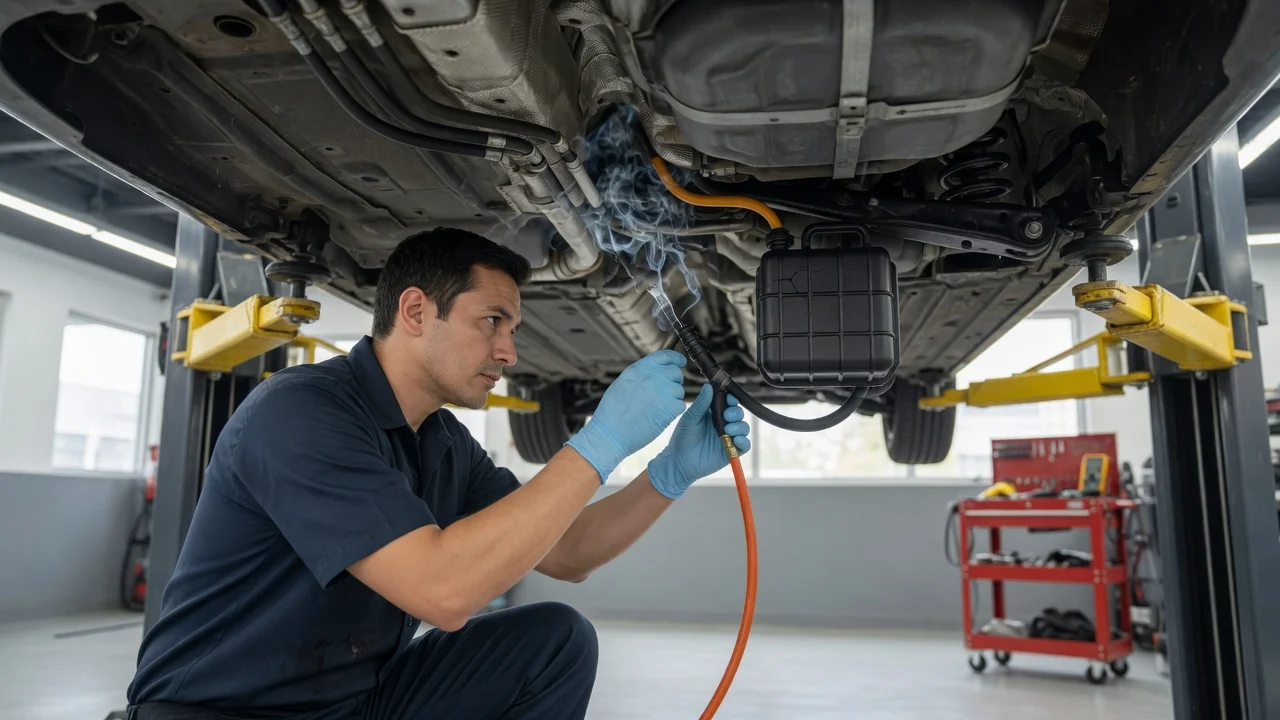
A smoke machine is the most direct way to locate a large EVAP leak. Introduce smoke into the system through the service port or test point specified for the vehicle, with the vent valve closed if required. Watch for smoke escaping at the fuel cap, filler neck, canister, vent valve, purge valve, or any accessible hose connection.
Check the output
A successful diagnosis identifies the source of the leak or confirms that the major accessible sealing points are intact. If the scan tool supports an EVAP leak verification test, run it after a repair and confirm that the monitor reports a pass. Keep in mind that some vehicles require a specific drive cycle, fuel level, or temperature range before the monitor will run and clear P0455.
Common problems and next steps
A loose or damaged gas cap is a common cause of P0455, but a missing cap O-ring or dirty sealing surface can produce the same result. The code can also return after a cap replacement when the real fault is a cracked filler neck or a disconnected canister hose. If the vent valve is stuck open, the EVAP system may not be able to build pressure during the leak test, which can look like a large leak.
If the visible lines and cap are sound, test the purge valve for sticking and the vent valve for correct sealing. When no leak is found with smoke, check the components that let air enter or leave the system during testing. Recheck only after the corrected part is installed, and have the vehicle run the appropriate monitor before clearing the code.