P0411 Code: Secondary Air Injection Incorrect Flow Detected
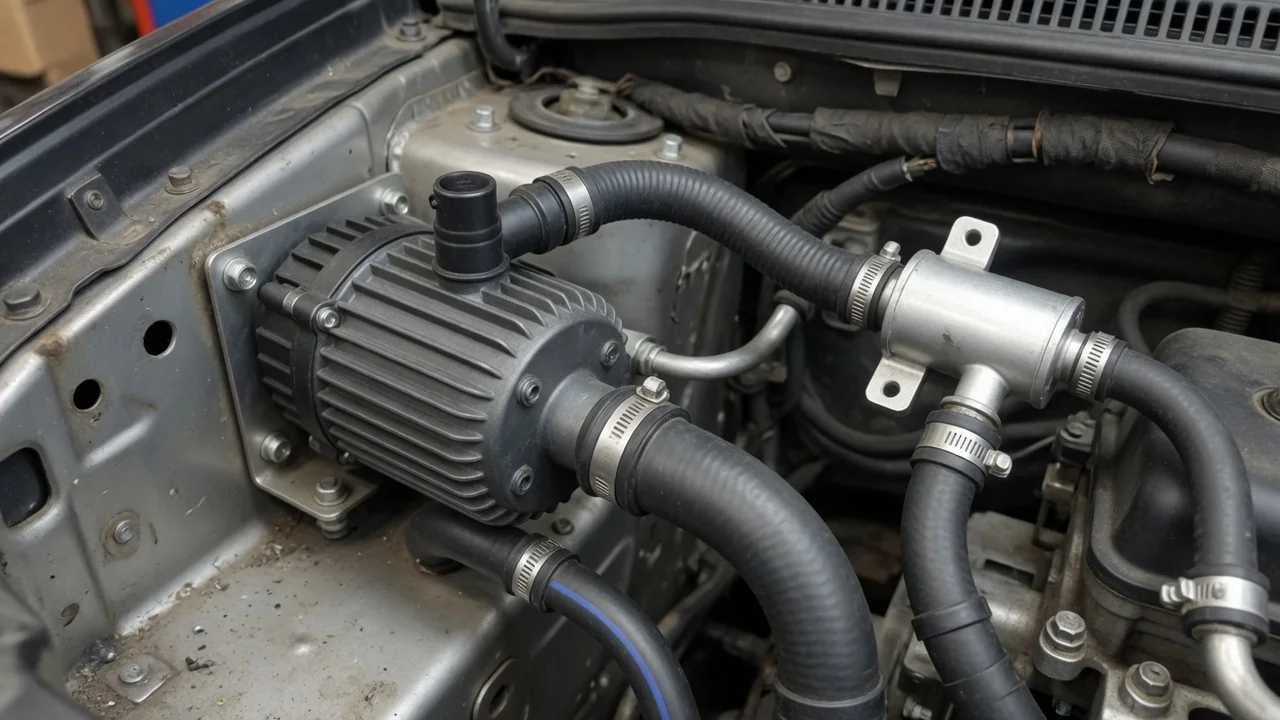
The P0411 code means the engine controller detected incorrect secondary air injection flow. A related P0410 code points to a broader secondary air injection system malfunction. Both results are diagnostic evidence, not proof that a pump, valve, or hose has failed. The system typically adds fresh air to the exhaust during cold-start emissions control, and unexpected airflow monitoring results set these codes. Confirm the exact scan report and vehicle-specific service information before interpreting tests.
What P0411 Means for Secondary Air Injection
P0411 indicates that the engine controller detected an unexpected secondary air injection flow response during a monitor. Secondary air injection supplies fresh air to the exhaust during certain operating conditions so hydrocarbons and carbon monoxide can oxidize more completely, which is especially useful for cold-start emissions. The controller compares commanded pump and valve activity with the airflow it expects to see. When the measured or inferred flow does not match that expectation, it stores the P0411 code and usually turns on the check-engine light.
The P0411 code identifies a system performance problem without proving which component failed. Designs differ: some vehicles use an electric air injection pump, combination valves, reed or check valve assemblies, and dedicated air hoses, while others use different routing and sensors. Airflow monitoring methods also vary, so a result that looks like incorrect airflow on one layout may mean something else on another. Check vehicle-specific service information for system design, enable conditions, and diagnostic procedures before interpreting any test result, because manufacturer-dependent codes require confirmation on the vehicle being serviced.
Symptoms and When to Seek Service
A check-engine light may be the only noticeable symptom of a P0411 code. Normal drivability does not confirm that emissions operation is normal, because secondary air injection often runs in a limited window after a cold start and may not affect how the engine feels once it is warm. Record any unusual air injection pump noise or extra startup sounds as observations, without treating them as proof of a particular failure. Those notes help a technician compare freeze-frame data with when the monitor actually ran.
Rough running or stalling still needs broader evaluation, because P0411 alone cannot establish its cause. Vacuum leaks, ignition problems, fuel delivery issues, and exhaust restrictions can produce similar complaints while a secondary air injection fault is stored. Seek prompt diagnosis when the light is on, and give immediate attention to a flashing check-engine light, severe running problems, visible smoke, or a burning smell. Those conditions can point to misfire, overheating, or other hazards that go beyond incorrect airflow in the air injection system.
How Leaks, Stuck Valves, and Pump Faults Affect Flow
Loose connections, cracked fittings, and air hose leaks can prevent supplied air from reaching the exhaust where the controller expects it. If the pump runs but the air escapes to atmosphere, airflow monitoring can report incorrect airflow even though the pump still works. Stuck valves or restricted passages interfere in the other direction: a check valve that will not open blocks delivery, while a valve that will not close can allow exhaust back toward the pump or hoses. Valve arrangements vary by vehicle, so the same symptom does not always mean the same part.
Pump operation, electrical supply, and control faults are also possible causes and need testing before any parts replacement. A pump that does not run, runs weakly, or is commanded off when the monitor expects it on can produce the same P0411 code as a leak. Wiring, relays, and driver circuits belong in that evaluation. On applicable systems, a feedback sensor or monitoring fault can change how the controller assesses airflow even when mechanical flow is acceptable. Treat each of those paths as hypotheses until vehicle-specific tests support or rule them out.
Safe Observations and Professional Diagnostic Tests
Before clearing anything, record all stored codes, freeze-frame data, and when symptoms occur. Freeze-frame information shows engine temperature, load, and related conditions at the moment the P0411 code set, which helps decide whether the event happened during a cold-start emissions window. Limit owner inspection to accessible visual observations with the engine off and cool, such as visibly loose hoses or damaged connectors. Do not power the air injection pump directly, bypass controls, open hot exhaust components, or work near moving parts; those steps are unsafe and can create new faults.
A technician uses vehicle-specific procedures to check commanded operation, electrical supply, airflow, valve function, and feedback signals. That sequence typically compares what the controller requested with what the pump, check valve, and hoses actually delivered, then isolates leaks from electrical and sensor issues. After a repair, confirm success through the manufacturer's diagnostic procedure and monitor completion. Clearing the P0411 code alone does not verify that incorrect airflow is gone, because the secondary air injection monitor may need specific start and temperature conditions before it runs again.
If the Scan Report Includes P0410
P0410 is a secondary air injection system malfunction code, not another name for P0411. Confirm the exact scan result, including whether the report shows a P0410 code, a P0411 code, or both, then follow vehicle-specific diagnostic guidance for that controller. Some platforms use P0410 as a general system fault while P0411 focuses on detected incorrect flow; other platforms may apply the labels differently. Treat P0410 as a related fault in the same secondary air injection system, and do not assume the two results describe identical failures.
Either code still requires evidence before condemning a pump, valve, hose, or electrical component. A stored P0410 code can reflect a pump that never ran, a control circuit problem, or a monitor that never saw expected activity, while P0411 more often points to flow that did not match the commanded event. If P0410 and P0411 are both present, preserve both codes and associated freeze-frame data, then let the vehicle-specific diagnostic sequence guide testing. Replacing parts without that sequence can miss air hose leaks, a stuck check valve, or a monitoring fault.