P0406 Code: EGR Sensor A Circuit High, Symptoms and Diagnosis
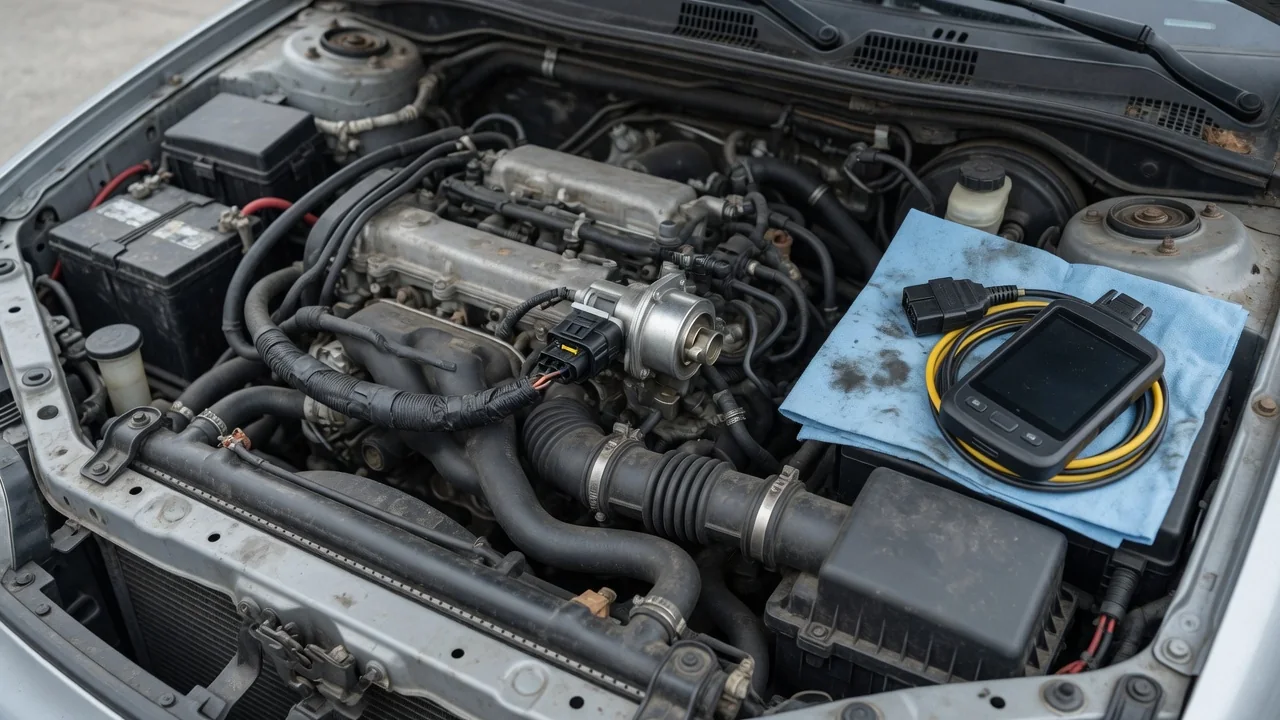
P0406 generally points to an exhaust gas recirculation sensor A circuit high condition, meaning the control module is seeing an unusually high EGR position feedback signal. That reading is a diagnostic clue, not a verdict that the valve has failed or that too much exhaust is flowing. Confirm the code definition, the sensor A designation, and the set criteria for the vehicle's year, make, model, and engine before deciding what the fault actually represents.
What P0406 Means for the EGR Feedback Circuit
On most applications, P0406 identifies an exhaust gas recirculation sensor A circuit high condition. The module monitors EGR position feedback and sets the code when that signal stays above the range allowed by the diagnostic criteria. Sensor A is a manufacturer designation, so the same label can refer to different physical sensors or circuits depending on the engine. Before interpreting the reading, verify the official definition and the enable conditions for that year, make, model, and engine rather than assuming a universal meaning.
A high feedback voltage describes the electrical appearance of the signal circuit, not the actual amount of recirculated exhaust. The reading does not prove the valve is fully open, that flow is excessive, or that the EGR valve itself has failed. Position feedback can be high because of wiring, grounding, or sensor issues while the pintle or plate remains closed. Treat P0406 as evidence that the circuit or its reported position is out of range, then confirm what that means on the specific vehicle before replacing parts.
Symptoms and When to Stop Driving
An illuminated check engine light is the most consistent owner-facing sign of P0406. Some vehicles also idle roughly, hesitate on acceleration, feel down on power, or stall if exhaust gas recirculation is not behaving as commanded. Others continue to drive with little or no change in feel, especially if the module has already limited EGR activity. Those drivability complaints can overlap with ignition, fuel, vacuum, and other emissions faults, so the symptoms do not by themselves identify which component is responsible.
Symptoms also cannot confirm that P0406 accounts for every complaint stored in memory or described by the driver. Related codes, misfires, or a separate mechanical problem may be present at the same time. If the engine stalls repeatedly, power drops sharply, temperature climbs, or the check engine light flashes, stop in a safe place and arrange assistance rather than continuing to drive. When the light is steady and the vehicle still operates normally, keep driving reasonably and have the fault diagnosed promptly instead of ignoring it.
Faults That Can Produce a High Sensor Signal
A high EGR position feedback reading often comes from the electrical side of the circuit. The signal wire can be shorted to voltage, the sensor ground can be open or high-resistance, a connector can be corroded or spread, or the sensor itself can fail internally and report a high value. Any of those conditions can make the module see a circuit-high condition even when the valve has not moved. Distinguishing among them requires the vehicle's wiring information rather than a generic assumption about which part failed.
An open circuit does not always produce the same result. Depending on pull-up or pull-down design, a broken wire or unplugged connector may look high, low, or implausible, so the effect of an open must be assessed from that vehicle's circuit diagram. Mechanical valve or linkage problems belong in the diagnosis only when the EGR design uses position feedback from a moving valve and test results actually show binding or incorrect travel. Carbon buildup is a common EGR concern in general, but P0406 by itself cannot diagnose deposits.
Safe Observations to Record Before Service
Before a shop visit, write down when the warning first appeared, whether the engine was still cold or already at operating temperature, and what changed in idle, power, or drivability. Note recent work that might have disturbed EGR connectors, exhaust hardware, or related wiring. Those details help a technician reproduce the condition that set P0406. Save every stored code and the freeze-frame data before anyone clears memory, because that snapshot of load, temperature, and commanded EGR position is often more useful than the code number alone.
Owner inspection should stay visual, with the engine off and cool. Look for a connector that is unlatched, a harness rubbing against a heat shield, or insulation that is melted or cracked near the EGR area. Do not unplug sensors, probe the signal circuit, or touch EGR components that retain heat after shutdown. Those actions can create new faults, damage terminals, or cause burns. Leave electrical testing and hot-component handling to a technician who has the vehicle-specific pinouts and safety procedures.
How Professional Testing Narrows the Cause
A technician starts with the service information for that vehicle, then reviews related codes and freeze-frame data to see when P0406 set. That context shows whether the engine was idling or under load, how warm it was, and what commanded EGR position the module was requesting. Comparing EGR position feedback with commanded position, where the scan tool supports it, helps separate a stuck mechanical valve from a circuit that simply reports high. Any comparison must use the manufacturer's specifications for that engine, not a universal voltage number.
Professional checks typically include sensor reference voltage, sensor ground integrity, signal circuit condition, and connector fit without requiring the owner to perform those tests. The goal is to show whether the high reading is coming from supply, ground, wiring, the sensor, or the module input. The sensor, valve assembly, or control module should not be condemned until that evidence is in hand. Intermittent P0406 faults may need a road test or additional observation because a circuit can look normal in the bay yet fail under heat or vibration.
Choosing a Repair and Confirming the Result
Repair should follow the confirmed finding, not the code number. Damaged wiring, a faulty connector, a failed position sensor, or a defective valve assembly each call for a different correction, and replacing the wrong piece leaves P0406 waiting to return. Whether the sensor can be serviced separately, how the assembly is replaced, and whether a relearn is required all depend on the specific vehicle. Use the manufacturer's service information for those details rather than assuming every EGR system is built the same way.
After the repair, verification should include the checks the service information calls for, continued monitoring for the circuit-high condition, and confirmation that the original drivability complaints are gone. A road cycle under the same conditions captured in freeze-frame data is often more convincing than a key-on scan in the bay. Clearing P0406 by itself does not fix the fault. It can also reset emissions readiness monitors, which may delay inspection readiness until the vehicle completes the required drive cycles again.