P0381 Code: Glow Plug Indicator Circuit Malfunction
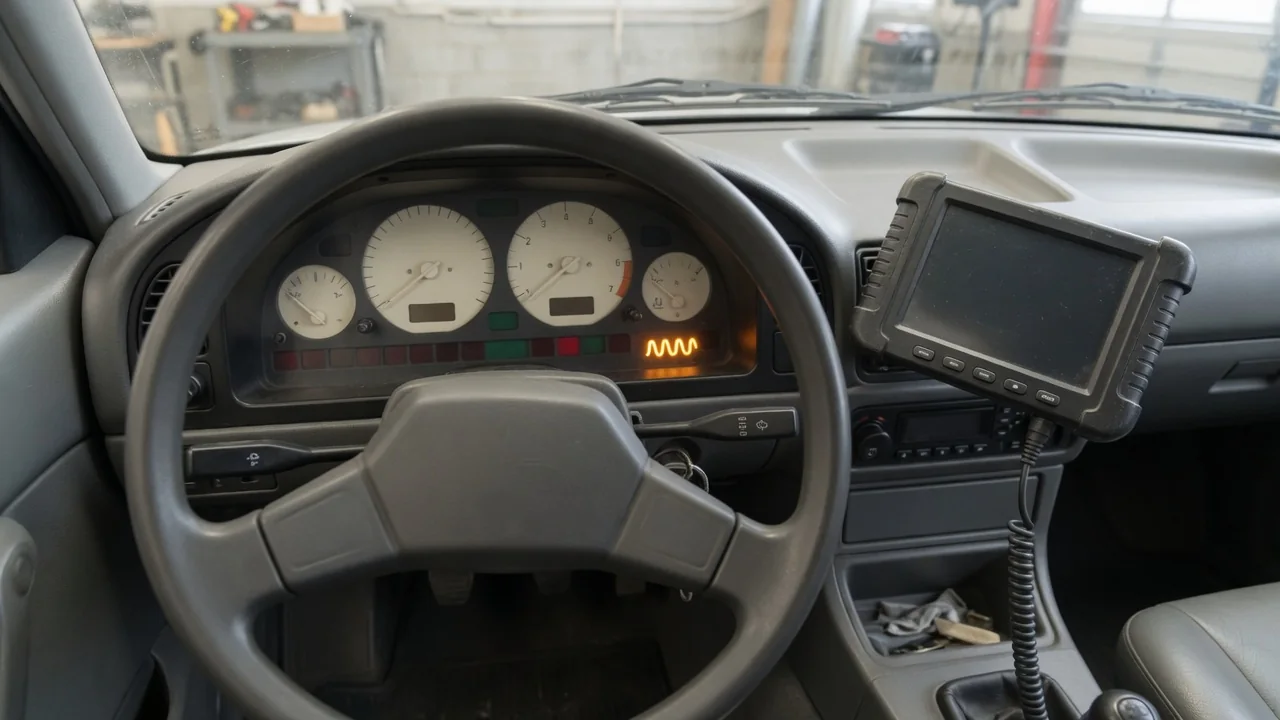
P0381 is a diagnostic trouble code commonly associated with a glow plug indicator circuit problem on diesel vehicles. It points to the warning lamp path that reports glow plug status, not automatically to failed heaters. Confirm the definition for the exact year, make, model, and engine, because layouts differ. A stored fault code is a starting point for diagnosis, not proof that glow plugs need replacement.
Confirm What P0381 Means for the Vehicle
P0381 is commonly described as a glow plug or heater indicator circuit malfunction. That wording refers to the circuit that drives or monitors the glow plug indicator lamp, not the heater elements that warm the combustion chambers. The indicator circuit’s job is to tell the driver when preheating is active or complete, based on the vehicle’s documented system layout. Some designs route the lamp through the instrument cluster, while others use a dedicated telltale controlled by a glow plug module or engine computer.
Before treating the description as settled, confirm the code definition and the diagnostic procedure for that vehicle’s year, make, model, and engine. Manufacturer-dependent wording and pinouts vary, so assuming a shared wiring or control arrangement can send testing in the wrong direction. P0381 by itself does not establish that the glow plugs have failed. Heater circuit codes address the high-current path to the plugs; an indicator circuit fault can exist while the heaters still operate, or the reverse can be true.
Indicator Behavior and Starting Symptoms to Record
Useful observations include a glow plug indicator lamp that stays illuminated, fails to illuminate during the expected wait, or flashes or dims in a way that does not match prior behavior. Normal indicator timing depends on vehicle design, coolant or ambient temperature, and how the control strategy times preheat, so the owner’s manual is the right reference for expected lamp duration. Unexpected lamp behavior is a reason to record details, not a substitute for confirming circuit operation with the published procedure.
Difficult diesel cold starting, extended cranking, white smoke, or rough running after start are worth noting because they can appear alongside glow-related complaints. Those symptoms do not prove an indicator circuit fault, because hard starting can come from fuel delivery, compression, battery condition, or actual heater circuit problems. A stored P0381 may also be present without an obvious starting problem if the lamp path is the only circuit the control module has flagged. Record whether the issue is constant or intermittent and under what temperature it appears.
Possible Faults Behind the Indicator Circuit Code
Possible faults that can set an indicator circuit code include damaged wiring, stretched or chafed harness sections, poor connector fit, corrosion at terminals, and interrupted supply or ground paths. Wiring continuity and voltage drop at those points matter because the lamp circuit is often a low-current path that still needs a clean return. An open, short to ground, or short to power can confuse the module that watches the indicator. None of those possibilities identifies the failed part until testing confirms which condition is actually present.
Where the vehicle’s circuit design supports it, a failed bulb, LED driver, or instrument cluster fault can produce the same diagnostic trouble code because the lamp is part of the monitored path. Control-module or communication faults belong in the investigation only when the vehicle-specific diagnostic information lists those checks, such as a commanded lamp that the cluster never acknowledges. A catalog of possible causes does not establish which component needs replacement. Parts swapping without confirmation can leave the original open or short in place and allow stored fault codes to return.
Safe Observations Before a Diagnostic Appointment
Before a diagnostic appointment, record every available code and freeze-frame snapshot, including companion heater or charging codes, then leave the information intact rather than clearing it. Freeze-frame data can show engine temperature, battery voltage, and operating mode at the moment P0381 was stored, which helps a technician recreate the condition. Note starting conditions, ambient temperature, how the indicator behaved during key-on and cranking, and whether the complaint is intermittent. Those notes are more useful than a single memory of a lamp that seemed wrong once.
Recent battery replacement, jumper-cable use, instrument panel work, or harness repairs are diagnostic context because they can disturb grounds, lamp feeds, or cluster connectors. Mention that history without assuming it caused the code. Limit owner checks to accessible visual observations with the vehicle off: look for obvious connector damage, loose cluster trim after recent work, or corrosion you can see without probing. Do not jump the indicator circuit, apply power directly to the lamp, or disassemble electrical connectors. Those actions can create additional faults and are not a substitute for a wiring diagram.
Professional Testing and Repair Verification
A technician starts with the correct wiring diagram and the manufacturer diagnostic procedure for that engine, then checks circuit operation, connector fit, power at the lamp feed, and ground integrity. That sequence distinguishes an open in the indicator circuit from a control output that never commands the lamp. Scan-tool indicator commands, where the vehicle supports them, can turn the telltale on and off while the technician watches the cluster and the circuit. Electrical testing of continuity, shorts, and voltage is performed to the procedure’s limits, not by improvising power into the harness.
Repairs should follow verified findings. A restored connection, repaired harness section, or a confirmed indicator or control-component fault may resolve P0381, but only the test results justify which of those actions is appropriate. After the repair, indicator operation is checked and the system is rescanned under the key-on, start, and temperature conditions the diagnostic procedure specifies. Verification matters because an intermittent ground or a cluster communication glitch can look repaired until the next cold start. Clearing the code without that confirmation does not prove the indicator circuit is healthy.
When Starting Problems Need Prompt Attention
Driving suitability cannot be determined from P0381 alone. Starting behavior, other stored fault codes, and any warning messages on the instrument cluster matter more than a single lamp-circuit code. If diesel cold starting becomes unreliable, cranking stretches, or the glow plug indicator lamp no longer gives dependable wait-to-start information, prompt diagnosis is warranted so the driver is not guessing when the engine is ready. Follow the owner’s manual for no-start conditions and seek assistance when serious accompanying warnings appear, rather than continuing to crank until the battery is depleted.
Clearing P0381 or replacing glow plugs without testing does not demonstrate that the indicator circuit fault is resolved. The heaters and the lamp path are related only through the vehicle’s control strategy; a new set of plugs will not restore wiring continuity or a failed cluster driver. If starting is still difficult after a lamp repair, additional codes and heater-circuit tests still need attention. Treat the diagnostic trouble code as evidence to interpret with the published procedure, then confirm that both the indicator and any related starting complaints have been addressed under the same conditions that first stored the code.