P0380–P0383 Diesel Codes: Glow Plug Circuit Diagnosis
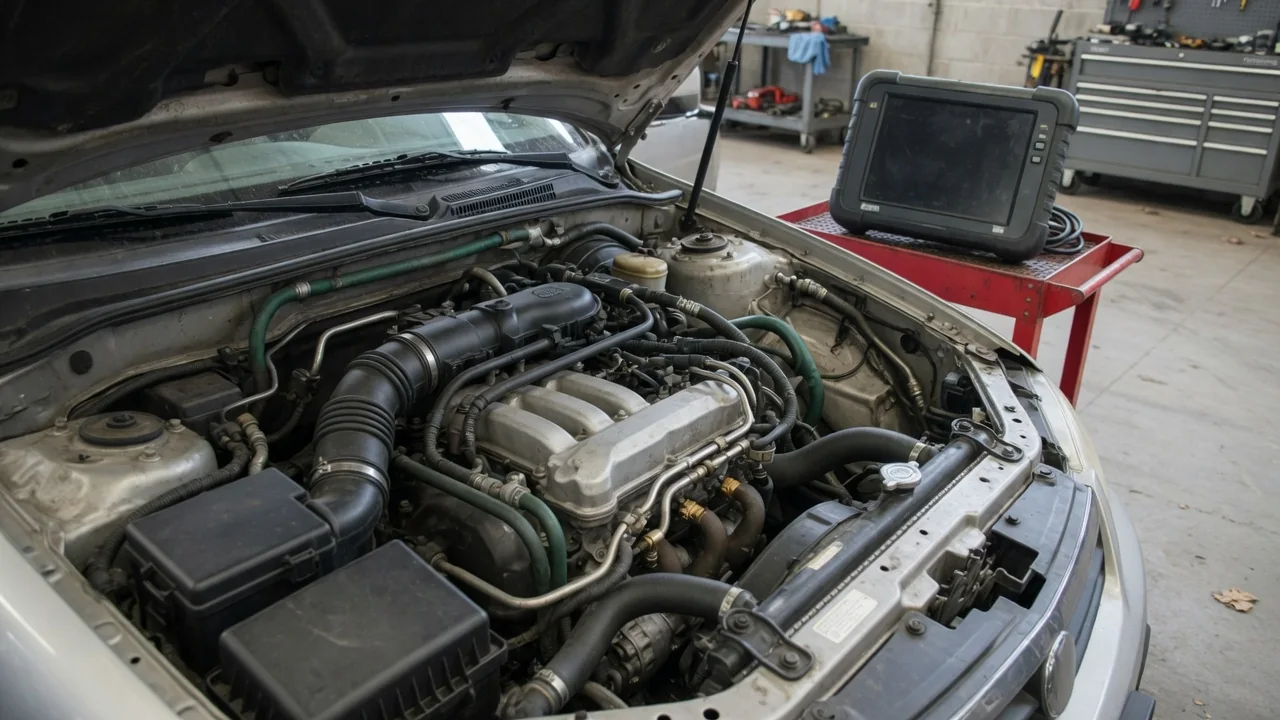
Diesel engines rely on glow plug preheating to ease combustion when metal and fuel are cold. Stored diagnostic codes in the P0380 through P0383 range typically point to glow plug heater circuit A or B, the glow plug indicator, or the glow plug control module path rather than a single failed part. Hard cold-start difficulty often accompanies these findings, but freeze-frame data and vehicle-specific definitions still decide what the electrical evidence actually means.
P0380: Establish What the Heater Circuit A Fault Means
A P0380 code is not a universal sentence. Before treating P0380 as glow plug heater circuit A, confirm the complete description for the vehicle's make, model, year, and diesel engine. Service information establishes how that circuit is laid out, which plugs it feeds, how the control module monitors voltage or current, and whether a relay power supply sits between battery and heaters. The commonly listed heater circuit A designation is a useful starting label, not a substitute for that diagram and monitoring strategy.
A circuit fault identifies a detected electrical problem. It does not establish which glow plug, relay, wire, or controller has failed. High resistance, an open, a short, a weak supply, or a monitoring error can all set P0380 depending on how the engine is designed. Record accompanying stored diagnostic codes and freeze-frame data before clearing anything. Temperature, engine runtime, battery voltage, and commanded preheating captured in that snapshot help separate a genuine heater-circuit issue from an unrelated starting complaint.
P0381: Understand the Glow Plug Indicator Circuit
Confirm whether the vehicle-specific P0381 code definition identifies the glow plug indicator circuit. The lamp or message may report preheating status, yet the indicator circuit is a separate monitored path from the heater elements themselves. An indicator circuit fault can change what the driver sees at key-on without proving that a glow plug has failed. Wiring to the cluster, a bulb or display driver, a control-module output, or a communication path can all disturb the warning while the heaters still operate.
Safe observation of the dashboard lamp at key-on is useful, yet expected behavior depends on coolant or ambient temperature and the vehicle's operating strategy. A short wait lamp on a cold morning is not the same as a lamp that never appears, stays on continuously, or flashes. Indicator behavior, cold-start difficulty, and companion codes need to be evaluated together. A P0381 finding beside a heater-circuit code suggests a broader electrical or control issue; an isolated indicator complaint may stay in the warning circuit.
P0382: Locate the Vehicle’s Heater Circuit B
Verify the vehicle-specific P0382 description before treating P0382 as glow plug heater circuit B. The B designation is a circuit identity on a wiring diagram; it does not automatically mean a cylinder bank, a cylinder number, or a physical side of the engine. Some layouts split heaters into two monitored groups, while others use B for a second feed, a different switching path, or a distinct control channel. Until that map is confirmed, swapping plugs on one bank is guesswork.
Once circuit B is identified, possible faults include the relevant plugs, the relay power supply or integrated switching, connectors, and wiring continuity on that path. A P0382 code still does not assign likelihood to any one of those items. Additional stored diagnostic codes can guide testing of shared supplies versus the identified circuit: a common power or ground problem may appear with both heater-circuit findings, while an isolated B fault keeps attention on that branch's voltage drop, connections, and commanded operation.
P0383: Verify the Control Circuit Definition Before Testing
Obtain the manufacturer's exact P0383 definition and diagnostic procedure for the engine before assigning a component. Generic scanner text may mention the glow plug control module or a control circuit, but wording and enable criteria vary. If the verified definition specifies a low control-circuit signal, that describes a monitored electrical condition, not proof of a defective module. A shorted wire, high resistance, a poor ground, or a command the module never received can produce the same stored result.
Identify power, ground, wiring, connectors, and controller operation as testing areas only where the vehicle's circuit design supports those checks. A generic scanner description alone cannot justify control module replacement. Confirm whether P0383 refers to a module input, an output driver, a communication line, or another monitored path, then follow the published sequence. Replacing the controller because the code name includes the module skips wiring continuity, circuit voltage drop, and supply integrity that often explain the same electrical condition.
Cold-Start Symptoms and Safe Observations
Cold-start difficulty with these codes can include extended cranking, rough running shortly after a cold start, and visible startup smoke. Those symptoms have other possible causes, including fuel delivery, compression, battery condition, and intake air temperature, so they do not prove a glow plug has failed. Record ambient temperature, whether the engine was fully cold, how the engine cranked, and how long the symptoms lasted. Freeze-frame data compared with those notes shows whether the control system saw a preheating request when the complaint occurred.
With the ignition off and the engine cool, look for readily visible damaged wiring or loose connectors without disconnecting or probing components. Heat shielding, chafed harnesses near the glow plug heater circuit, and unseated connectors are observations, not a repair plan. Avoid repeated prolonged cranking, which stresses the starter and battery without confirming heater operation. Seek assistance for a no-start, severe running problems, smoke from wiring, or a burning smell rather than continuing to crank or applying unplanned power to the system.
Professional Tests That Support a Repair Decision
Battery condition and supply voltage affect both starting and glow system diagnosis. A weak battery can extend cranking and distort circuit voltage drop readings while the heaters are commanded. Professional checks cover power feeds, grounds, fuses, relays or integrated switching, and commanded operation using the correct service procedure. Plug resistance and current measurements require vehicle-specific specifications and suitable equipment; no universal threshold establishes a failed plug. Those tests belong with documented values for that engine, not a generic ohmmeter guess.
Owner checks should exclude relay bypassing, feeding glow plugs directly from the battery, and high-current probing, because component design and operating voltage vary and those methods can damage wiring or the control module. After a repair, confirm success through appropriate system testing, code rechecking, and starting behavior under relevant cold or cool conditions. Clearing P0380, a P0381 code, P0382, or P0383 from memory is not proof the heater circuit, indicator, or control path is healthy. Recurrence after a similar cold start still needs the same evidence-based approach.