P0370 to P0374 Codes: Timing Reference High Resolution Signal A Explained
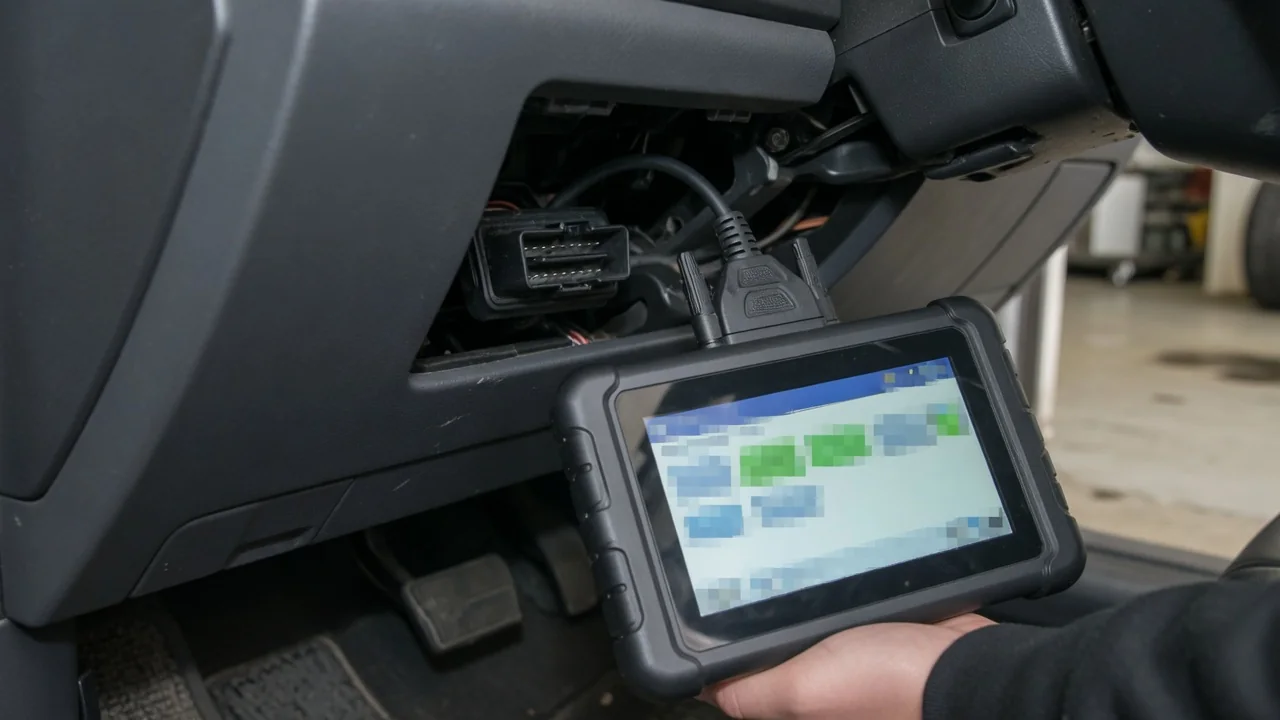
When the check engine light stays on and you pull a P0370 code, your engine computer has flagged a problem with the timing reference high resolution signal A. This pulse train helps the ECM know exact crankshaft or camshaft position for split-second spark and fuel decisions. Codes P0371 through P0374 break that general fault into too many, too few, intermittent, or missing pulses. A P0399 code is different and may or may not appear alongside these. Save freeze frame data before clearing anything, because those numbers direct your next diagnostic step.
What P0370 Means: The Timing Reference High Resolution Signal A Circuit
P0370 is the generic OBD-II parent code for a malfunction in the high resolution timing reference signal A circuit. This signal is a rapid series of voltage pulses that tells the engine control module where the rotating assembly is at any instant. Depending on the engine design, it may come from a dedicated high-count encoder ring, a crankshaft position sensor with fine teeth, or a camshaft sensor used for cylinder identification. The exact source and circuit layout vary by manufacturer, so P0370 is a starting point, not a pinpoint diagnosis.
The subcodes P0371 through P0374 describe how the pulse pattern is wrong. P0370 alone points to a general circuit fault, while P0371 says the ECM counted extra pulses, P0372 reports missing pulses, P0373 means the signal is erratic, and P0374 says no pulses arrived at all. Before clearing anything, write down the freeze frame data and any other stored codes. Those details show engine speed, temperature, and load when the fault set, which helps you reproduce the problem and avoid guessing.
P0371: Too Many Pulses on Timing Reference Signal A
P0371 means the engine computer is seeing more pulses on timing reference signal A than it expects for the current engine speed and its comparison reference. In a healthy circuit, the count rises and falls smoothly with rpm. Extra pulses can be caused by electrical interference from high-current wiring, a poor ground that lets noise into the signal line, or a damaged sensing element that generates false transitions. These are possibilities to test, not parts to replace based on the code alone.
A vehicle with P0371 may run rough, hesitate, or feel like it has a random misfire. Some engines may simply turn on the check engine light and run normally, because the ECM can ignore occasional spurious pulses if enough good data remains. The code does not identify a failed sensor on its own. A technician needs to view the signal waveform with an oscilloscope or a factory-level scan tool to distinguish electrical noise from a true sensor fault before condemning any component.
P0372: Too Few Pulses on Timing Reference Signal A
P0372 reports that the engine control module counted fewer high resolution signal A pulses than expected compared with its other timing references. The missing pulses often point to an intermittent connection, a weak or degraded signal, a contaminated or damaged sensing component, or extra resistance in the wiring harness. A sensor gap that is too wide can also produce a signal that drops out at certain speeds. Each of these candidates changes the signal differently, so a scope is the most direct way to see which one fits.
Drivers may notice stumbling, reduced power, hard starting, or stalling because the ECM cannot place spark and fuel events as precisely as it needs to. On engines that use the signal mainly for fine timing corrections, the only symptom may be a stored code. Safe observations you can make include whether the problem is worse when the engine is hot or cold, happens on bumps, or appears in wet weather. With the engine off and cool, look for damaged, corroded, or unplugged connectors along the sensor and harness.
P0373: Intermittent or Erratic Pulses on Timing Reference Signal A
P0373 tells you the signal A pulses are irregular or come and go rather than being consistently too many, too few, or missing entirely. This intermittent behavior is the most frustrating to diagnose because the fault may not be present during a quick key-on check. The code can clear itself for a while, then return later when the bad connection vibrates, the harness gets hot, or moisture bridges a connector. Loose terminals, chafed wiring that moves with the engine, heat-related breakdown, and water intrusion are all realistic contributors that must be verified with testing.
Symptoms often match the fault: occasional stalling, surging, or a rough idle that happens only on certain drives. Drivers should write down temperature, vehicle speed, weather, and whether the engine was under load when each episode occurred. A note like “bucks after 20 minutes on the highway” tells a technician to watch for heat-related failures. Recording conditions helps a shop reproduce the fault during a road test with a scope connected, which turns an intermittent mystery into a measurable problem.
P0374: No Pulses Detected on Timing Reference Signal A
P0374 means the engine control module detected no pulses at all on timing reference signal A while the engine was running or cranking and it still expected them. A complete loss of signal can come from an open circuit in the wiring, a lost power or ground feed to the sensor, a disconnected or fully corroded connector, or a failed sensing component. The absence of any pulses tells you the circuit is broken somewhere, but it does not prove which link is bad. Manufacturer-dependent wiring diagrams are necessary to trace the path.
The effects of P0374 depend on how heavily the engine relies on this signal. Some designs can limp using other sensors and will run rough with reduced power. Others use signal A for primary timing and may crank but not start, or stall while driving. A vehicle that stalls or runs poorly in traffic should not be driven. Have it inspected where it sits or towed to a shop. Before replacing any sensor, confirm the vehicle-specific definition and wiring layout, because a broken wire or lost ground creates the same code.
P0399 Code: Why It Is Not Part of the Signal A Family
P0399 is a separate fault code outside the P0370 to P0374 timing reference signal A group. Do not give it a universal definition, because its meaning is not standardized across all makes and models. On some vehicles it may relate to a different sensor circuit entirely, while on others it may have a manufacturer-specific use. The only reliable way to interpret P0399 is to look up the definition for the exact make, model, year, and engine in factory service information.
If P0399 is stored alongside a P037x code, both must be interpreted together once each vehicle-specific meaning is confirmed. It should not be assumed that they share the same cause or the same circuit. A repair that fixes a signal A pulse fault may have no effect on P0399, and applying signal A fixes to P0399 without confirmed diagnostic results can waste time and parts. Treat each code on its own evidence and only connect them after testing shows a common root.
Safe Diagnostic Approach and When to Get Professional Testing
Start by reading and saving all codes and freeze frame data, then confirm the vehicle-specific definitions for every code present. With the engine off and cool, do a careful visual check of the sensor, its connector, and the wiring for damage, corrosion, or unplugged terminals. Do not poke or disconnect components with the engine running. A basic code reader can report a pulse fault, but it cannot show signal quality. Waveform checks with an oscilloscope or dealer-level tools are often needed to see noise, dropouts, or missing pulses.
Do not replace sensors based on codes alone. Wiring resistance, connector pin tension, and ground faults can produce the same pulse count errors as a failed component. Professional help is the safer path when the vehicle has a no-start condition, stalls while driving, keeps setting the code after being cleared, or stores several timing-related codes at the same time. Give the technician a written log of symptoms, weather, engine temperature, and rpm when the problem happens. That record shortens diagnosis time and prevents unnecessary parts replacement.