P0350–P0356 Codes: Ignition Coil Circuit Faults and Coil Locations
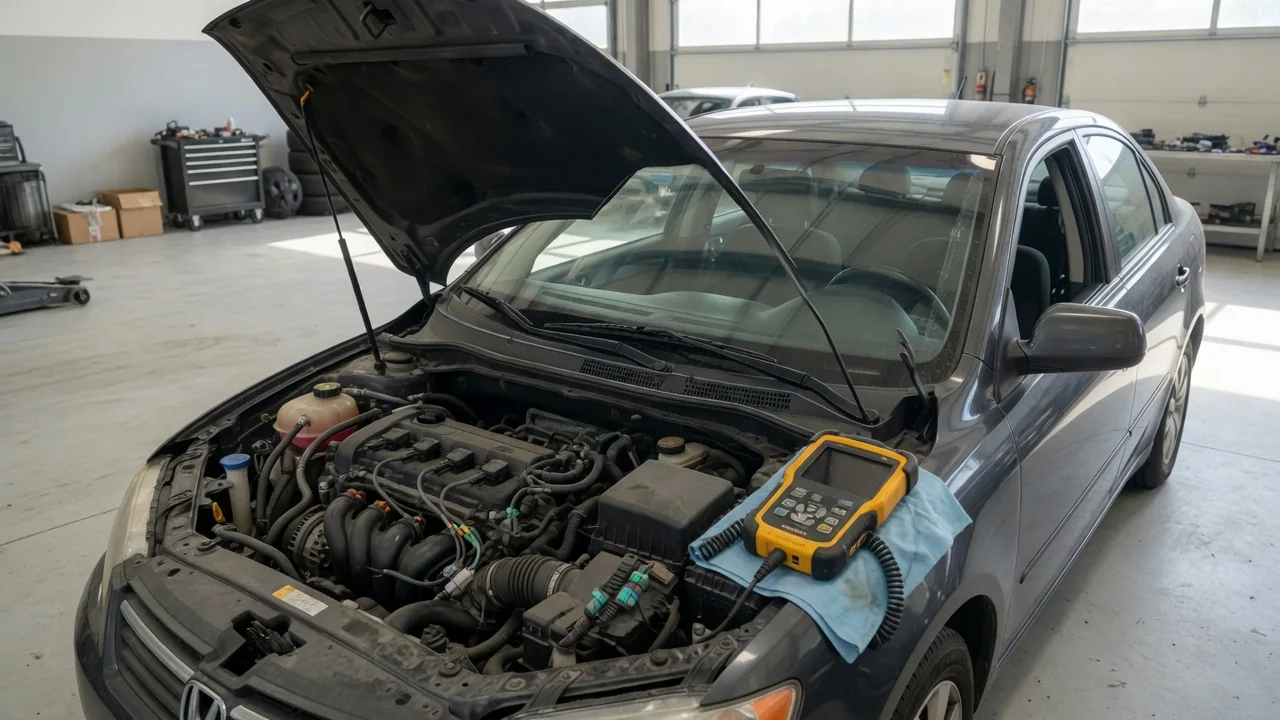
Codes P0350 through P0356 point to the ignition coil circuit rather than naming a failed part. P0350 is a general coil circuit designation, while P0351, P0352, P0353, P0354, P0355 and P0356 refer to coil circuits A through F. Knowing what each code means, how to find the referenced coil, which symptoms matter and how testing separates a bad coil from a wiring, connector or driver fault saves time and parts.
What P0350 and the P0351–P0356 Code Family Mean
In generic diagnostic language, P0350 is usually described as an ignition coil primary/secondary circuit fault that doesn't name a specific coil. P0351 through P0356 narrow that to coil circuits A, B, C, D, E and F. A P0351 code might appear on a scanner as ignition coil A primary/secondary circuit. Manufacturers can use their own wording, and some describe an open primary control circuit instead. Confirm the definition for the exact vehicle, engine and model year before interpreting the code.
The primary winding is the low-voltage side of the coil. It receives battery supply, and the coil driver switches its ground path to build a magnetic field and then collapse it. The secondary winding turns that collapse into the high voltage that fires the spark plug. A circuit code means the engine computer saw something unexpected in this system. It does not mean the computer knows which winding or component failed. The letter also has to be mapped through service information before it can be assigned to a cylinder.
P0351 and P0352: Identifying Coil Circuits A and B
P0351 flags coil circuit A and P0352 flags coil circuit B. Scanners may display wording such as ignition coil B primary/secondary circuit or ignition coil B primary control circuit open. Which physical coil that means depends on the engine identification and ignition layout. A four-cylinder with coil-on-plug units, a V6 with coils on each bank and an older engine with a shared coil pack can assign letters differently. The manufacturer's component diagram is the authority.
When looking for the P0352 ignition coil B location, don't assume B is always cylinder 2 or sits in a fixed spot under the hood. Letters often follow a cylinder or firing sequence, but the manufacturer sets that relationship, and cylinder numbering itself varies between engine families. When the description mentions an open control circuit, the cause could be a broken wire in the wiring harness, a spread or corroded terminal, a failed coil assembly or a fault elsewhere along the control path.
P0353 and P0354: Finding Coil Circuits C and D
P0353 identifies coil circuit C and P0354 identifies coil circuit D, subject to the vehicle's own diagnostic documentation. To find the P0353 ignition coil C location or the P0354 ignition coil D location, pull the wiring and component diagram for the exact engine. That diagram establishes cylinder numbering, shows which side counts as bank 1 on a V-type engine and traces which harness branch feeds each coil connector. That removes the guesswork that leads to replacing the wrong part.
The ignition layout changes what C or D actually represents. With individual coils, the letter usually corresponds to one coil and one cylinder. With a shared coil pack, one designated circuit may drive a coil that fires a pair of cylinders, so misfires can register on two cylinders together. A scan tool showing ignition coil D primary/secondary circuit is a reason to test that circuit. It is not proof that ignition coil D itself needs replacement.
P0355 and P0356: Locating Coil Circuits E and F
P0355 points to coil circuit E and P0356 to coil circuit F, though the applicable description still needs confirmation for the specific vehicle. Finding the P0355 ignition coil E location or the P0356 ignition coil F location requires the vehicle model, model year, engine identification and the matching ignition diagram. Decoding the VIN is the most dependable way to confirm the engine, because vehicles that look alike can carry different engines with different coil arrangements.
Ford owners often ask where ignition coil E sits, but no single cylinder or bank assignment applies across Ford engines. The exact engine and its service diagram decide which position E represents, and numbering conventions can differ between manufacturers and engine families. An ignition coil F primary control circuit open message also describes a circuit condition that needs testing. The coil, its connector, the harness or the driver could be responsible, so the message alone does not confirm a failed coil.
Symptoms and When to Stop Driving
An ignition coil circuit fault can cause a rough idle, hesitation under acceleration, reduced power, hard starting and an illuminated check-engine light, though not every fault produces every symptom. An intermittent fault may appear only in damp weather, at operating temperature or under load. A flashing check-engine light or severe shaking often goes with an active engine misfire. If that happens, pull over safely, shut off the engine and arrange assistance instead of driving on.
Driving with an active misfire sends unburned fuel into the exhaust, where it can overheat and damage the catalytic converter. There is no dependable safe distance to count on. Before anyone clears the codes, note when the symptoms occur, such as on cold starts, at highway speed or at idle. Save every stored code along with its freeze-frame data. Those snapshots record engine speed, load and temperature at the moment of the fault, which helps a technician reproduce it.
How Testing Determines Whether the Coil Is Faulty
Diagnosing a faulty ignition coil starts with the full picture: every stored code, misfire counts, freeze-frame data, the verified circuit identification and the manufacturer's test procedure. Owners wondering how to check which ignition coil is bad should only look at accessible areas with the engine off and cool. Signs to look for include a cracked coil connector, a chafed wiring harness, and moisture or oil pooling around the coils. Don't dismantle anything or touch the ignition terminals.
Where the vehicle permits it and the parts are confirmed suitable, a technician may swap coils between cylinders. If the misfire moves with the coil, that supports a coil diagnosis, although a circuit code may stay tied to its original control circuit. Persistent or intermittent faults call for professional testing of supply, ground, wiring and control signal. Symptoms alone, a single resistance reading or a code that stays put cannot prove which ignition coil is bad.
Repairing the Confirmed Fault and Verifying the Result
Repairs should follow confirmed findings. A failed coil gets replaced. Damaged connector terminals get repaired or the connector gets renewed. Compromised wiring gets restored properly, and a confirmed supply or ground fault gets corrected at its source. The coil driver inside the control module is also a possible cause. It should be condemned only after professional testing has checked the relevant circuit and the coil load, because a wiring or coil fault can look like a driver failure.
Choose replacement parts using the exact vehicle and engine application. Coils are not universally interchangeable, and you don't have to replace every coil when testing isolates just one. After the repair, check the codes again, confirm the symptoms are gone and complete any operating checks or drive conditions the manufacturer calls for. Turning off the warning light proves nothing on its own, because an unresolved fault can return once the computer retests the ignition coil circuit.