P0313 Code: Low-Fuel Misfire Symptoms and Next Steps
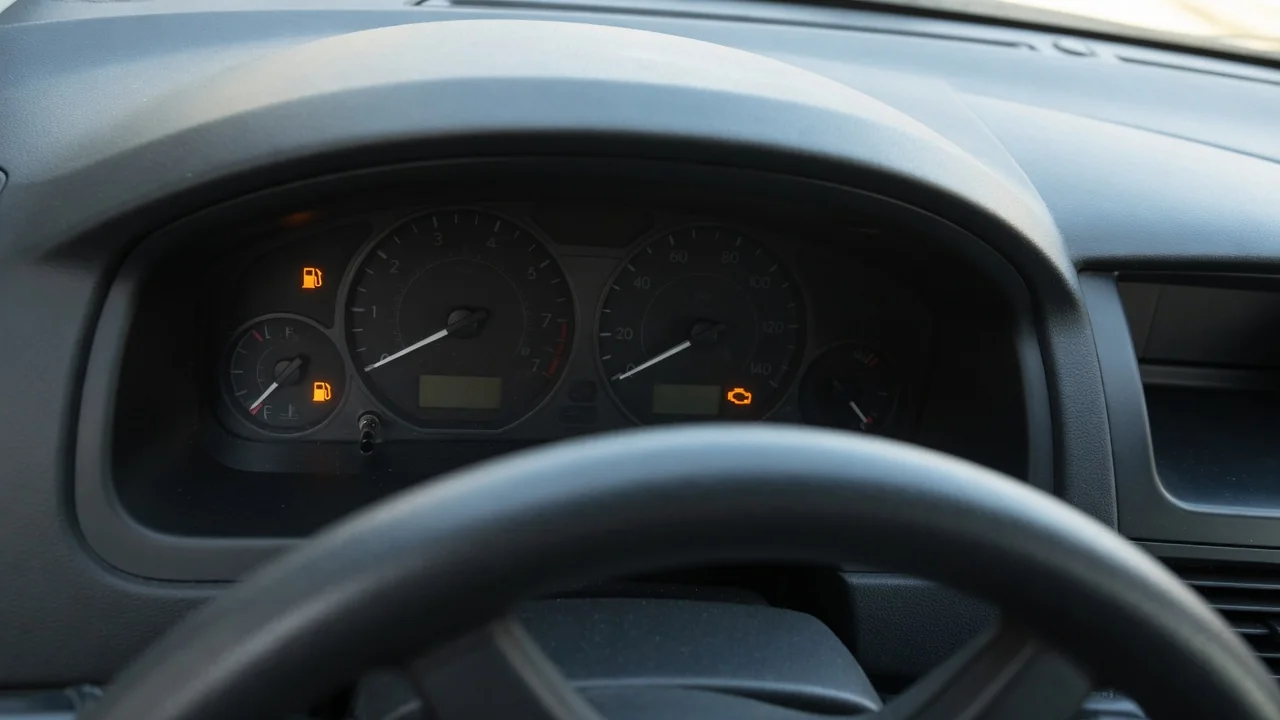
A P0313 code flags misfire detected with low fuel, a condition that can produce a check engine light, rough idle, and hesitation. The stored snapshot is evidence to interpret, not proof that a part has failed. Confirm the vehicle-specific meaning, then use freeze-frame data, fuel level history, and related pending trouble codes such as P0314 to decide whether refueling, further testing, or stopping is the next step.
What P0313 Means and What It Cannot Prove
A P0313 code indicates the control module detected misfire while fuel level was low enough to meet that strategy's criteria. The exact detection thresholds, enabling conditions, and diagnostic procedure are manufacturer-dependent, so the applicable service information must be checked rather than assuming a universal definition. The stored P0313 record documents an operating condition the module observed. It does not prove that low fuel was the only factor, that a component has failed, or that the same cause is still present.
Drivers may notice rough running, hesitation, reduced power, a rough idle, or an illuminated check engine light when this condition is active, though not every vehicle exhibits the same symptoms and some events are brief. A pending trouble code can appear before a stored code and warning lamp, depending on how that vehicle confirms faults. Treat P0313 as a starting point for diagnosis. Confirm the code description for that powertrain, then compare symptoms and captured data instead of concluding that the tank was empty or that ignition hardware is at fault.
How Low Fuel Can Contribute to a Misfire
Combustion needs a timely mix of air, spark, and fuel. When fuel delivery falls short of what the injector pulse and engine load require, a cylinder can fail to fire as expected and the module can log a misfire. An insufficient supply need not be a complete stoppage; a brief lean event during acceleration, a hill, or a corner can be enough for detection. P0313 ties that observation to a low-fuel context on vehicles that use this code, so the recorded fuel level at the event matters more than a later gauge glance.
Very low fuel can interrupt pickup as the remaining volume sloshes away from the pickup during braking, turning, or climbing, depending on tank design, pickup location, and how the vehicle is being driven. That interruption can be intermittent, which is why a misfire may appear only in motion and then settle. The current fuel gauge cannot establish what the tank held when the fault set. Freeze-frame data, if available, is the better snapshot of operating conditions. Running low does not, by itself, prove pump damage or that settled debris entered the engine.
When Misfire Symptoms Require Stopping
A stored P0313 code is not proof of permanent engine or fuel-system damage. It records that misfire was detected under a low-fuel condition as that vehicle defines it. The misfire itself, if it continues, is the more immediate risk. Unburned fuel can reach the catalytic converter and raise converter temperature during an active misfire, which can damage the converter if the condition is allowed to continue. That risk is about ongoing misfire, not about the mere presence of the stored code after the engine is already running smoothly again.
A flashing check engine light, severe shaking, stalling, or substantial power loss are reasons to pull over when it is safe and arrange assistance rather than continuing to drive. Those signs point to an active misfire severe enough to threaten drivability and the converter. A steady warning light with otherwise normal operation still warrants prompt evaluation and a look at the owner's manual for that vehicle's warning-lamp guidance. Do not ignore a P0313 event simply because the engine later feels acceptable; document it and have the condition interpreted before assuming the issue has vanished.
Safe First Checks and the Limits of Refueling
Start with the fuel gauge and recent refueling history. If the level is low and the vehicle can be refueled safely, add the correct fuel for that engine. That step addresses an obvious supply shortage, but it is not a complete diagnosis. Before clearing anything, connect a compatible scan tool only while parked and record stored codes, pending trouble codes, and any freeze-frame data. Those captures can show engine speed, load, temperature, and fuel level at the moment the P0313 code set, which later driving cannot reconstruct.
Smoother operation after filling the tank supports a connection to fuel level, yet it does not confirm that every underlying fault is resolved. A misfire can have more than one contributor, and a low tank can coincide with weak fuel delivery, ignition problems, injector issues, or mechanical condition. If roughness, hesitation, a rough idle, or the check engine light persist or return with adequate fuel, professional testing should follow the diagnostic evidence rather than parts replacement based on the code alone. Fuel-pressure, ignition, injector, and mechanical checks belong in that work only as the data indicate.
What a Stored P0314 Code Means
A P0314 code describes single-cylinder misfire with the cylinder unspecified, but that wording must still be confirmed in the applicable vehicle's service information along with its diagnostic procedure. Manufacturer-dependent definitions vary, so treating P0314 as a universal label is a mistake. The P0314 code does not identify which cylinder misfired and does not establish a low-fuel cause. It is a misfire observation without a cylinder number attached. Pairing it with P0313, cylinder-specific misfire codes, or fuel-system codes is more informative than reading either code in isolation.
Do not guess a cylinder or replace coils, plugs, injectors, or other parts solely because a P0314 code is stored. Accompanying codes, freeze-frame data, and professional misfire testing, such as reviewing misfire counters, inspecting ignition and fuel delivery on the indicated bank, and evaluating mechanical contribution, narrow the search without swapping hardware first. If P0313 and P0314 appear together, low fuel may be part of the story, but it still does not prove which cylinder was involved or that a part has failed. Diagnosis follows evidence, not the shortest path to a replacement.
Clearing P0313 and Reducing Repeat Low-Fuel Events
Clearing a P0313 code erases stored diagnostic information without repairing the condition that triggered it. Pending trouble codes, freeze-frame data, and misfire history useful for later comparison disappear as well. After the cause has been addressed, often by restoring adequate fuel and confirming the engine no longer misfires, a compatible scan tool can clear the code while the vehicle is parked. Readiness monitors can reset with that action, which matters if an emissions inspection is expected soon. Clearing is a record-keeping step, not a repair, and it should not precede capturing the data.
The check engine light may turn off after the module successfully completes its monitoring, but the number of trips or miles required is determined by that vehicle's strategy, not by a promised interval. If the misfire condition is gone, the lamp can stay off; if the fault returns, the code can set again. Refuel before the tank becomes very low to reduce pickup interruption. If the P0313 code, a P0314 code, or misfire symptoms return with adequate fuel, seek diagnosis rather than clearing the light and continuing to drive on a repeating fault.