P0303 Engine Code: Cylinder 3 Misfire Diagnosis
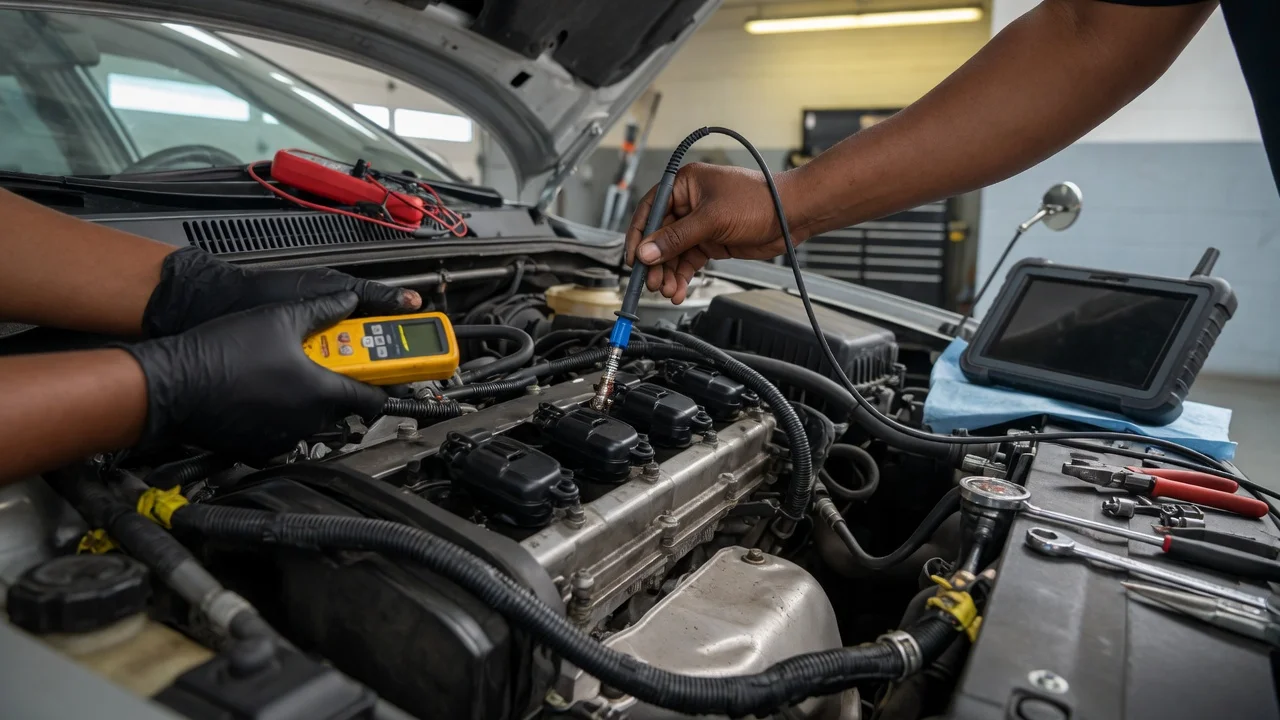
What P0303 means
P0303 is a diagnostic trouble code indicating that the engine control module has detected a misfire on cylinder 3. A misfire means that the air and fuel mixture in that cylinder did not ignite completely at the expected time, or in some cases did not ignite at all. The result is usually a noticeable stumble, rough idle, reduced power, or a flashing check engine light under load.
The code identifies a misfire affecting the cylinder, not a specific failed part. The underlying cause must still be diagnosed. The same code can appear on engines with different ignition, fuel delivery, and cylinder numbering layouts, so the diagnostic path depends on the vehicle, model year, generation, powertrain, trim, and market.
Likely causes of a cylinder 3 misfire
The most common causes involve the ignition system, fuel delivery, mechanical sealing, or the cylinder air charge. Typical candidates include a worn spark plug, a damaged ignition coil or coil boot, an injector that is clogged or failing, a vacuum leak near that cylinder, low compression, and oil or coolant entering the combustion chamber.
Model-specific patterns also matter. Some engines are more prone to coil failures on particular cylinders because of heat, harness routing, or oil leaks from a nearby valve cover. A vehicle with direct injection may point attention toward carbon buildup on intake valves, while a high-mileage engine may point toward worn rings, valves, or a failing head gasket. Without vehicle-specific inspection data, these differences remain possibilities rather than proven causes.
What to check first
Begin with the simplest items that can be observed without replacing parts. Read the full fault code list first. P0303 may be accompanied by other codes that change the diagnosis, such as a fuel trim code, a specific injector circuit code, or a separate misfire code on another cylinder.
Inspect the cylinder 3 spark plug and coil or coil-on-plug assembly. Look for cracks in the coil housing, carbon tracking, oil fouling, coolant residue, or a plug with heavy wear. Fouling or coating on one plug is evidence about what is happening inside that cylinder, but the part itself may still be functional.
A useful workshop test is to compare or move parts between cylinders. If the misfire moves with a coil or plug, the moved part is strongly implicated. If the misfire stays on cylinder 3, the cause is more likely elsewhere, such as fuel delivery, wiring, sealing, or compression.
Fuel, air, and compression checks
Fuel delivery can be checked through injector operation, injector circuit testing, and fuel pressure where the system design allows it. An injector that is partially blocked can cause a misfire that is worse at idle or light load. Fuel pressure loss, a leaking injector, or contamination may also affect one cylinder more than another.
Air or vacuum issues usually create a lean condition. A leak close to the cylinder 3 intake runner may affect that cylinder first. Listen for an obvious air leak, watch fuel trim values if available, and inspect intake gaskets, hoses, and the area around the injector seal.
A compression test and, where practical, a cylinder leak-down test help separate ignition and fuel problems from mechanical ones. Low compression on cylinder 3 can indicate a valve, ring, piston, or head gasket problem. A leak-down test can help identify whether air escapes through the intake, exhaust, crankcase, or cooling system, which narrows the fault.
When to stop driving or seek professional help
A misfire that is constant, accompanied by overheating, coolant loss, heavy smoke, oil contamination, or severe loss of power should be treated as a reason to stop driving the vehicle. A flashing check engine light indicates that continued operation may damage the catalytic converter or other components. In those conditions, professional diagnosis is advisable.
P0303 is a starting point, not proof of a bad component. A code reader can confirm the fault, but diagnosis still requires observation of the vehicle, its service history, and the results from the relevant checks. Where evidence is incomplete, the safest next action is to avoid replacing expensive parts by guesswork and instead test or inspect the plausible causes in order of likelihood for the specific vehicle.