P0303 Engine Code
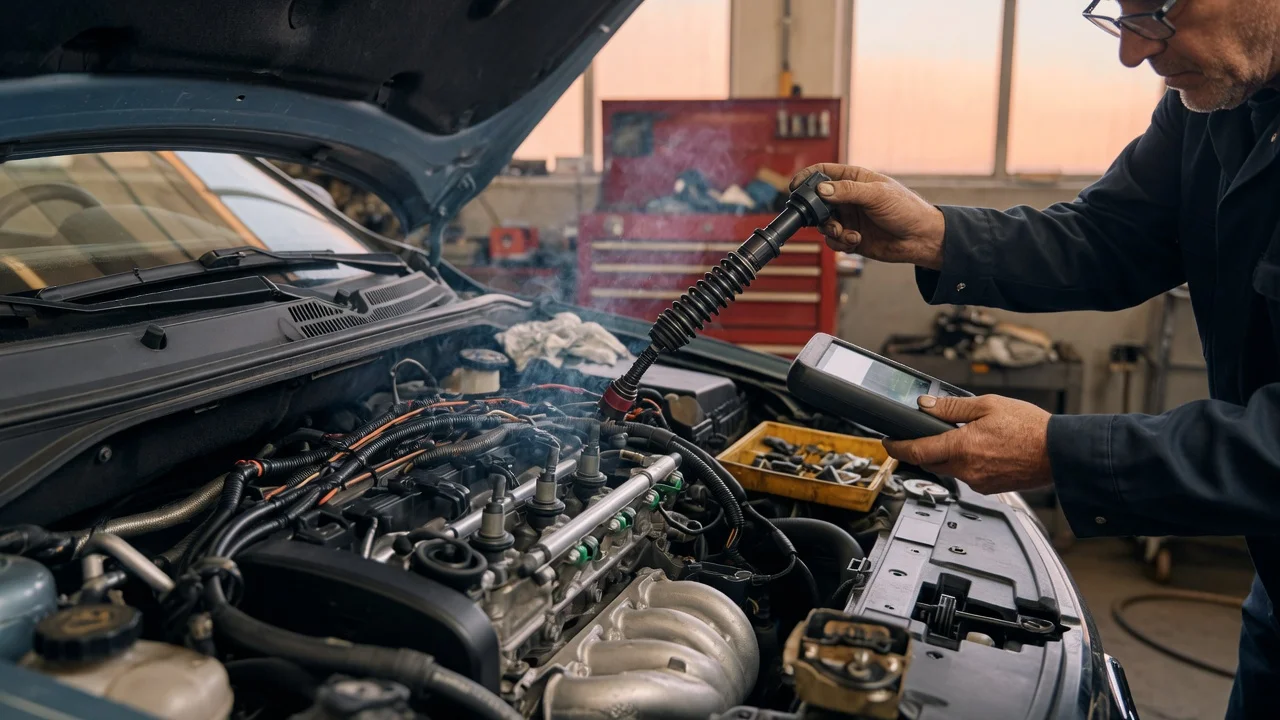
What P0303 means
P0303 is an OBD-II diagnostic trouble code that means Cylinder 3 Misfire Detected. The engine control module has measured that cylinder 3 is not contributing combustion events as expected, so that cylinder is misfiring often enough to exceed the module’s misfire threshold.
The code identifies which cylinder is misfiring. It does not, by itself, name the failed part. Ignition, fuel delivery, air metering, wiring, and mechanical problems can all produce the same P0303 result. Cylinder numbering is engine-specific: on an inline engine, cylinder 3 is usually the third cylinder from the front of the engine, while on a V-type engine it depends on how that manufacturer numbers banks and cylinders. Confirm cylinder 3 on the engine in question before replacing parts.
A steady check-engine lamp typically means the misfire was logged but is not immediately judged catalyst-damaging. A flashing lamp means the misfire rate is high enough that unburned fuel may overheat the catalytic converter; in that case, reduce load and have the engine diagnosed promptly. Freeze-frame data stored with the code shows the speed, load, and temperature when the misfire was recorded, which helps separate a cold-start or idle problem from a cruise or acceleration problem.
Related cylinder misfire codes
P0303 belongs to a family of cylinder-specific misfire codes. P0301 is cylinder 1, P0302 is cylinder 2, and P0304 is cylinder 4. Additional cylinders follow the same pattern (P0305, P0306, and so on) on engines with more than four cylinders. P0300 is different: it reports random or multiple-cylinder misfires rather than pinning the event to one hole.
If only P0303 is stored, diagnosis should start at cylinder 3. If P0303 appears with another cylinder code, or with P0300, the cause may be shared: a vacuum leak, a fuel-pressure problem, a crankshaft or camshaft sensor issue, or a control-module strategy that is affecting more than one cylinder. Treat paired codes as a pattern, not as four unrelated failures.
Common causes
Worn, fouled, or incorrectly gapped spark plug on cylinder 3; Failed ignition coil, coil-on-plug unit, or spark-plug wire for cylinder 3; Clogged, leaking, or electrically failed fuel injector on cylinder 3; Damaged injector or coil connector, broken wire, or poor ground; Low compression from a burned valve, worn rings, or a head-gasket leak at cylinder 3; Vacuum leak, intake-gasket leak, or unmetered air concentrated at that cylinder’s runner; Incorrect fuel pressure, contaminated fuel, or a restricted fuel filter that shows up first on one cylinder; Timing, variable-valve-timing, or cam/crank correlation faults that disrupt cylinder 3 events
Which of those is most likely depends on the engine layout and ignition design. Coil-on-plug engines often fail at the coil or plug for that cylinder. Engines with a wasted-spark coil pack or plug wires add those parts to the list. Direct-injection engines add high-pressure injector and carbon-buildup concerns that port-injected engines do not share in the same way. Model year, powertrain, and market calibration can also change misfire thresholds and related codes, so a scan of pending codes, fuel trims, and misfire counters on that specific vehicle is more useful than a generic parts swap.
What to do next
Read the stored codes and freeze-frame data, then inspect cylinder 3’s spark plug, coil or wire, and injector connection before replacing unrelated parts. Swapping the coil or plug with another cylinder and seeing whether the misfire code follows the part is a common isolation step on coil-on-plug engines; if the code moves, the swapped part is implicated, and if P0303 stays on cylinder 3, look at the injector, compression, or wiring for that cylinder. Check for exhaust leaks, intake leaks, and obvious damage around that cylinder as well.
Do not keep driving with a flashing misfire lamp. Continued misfire can overheat the catalytic converter and add a much larger repair. After any repair, clear the code only after the cause is corrected, then complete a drive cycle so the monitor can confirm the misfire is gone. If the code returns immediately, the original cause was not fixed.
This explanation covers the generic OBD-II meaning of P0303. It does not replace a vehicle-specific service procedure. Cylinder location, coil and injector layout, and the exact misfire detection method vary by engine family, and those details were not supplied for a particular make, model year, or powertrain. Use the factory cylinder diagram and diagnostic flow for the engine you are working on when the next step is a repair rather than an identification of the code.