P0195–P0199 Engine Oil Temperature Sensor Codes Explained
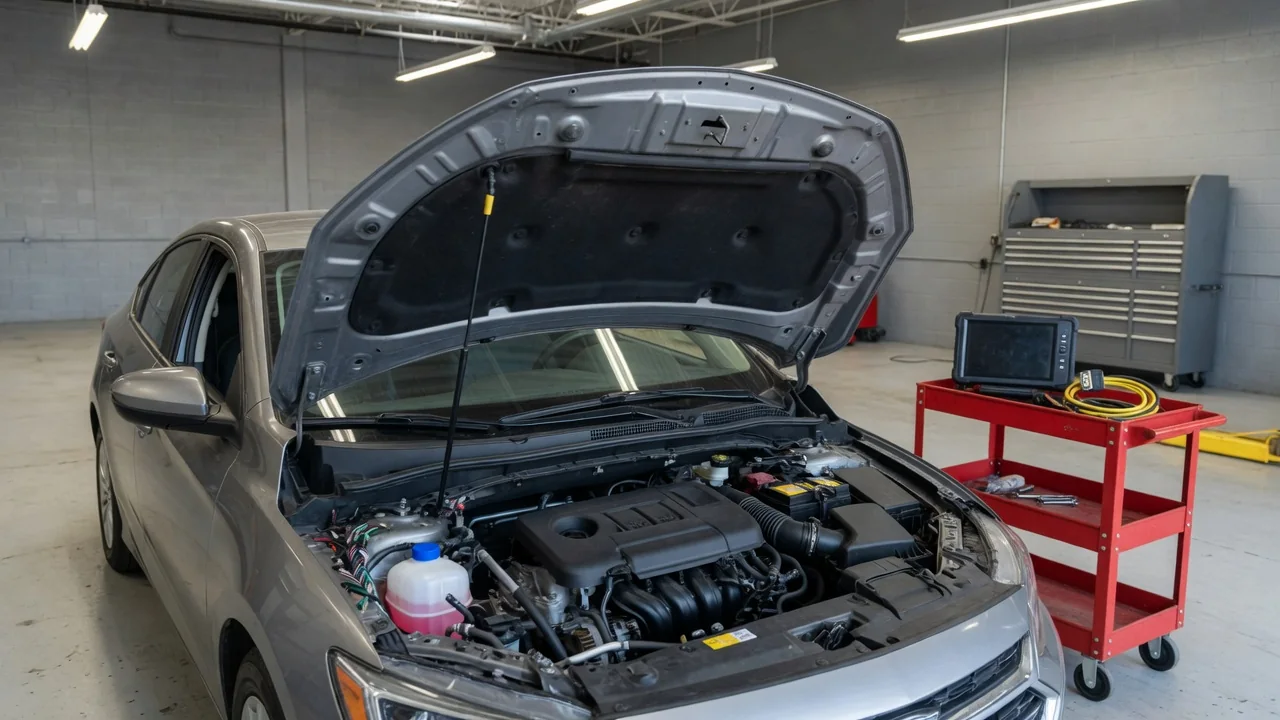
Codes P0195 through P0199 concern the engine oil temperature sensor circuit. They report circuit malfunction, range and performance, low or high signal voltage, or an intermittent signal. A stored P0198, P0197, P0196, P0195, or P0199 does not by itself prove the sensor has failed. Confirm the vehicle year, make, model, engine, and the manufacturer's definition before judging symptoms or planning tests.
What P0195–P0199 Identify in the Oil Temperature Circuit
Before treating any of these as a failed engine oil temperature sensor, match the stored identifier to the vehicle's year, make, model, engine, and the manufacturer's service definition. Shared numbers can still hide different monitoring strategies and test limits. Standard labels treat P0195 as circuit malfunction, P0196 as range and performance, P0197 as circuit low, P0198 as circuit high, and P0199 as intermittent. Those names describe how the control module classified the input, not which hardware to replace.
These identifiers apply to the engine oil temperature sensing circuit as a whole: the sensor, its connector, the wiring, and the module's interpretation of signal voltage. A P0195 code stored in memory is evidence that the monitor saw an out-of-limit electrical condition, not proof that the sensing element itself has failed. Circuit-high and circuit-low labels likewise describe the electrical input relative to the permitted window. They do not establish that the oil is actually hot or cold, and they should not be read as a measured oil-temperature reading.
P0198: High Circuit Input and Possible Symptoms
P0198 means the control module saw a high-input condition on the engine oil temperature sensor circuit under that vehicle's monitoring criteria. There is no universal voltage threshold that applies to every make, so the service information for the specific engine is required before any pass-fail judgment. P0198 symptoms can be limited to a check-engine light, an implausible oil-temperature reading on a scan tool, or no obvious change in how the vehicle drives. Any fallback strategy, such as substituting a default value, is vehicle-dependent and must be confirmed in the applicable documentation.
Depending on how the circuit is designed, a high input can come from an open circuit, a poor connection, a sensor fault, or a short to voltage. Those possibilities must be sorted with the wiring diagram rather than assumed from the P0198 code number. A high-circuit label also does not prove the oil is overheating. The stored identifier reports an electrical condition, not a verified temperature, so it cannot establish whether continued driving is safe. Look instead at temperature warnings, oil condition, and engine behavior together with freeze-frame data.
P0197: Low Circuit Input and Wiring Fault Possibilities
A P0197 code indicates that the input on the engine oil temperature sensor circuit fell below the permitted electrical range for that system. The monitor is flagging signal voltage that is too low relative to the manufacturer's window, not a measured oil temperature. A short to ground, an internal sensor fault, or a related wiring problem can all produce a low input, but only the correct wiring diagram can show which path is plausible on that engine. Connector corrosion or a damaged return can look electrically similar until the circuit is tested.
A low circuit input does not prove that engine oil is cold, and it does not speak to oil pressure at all. Those are separate measurements. Treating P0197 as a cold-oil fact can send diagnosis in the wrong direction, especially if live temperature data disagrees with other sensors after a cold soak. Professional circuit testing should come before a replacement sensor is selected or wiring is repaired. Continuity, isolation from ground, and the expected signal behavior under the service procedure are what distinguish a sensor fault from a harness problem.
P0196 and P0199: Implausible or Intermittent Temperature Signals
P0196 concerns a signal that fails the vehicle's expected range or plausibility checks even when a temperature reading is present. The module may see a value that does not move as expected with engine warm-up, or that disagrees with related temperatures, and store a range and performance fault. P0199 identifies an intermittent circuit condition. The intermittent signal may recover before anyone inspects the vehicle, leaving only a stored identifier and freeze-frame data. Neither code names a single failed part; both describe how the input behaved during monitoring.
Damaged wiring, loose terminals, connector corrosion, and sensor faults can all contribute to a P0196 code or a P0199 without a single common failure pattern. Saved operating conditions help a technician reconstruct when the implausible or dropped signal occurred, including engine speed, load, warm-up state, and live temperature data trends across a drive cycle. Comparing those snapshots with expected warm-up behavior can separate a stuck reading from a momentary open. Visual inspection of accessible harness sections then follows the diagram, not a guess about which part usually fails.
Safe Initial Checks and Professional Sensor Testing
Record every stored and pending identifier, freeze-frame data, and any warning message before clearing anything. Clearing first erases the operating snapshot that shows whether the fault set hot, cold, or during a particular load. With the engine off and cool, inspect only accessible wiring and connectors for visible damage, contamination, or loose attachment. Use vehicle-specific information to locate the engine oil temperature sensor rather than assuming a common mounting point. Do not jump wires, probe unidentified terminals, remove a sensor from a hot engine, or resistance-test an energized circuit.
A technician then compares cold-soak plausibility and temperature change against the manufacturer's expected behavior using live temperature data. After a long rest, oil temperature should sit near ambient; as the engine runs, the reading should change in a believable way rather than remaining pegged. Professional checks of the signal circuit, applicable supply and ground circuits, wiring continuity, and sensor response use the correct diagram and specifications for that vehicle. Those steps decide whether the fault is in the sensor, the harness, or the module's interpretation, which a visual look cannot settle.
Driving Decisions and Confirmation After Repair
How urgently you need to stop depends on warning messages, actual temperature evidence, oil condition or level concerns, and engine behavior, not on P0198, P0197, or a related identifier by itself. An oil-pressure warning, an overheating warning, severe abnormal noise, or a significant oil leak is a reason to stop safely, shut the engine off, and arrange assistance. Those conditions speak to lubrication and heat, which a sensor-circuit code does not confirm or rule out. Do not keep driving in hopes the light will clear when those warnings or mechanical signs are present.
When the only indication is an isolated check-engine light and the engine otherwise behaves normally, schedule prompt diagnosis and follow the owner's manual rather than assuming a safe driving distance. After a repair, confirmation means a plausible temperature signal on live data and successful vehicle-specific monitor operation, not merely turning the light off. Clearing the lamp without a completed monitor cycle does not verify the fix. If P0196, P0198, or P0199 returns, the circuit still needs investigation against the original freeze-frame conditions.